
Seizing Opportunities in Vietnam-Indonesia Agricultural Trade: A Strategic Shift for Food Security and Investment
The recently accelerated negotiations for the Vietnam-Indonesia rice trade agreement, discussed at the July 7, 2025 BRICS Summit, mark a pivotal moment in Southeast Asia's agricultural landscape. This partnership, framed within a broader $18 billion bilateral trade target by 2028, underscores a strategic shift toward diversifying trade and bolstering regional food security. For investors, the deal presents opportunities to capitalize on emerging dynamics in agricultural supply chains, while navigating challenges such as global market competition and policy shifts.
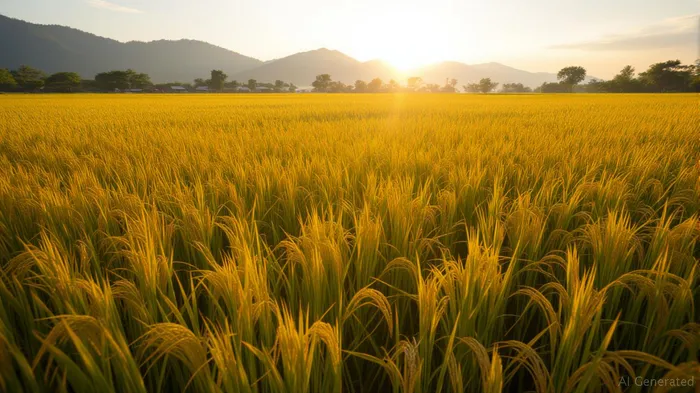
The Strategic Imperative: Food Security and Trade Diversification
Vietnam, the world's second-largest rice exporter, has long been a critical supplier to Indonesia, the fourth-most populous nation. In 2024, Vietnam exported $746 million worth of rice to Indonesia, accounting for nearly 12% of its total rice exports. The proposed agreement aims to institutionalize this relationship, ensuring stable, long-term supplies to Indonesia—a nation that imported 3.85 million tons of rice in 2024 but has now announced a temporary halt to imports in 2025 due to self-sufficiency goals.
While Indonesia's decision to pause imports in 2025 poses an immediate challenge, the strategic partnership extends beyond rice. The 2025–2030 Comprehensive Strategic Partnership includes collaboration in aquaculture, digital infrastructure, and green energy. For investors, this diversification strategy reduces reliance on any single commodity, creating resilience against market volatility.
This data will highlight Vietnam's export consistency and identify trends that could inform investment decisions.
Navigating Challenges: Competition and Currency Risks
The rice trade faces headwinds from India's resurgence as a low-cost supplier, which has driven global prices to 19-month lows. Vietnam's competitive edge lies in its focus on high-quality, value-added rice varieties like jasmine (ST24/25), which command premium prices in EU and Middle Eastern markets. Investors should prioritize companies investing in quality differentiation, such as VinaCapital's agribusiness funds or private rice exporters like Lien Ninh Co., Ltd., which already dominate Indonesia's premium market segments.
Currency fluctuations also pose risks. Vietnam's reliance on USD-denominated exports means weakening VND could erode margins. However, this also creates opportunities for investors in foreign exchange hedging instruments or Vietnam-based companies with dual-currency revenue streams.
Investment Themes: Beyond Rice
The partnership's success hinges on diversifying beyond grains. Key areas to watch include:
1. Aquaculture and Fisheries: Both nations aim to boost collaboration in shrimp, tuna, and seaweed production. Companies like Thai Van Fishery (Vietnam) or Indonesian Seafood Group could benefit from streamlined trade policies.
2. Digital Supply Chains: Investment in tech platforms that track agricultural products from farm to market could reduce waste and increase efficiency. Startups like AgriChain Solutions (Vietnam) are already leveraging blockchain for traceability.
3. Green Transition: The deal's focus on sustainable practices aligns with global ESG trends. Investors should explore renewable energy projects in Vietnam's Mekong Delta or Indonesia's Java region, which power irrigation and logistics.
Conclusion: A Long-Term Play for Regional Stability
The Vietnam-Indonesia agreement is not just about rice—it's a cornerstone of ASEAN's food security and economic integration. While short-term disruptions like Indonesia's import pause create uncertainty, the partnership's $18 billion trade target by 2028 signals long-term growth potential. Investors should adopt a diversified strategy, focusing on:
- Quality agricultural producers with exposure to premium markets.
- Logistics and tech firms enabling cross-border supply chains.
- Green infrastructure projects supporting sustainable agriculture.
The path forward requires patience and adaptability, but for those willing to navigate the complexities, the rewards in this fertile region are substantial.
This data will illustrate demand trends and help investors assess the sustainability of trade partnerships.







Comentarios
Aún no hay comentarios