
Seizing the Golden Window: Iran's SLAL Tenders and the Agri-Commodities Playbook for 2025
The Iranian state-owned animal feed importer SLAL has once again opened the gates to one of the most compelling arbitrage opportunities in global agri-commodities—this time with a twist. With June-July 2025 shipment deadlines and a payment framework designed to bypass U.S. sanctions, the tenders for 120,000 metric tonnes each of corn, barley, and soymeal represent a rare convergence of geopolitical necessity, logistical innovation, and bullish fundamentals. For investors, the question is clear: Will you act now, or miss the chance to profit from a market where risk is mitigated and demand is insatiable?
Payment Innovation: The Sanctions-Proof Catalyst
At the heart of this opportunity lies Iran’s solution to its financial straitjacket: non-U.S. payment channels. By mandating transactions in euros via Turkish and Iraqi banks—entities less exposed to secondary sanctions—the tenders eliminate a key barrier that plagued prior deals. This move not only reduces counterparty risk but also signals a structural shift toward sanctions-resilient trade ecosystems.
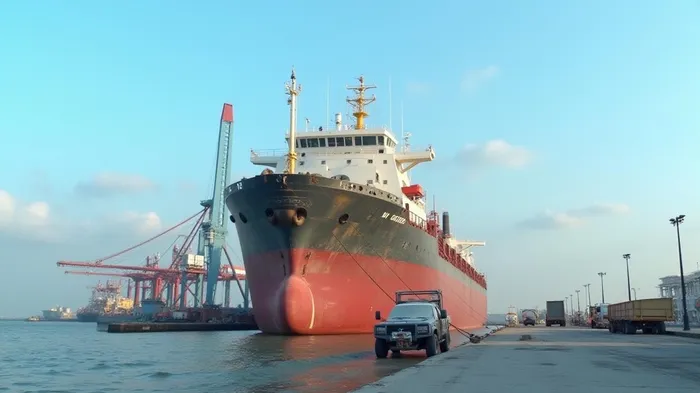
The success of SLAL’s 2024 barley purchase via Turkey and Kazakhstan, facilitated by these banks, proves the model’s viability. Now, with clearer payment terms and extended tender deadlines (pushed to April 21), investors can confidently navigate what was once a minefield of regulatory and financial uncertainty.
Commodity-by-Commodity: Where the Profits Lie
Corn: Brazil vs. the Black Sea
Brazil and the Black Sea region (including Turkey, Russia, and Ukraine) are the battlegrounds for corn arbitrage. While Brazilian corn often trades at a premium due to logistics and currency risks, Black Sea suppliers can undercut prices by leveraging proximity and lower transportation costs.
Current price disparities suggest a 10–15% spread in favor of Black Sea origins. Investors should prioritize traders with Black Sea origination capabilities—especially those with ties to Ukrainian or Turkish exporters—to capitalize on this margin.
Barley: EU/Russia/Kazakhstan’s Geopolitical Edge
Barley’s tender offers a dual advantage: European barley’s quality commands higher premiums, while Russian/Kazakh supplies benefit from Caspian Sea transit efficiency. SLAL’s previous reliance on Russian/Kazakh barley (via Turkish banks) hints at a preference for cost-effective routes.
Russia’s price competitiveness, bolstered by weak ruble dynamics, could push it to dominate this tender. Investors should focus on firms with access to Black Sea ports and partnerships in the Caspian logistics chain.
Soymeal: Argentina’s Hidden Gem
Argentina’s soymeal, often overlooked due to currency controls, now shines as a prime play. While Brazil dominates global exports, Argentina’s underpriced soymeal—driven by a collapsing peso—creates a rare value opportunity.
The spread here is stark: Argentina’s prices are ~$50–$70 cheaper per ton. SLAL’s prior purchase of 100,000 tons from Argentina/Brazil underscores its willingness to exploit this gap.
Why Now? The Perfect Storm of Demand
Three factors ensure this isn’t a fleeting opportunity:
1. Global Feedstock Shortages: Rising livestock populations in Asia and the Middle East are straining supply chains.
2. Climate Volatility: South American droughts have slashed corn yields, while Black Sea wheat exports are under U.S. tariff threats, diverting attention to barley.
3. Sanctions-Driven Diversion: Iran’s reliance on non-U.S. channels is a template for other sanctioned economies, creating a scalable model for future deals.
The data is unequivocal: demand will outpace supply, and SLAL’s tenders are a direct lever to profit from this imbalance.
The Investment Imperative: Act Before the Window Closes
Time is of the essence. With deadlines now firm and shipment dates fixed for June-July 2025, the tender resolutions are approaching fast. Here’s how to position:
- Commodity ETFs: Allocate to agri-commodity ETFs like DBA (double leveraged) or ARKW (if investing in logistics firms).
- Exporter Stocks: Target companies with Black Sea/Eastern European exposure (e.g., NORDN for logistics) or South American origination (e.g., BRFS).
- Currency Plays: Hedge against the euro’s strength—since payments are in EUR—via ETFs like FXE.
Conclusion: Secure Your Stake in 2025’s Agri-Boom
The SLAL tenders are more than a procurement play—they’re a blueprint for profiting in a world where sanctions redefine trade. With payment risks mitigated and demand soaring, this is your moment to act. Delay, and you risk watching the gains slip away as tenders close and prices surge. The question isn’t whether to invest—it’s how quickly you can get ahead of this curve.
The window is open. Will you step through?







Comentarios
Aún no hay comentarios