
U.S. Seizes Venezuelan Oil Tanker in Bold Sanctions Move
The U.S. Treasury has intensified its campaign against Venezuela's oil industry by sanctioning six shipping companies and six tankers for allegedly transporting the nation's crude. The move is part of a broader strategy to isolate President Nicolás Maduro's government, which the U.S. describes as illegitimate according to reports. The seized tanker, The Skipper, was among those blacklisted, with the vessel now expected to be brought to a U.S. port after being taken in international waters as reported. The Trump administration has accused Venezuela of using its oil revenue to fund what it calls narco-terrorist activities, although critics argue the real objective is regime change.
Venezuela has condemned the seizure as an act of "international piracy," vowing to challenge it through international legal channels. Interior Minister Diosdado Cabello called the U.S. "murderers, thieves, and pirates," accusing Washington of a long-standing pattern of intervention according to the BBC. 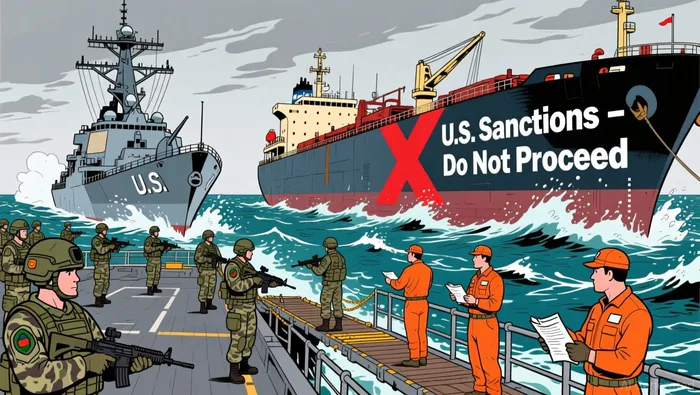 Meanwhile, the U.S. has justified the action as part of an ongoing effort to combat drug trafficking, with White House Press Secretary Karoline Leavitt stating that the administration is committed to "stopping the flow of illegal drugs" and enforcing sanctions according to the Business Standard. The seizure of The Skipper marks a dramatic escalation in U.S. pressure on Caracas, which has previously faced economic and diplomatic isolation.
Why the Standoff Happened
The Trump administration has long maintained a "maximum pressure" campaign against Venezuela, targeting its oil sector as a key source of revenue for Maduro's government. The latest sanctions follow the withdrawal of Chevron's oil extraction license and the imposition of secondary sanctions on Venezuela's oil exports according to analysis. The administration has also accused Venezuela of facilitating narcotics trafficking into the U.S., with Secretary of the Treasury Scott Bessent stating the move holds Maduro's regime "accountable for its continued crimes" according to ABC News. However, analysts argue that U.S. actions in the region have frequently been mischaracterized, with reports from independent agencies refuting the "narco-terrorism" narrative according to analysis.
The U.S. has also sanctioned three nephews of Maduro's wife, Cilia Flores, along with a Panamanian businessman and multiple firms allegedly linked to the regime. These individuals were previously involved in a 2022 prisoner exchange in which they were released by the Biden administration according to the Business Standard. The Treasury's Office of Foreign Assets Control (OFAC) has blacklisted these entities for their alleged roles in illicit oil trading and drug trafficking. The move is part of a broader effort to undermine the Maduro government's financial lifelines, though it has drawn sharp criticism from international legal groups, who have called it a violation of international law according to analysis.
How the Oil Sector is Responding
Despite the escalation, Venezuela's oil production has remained relatively stable, with output at 934,000 barrels per day (bpd) in November, according to OPEC figures. State oil company PDVSA reported a higher figure of 1.14 million bpd, though discrepancies remain over the inclusion of natural gas liquids and condensates according to OPEC data. The U.S. seizure of The Skipper is expected to increase shipping and insurance costs for Venezuela, which now relies on intermediaries to export crude to Asian markets at steep discounts according to analysis. The use of "ghost ships" - vessels that disguise their identity to avoid sanctions - has become a common workaround, but the risk of further seizures remains high according to Bloomberg.
The Trump administration's military buildup in the Caribbean has also contributed to heightened tensions, with thousands of troops and the USS Gerald Ford aircraft carrier deployed in the region. U.S. forces have carried out more than 20 strikes on suspected drug-trafficking boats since early September, killing over 80 people according to BBC reporting. While the U.S. frames these operations as anti-narcotics efforts, Venezuela has accused Washington of seeking to control the country's vast oil reserves. The recent seizure of The Skipper is the first direct action against an oil tanker carrying sanctioned crude, and it signals a shift toward more aggressive tactics according to Bloomberg reporting.
Risks to the Outlook
The U.S. actions raise significant geopolitical and economic risks. Chevron, the only U.S. company authorized to operate in Venezuela under a Treasury license, has stated it continues to comply with sanctions and export oil to the U.S. through joint ventures with PDVSA according to Bloomberg. However, the company has warned of operational challenges stemming from the regional military buildup and potential disruptions in air navigation according to Seeking Alpha. Meanwhile, Venezuela has increased its reliance on Russian crude, with India importing record volumes in November, part of which is exported to Australia and other markets according to Economic Times. The broader oil market remains oversupplied, with the International Energy Agency reporting an excess of 3.8 million barrels per day, limiting the potential impact of any supply disruption from Venezuela according to Bloomberg.
The use of sanctioned tankers to transport Venezuelan crude has also raised concerns over compliance and safety. These vessels often operate without top-tier insurance and may carry oil for multiple sanctioned countries, including Russia and Iran according to the Business Standard. The global shadow fleet now includes over 900 vessels subject to U.S., British, or European sanctions. For Venezuela, the risk of losing access to these ships could significantly reduce its export capacity, particularly as U.S. officials have hinted at the possibility of a naval blockade according to Business Standard reporting. The outcome of these tensions will likely have broader implications for global oil markets and the ongoing struggle for influence in Latin America.







Comentarios
Aún no hay comentarios