
Sei Network's SIP-3 Upgrade and the Urgency for USDC.n Holders to Act
The blockchain industry is no stranger to disruptive upgrades, but few events carry the existential weight of SeiSEI-- Network's impending SIP-3 migration. As the chain prepares to transition to an EVM-only architecture, holders of USDCUSDC--.n-a Cosmos-native stablecoin-face a critical decision: act swiftly to migrate assets or risk permanent devaluation. With the deadline set for the end of March 2026, the urgency for strategic asset migration has never been clearer.
Technical Implications of SIP-3: A Hard Fork with Consequences
Sei Network's SIP-3 upgrade will fundamentally restructure its blockchain by eliminating support for CosmosATOM-- SDK-based assets, including USDC.n. This token, originally bridged from the Noble blockchain, will become incompatible with the new EVM-centric framework. According to a report by , the upgrade will render USDC.n inaccessible post-deployment, effectively nullifying its utility and value on the Sei chain. For holders, this means a narrow window to convert their assets into native USDC-a version natively supported by EthereumETH-- and EVM-compatible chains-before the transition.
The technical shift underscores a broader trend in blockchain development: the prioritization of EVM compatibility to attract developer and user ecosystems. However, this progress comes at a cost for existing token holders, who must navigate complex migration pathways to preserve capital.
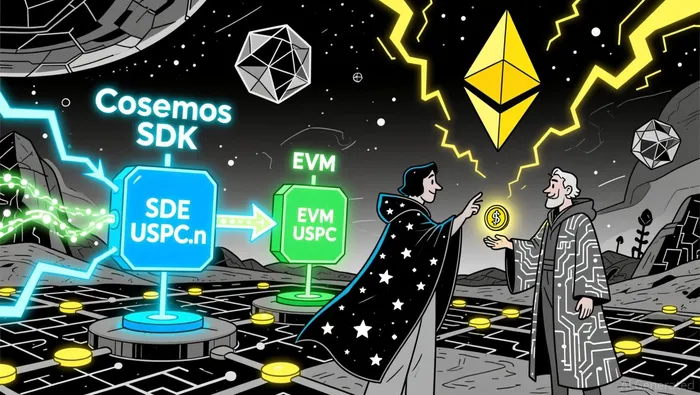
Migration Strategies: From Automated Tools to High-Risk Bridges
Sei has outlined multiple migration routes, each tailored to different volume sizes and risk tolerances. For smaller holdings, decentralized exchanges like DragonSwap and Symphony offer straightforward swaps to native USDC. Larger holders, however, are advised to use the Brrr tool-a batched transaction solution that leverages Noble and Polygon to minimize gas costs and maximize efficiency via Circle's Cross-Chain Transfer Protocol (CCTP).
Manual migration via bridges such as Stargate or Base remains an option, but it introduces heightened risks. highlights the potential for technical errors, slippage, and even fund loss during these processes. This is particularly concerning for DeFi participants who have supplied USDC.n to protocols like Yei Finance and Takara Lend. As of recent reports, approximately $194,000 remains in Yei and $13,000 in Takara, necessitating immediate withdrawal and conversion to avoid post-upgrade liquidity traps.
Strategic Asset Migration: Timing and Risk Mitigation
The SIP-3 upgrade exemplifies the importance of proactive asset management in pre-chain transition environments. With over $1.4 million in USDC.n still on the Sei Network, delays in migration could lead to cascading losses for both retail and institutional holders. The key to mitigating risk lies in three principles:
- Early Action: Begin migration before the March 2026 deadline to avoid last-minute congestion or unexpected delays.
- Tool Selection: Prioritize automated tools like Brrr for large volumes and DEXs for smaller ones, reserving manual bridges for only the most technically proficient users.
- Monitoring: Stay attuned to official Sei announcements, as the timeline remains subject to change.
The Bigger Picture: Lessons for Blockchain Investors
Sei's SIP-3 upgrade is not an isolated event but a microcosm of the challenges facing blockchain ecosystems during architectural overhauls. For investors, it underscores the necessity of adaptability and due diligence. While EVM dominance may drive long-term value for Sei, short-term holders must balance innovation with operational risk.
In pre-chain transition environments, the ability to execute seamless asset migrations becomes a critical competitive advantage. Those who act decisively-leveraging both technological tools and strategic foresight-will emerge unscathed. Conversely, hesitation or reliance on unvetted methods could result in irreversible losses.
As the March 2026 deadline looms, the message is clear: USDC.n holders must treat this migration not as an inconvenience, but as a high-stakes operational imperative. The future of their capital depends on it.






Comentarios
Aún no hay comentarios