
Seeds of Resilience: ADQ and Limagrain's Bold Bet on Desert-Adapted Agriculture
The escalating threat of climate change to global food systems has thrust innovation in agriculture into the spotlight. Nowhere is this urgency clearer than in arid regions, where extreme heat, drought, and salinity threaten crop yields. Against this backdrop, ADQ, the sovereign investor of Abu Dhabi, has announced a landmark strategic partnership with France's Limagrain Vegetable Seeds (LVS), acquiring a 35% stake in the firm and establishing a joint venture to develop climate-resilient vegetable seeds. This move positions the UAE at the forefront of a rapidly evolving sector: agricultural technology tailored to desert ecosystems.
A Desert-Derived Solution to Global Food Insecurity
The partnership's core objective is to engineer vegetable crops—such as tomatoes, cucumbers, and melons—that can thrive in environments like the UAE's, where temperatures exceed 50°C and water scarcity is acute. By combining LVS's expertise in vegetable genetics with Silal's (an ADQ subsidiary) advanced agritech infrastructure, the joint venture will focus on non-GMO methods like gene selection and editing to enhance drought, heat, and salinity tolerance.
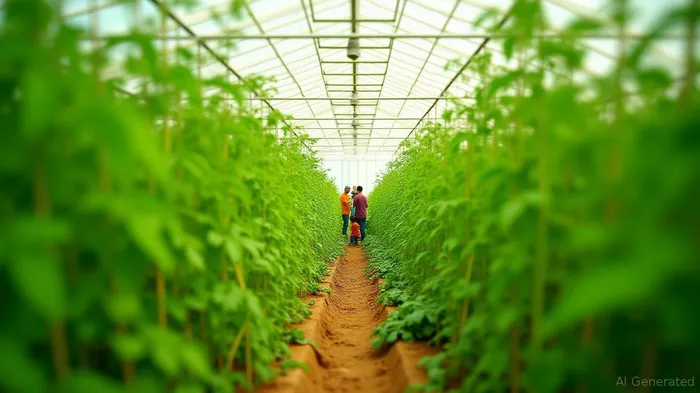
The UAE's National Food Security Strategy 2051 aims to produce 50% of the nation's food locally—a stark shift from its current 10-20% domestic output. This deal directly addresses this goal by reducing reliance on imports, which currently account for 80-90% of the UAE's food supply. But the ambition extends beyond borders: the partnership plans to export these desert-adapted seed solutions to arid regions worldwide, including Africa, the Middle East, and southern Europe.
Why This Matters for Investors
The global market for climate-smart agriculture is projected to grow exponentially as nations grapple with food security in warming climates. By 2030, the climate-resilient seeds sector alone could exceed $15 billion, driven by demand for crops suited to degraded soils and erratic weather patterns. ADQ's strategic entry into this niche underscores a shrewd move to capitalize on two converging trends:
1. Geopolitical Food Security Priorities: Governments are increasingly prioritizing local food production to mitigate supply chain risks.
2. Technological Leapfrogging: Gene editing and precision agriculture enable “desert-proofed” crops without genetic modification, sidestepping regulatory hurdles in many markets.
Risks and Reward Potential
While the partnership's long-term success hinges on R&D breakthroughs and regulatory approvals, the risks are tempered by the UAE's financial and infrastructural backing. Silal's state-of-the-art facilities in Al Ain—equipped with greenhouses and growth chambers—provide a controlled environment to accelerate seed trials. Meanwhile, LVS's global network of 4,000 employees and 35-country reach ensures scalability.
For investors, this is a play on both sector growth and geopolitical alignment. While ADQ's direct stake in LVSLVS-- isn't publicly tradable, the deal signals broader opportunities in agri-tech ETFs or companies like Monsanto/Bayer or Syngenta, which dominate seed innovation. Additionally, the UAE's Vision 2051 could attract capital to local agri-startups or real estate linked to agricultural zones.
Final Take: A High-Impact, Future-Proof Investment
ADQ's bet on Limagrain is more than a stake in a seed company—it's a strategic stake in solving one of the 21st century's most pressing challenges. By targeting the $15 billion climate-resilient agriculture market and aligning with the UAE's food security goals, this partnership offers a tangible pathway to profits while addressing systemic risks. For investors seeking exposure to climate adaptation, this is a sector to watch closely.
In a world where 40% of global cropland faces desertification, the demand for crops that defy harsh conditions is not just theoretical—it's existential. ADQ and Limagrain are planting seeds for a future where agriculture thrives where it was once thought impossible. This is the kind of innovation that turns deserts into fertile ground for both food and financial returns.







Comentarios
Aún no hay comentarios