
Security Vulnerabilities in Live-Service Gaming Ecosystems: A Cautionary Tale for Investors
The collapse of Rainbow Six Siege's in-game economy in late 2025 serves as a stark reminder of the operational and reputational risks embedded in live-service gaming stocks. Ubisoft's catastrophic breach-triggered by a MongoDBMDB-- vulnerability (CVE-2025-14847) and compounded by IAM flaws-exposed systemic weaknesses in its backend infrastructure, leading to a $13.33 million in-game currency flood, server outages, and a rollback of player transactions. This incident, coupled with broader financial instability, underscores a critical need for investors to re-evaluate tech sector valuations through the lens of cybersecurity readiness.
Systemic Vulnerabilities in Live-Service Ecosystems
The Rainbow Six Siege breach was not an isolated incident but a symptom of deeper architectural flaws. Attackers exploited the MongoBleed vulnerability to access internal systems, enabling them to manipulate moderation tools, ban/unban players, and distribute 2 billion R6 Credits and Renown to all accounts. This exposed a critical failure in Ubisoft's IAM protocols, as attackers could alter user data without direct account access. VX-Underground noted that multiple threat actors simultaneously targeted Ubisoft, with one group accessing internal Git repositories and allegedly stealing source code dating back to the 1990s.
Such vulnerabilities are not unique to Ubisoft. Over 200,000 MongoDB instances are estimated to be exposed online, many with similar misconfigurations. For live-service games, where real-time economies and player trust are paramount, these flaws create a perfect storm: a single exploit can destabilize revenue streams, erode competitive integrity, and trigger mass player attrition.
Financial Costs of Rollbacks and Reputational Damage
Ubisoft's response to the breach-rolling back all transactions after 11:00 AM UTC-was both a technical and reputational gamble. While the company avoided penalizing players who spent the illicit credits, the rollback itself carried hidden costs. The in-game economy's collapse led to a surge in cosmetic item purchases, devaluing rare skins and developer-only cosmetics. This devaluation, combined with server instability, likely accelerated player churn, a metric not quantified in public reports but critical to long-term revenue.
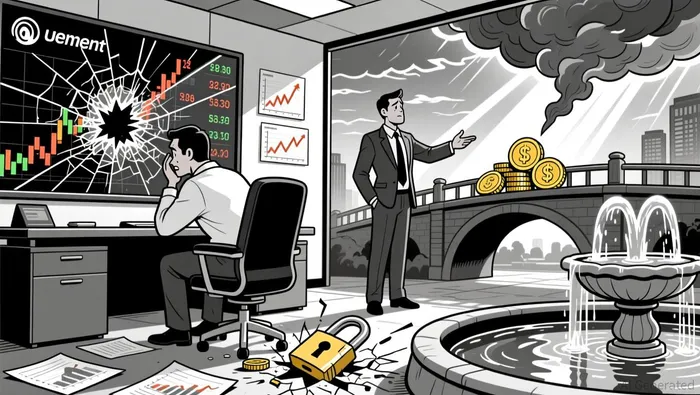
Financially, Ubisoft's stock price had already plummeted to less than €6.00 per share by late 2025, down from a peak near €100. The breach exacerbated investor concerns, with the company's net bookings for Q2 2025-26 declining by 2.9% year-on-year. A debt covenant breach and delayed earnings report further eroded confidence, forcing Ubisoft to secure a €1.16 billion investment from Tencent to stabilize its balance sheet. While this infusion reduced net debt to €1.15 billion, it also signaled a loss of autonomy, with speculation mounting about a potential Tencent-led buyout or privatization.
Industry-Wide Implications for Tech Sector Valuations
The Rainbow Six Siege breach aligns with broader trends in cybersecurity economics. A 2025 study found that companies suffering extreme cybersecurity events underperformed peers by nearly 7% over a year, with average share price declines of 5.3% within days of disclosure. For gaming stocks, the impact is amplified by the sensitivity of user data and the high-profile nature of breaches in digital platforms. Ubisoft's case illustrates how a single incident can trigger a cascade of financial and reputational damage, from lost revenue to eroded investor trust.
Moreover, the breach highlights a disconnect between C-suite priorities and cybersecurity realities. The EY 2025 CISO study revealed that executives underestimated the sophistication of cyber threats compared to their CISOs. This misalignment often leads to underinvestment in security, leaving companies exposed to vulnerabilities like MongoBleed. For investors, this underscores the importance of scrutinizing a company's cybersecurity posture-not just its quarterly earnings.
A Call for Cybersecurity-Driven Valuation Models
The Rainbow Six Siege incident should prompt a re-evaluation of how tech sector valuations are constructed. Traditional metrics like revenue growth and EBITDA margins are insufficient in an era where a single breach can erase years of brand equity. Instead, investors must prioritize metrics such as:
1. Cybersecurity Maturity: Assessments of IAM protocols, patch management, and third-party risk.
2. Reputational Resilience: A company's ability to manage crises and retain player trust post-breach.
3. Financial Contingency Planning: The presence of insurance, liquidity buffers, and rollback strategies.
Ubisoft's reliance on Tencent's investment to stabilize its balance sheet-rather than internal cybersecurity improvements-exposes a dangerous trend: companies are increasingly outsourcing financial risk rather than addressing root vulnerabilities. For investors, this signals a need to weigh cybersecurity readiness as heavily as product pipelines or market share.
Conclusion
The Rainbow Six Siege breach is a cautionary tale for the gaming industry and its investors. It reveals how systemic vulnerabilities in IAM and backend infrastructure can trigger operational chaos, financial losses, and reputational decay. As live-service games become central to the gaming economy, cybersecurity must transition from a technical afterthought to a strategic imperative. Investors who fail to account for these risks will find themselves exposed to the same volatility that has plagued Ubisoft in 2025.





Comentarios
Aún no hay comentarios