
Security Risk Diversification in the Crypto Sector: Navigating Physical Threats as a New Frontier for Portfolio Risk Management
The cryptocurrency sector, once celebrated for its digital anonymity and decentralized nature, now faces a paradox: the very attributes that attract investors also make it a prime target for physical threats. As the industry matures, the intersection of physical and digital vulnerabilities has emerged as a critical frontier for risk diversification. This article examines how investors can hedge against physical security risks-ranging from coercion to infrastructure breaches-by integrating advanced frameworks and financial instruments.
The Escalation of Physical Threats in Crypto
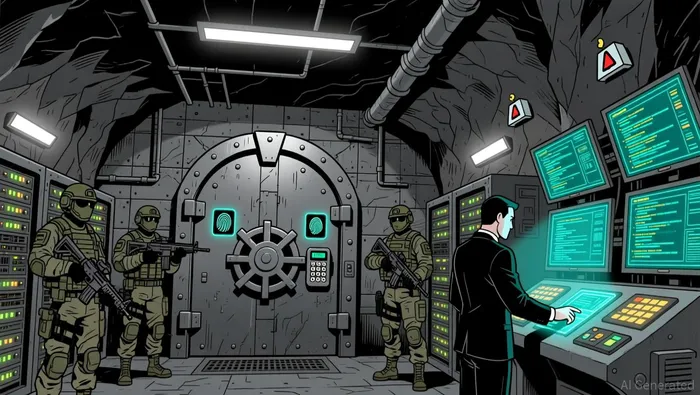
Physical threats to cryptocurrency infrastructure have surged in 2023–2025, driven by the asset class's liquidity and the visibility of crypto wealth. High-net-worth individuals, including executives and developers, have become targets of staged encounters, home invasions, and even family kidnappings to coerce the transfer of digital assets according to Max Security. For instance, the DPRK's $1.5 billion hack of ByBit in early 2025 exploited compromised IT personnel through social engineering, underscoring the role of human vulnerabilities in security breaches as Chainalysis reported.
Infrastructure such as BitcoinBTC-- ATMs and exchange centers has also faced physical attacks, particularly in regions with high adoption rates like the U.S. and Spain according to Max Security. The May 2025 LockBit breach further demonstrated how leaked wallet addresses and negotiation data can enable secondary ransom attempts, blurring the lines between cyberCYBER-- and physical threats according to Kroll Intelligence. These incidents highlight a troubling trend: as crypto adoption grows, so does the sophistication of attacks targeting both individuals and institutions.
Impact on Investment Risk Diversification
The rise in physical threats has forced investors to rethink diversification strategies. Centralized exchanges, once seen as convenient, now face scrutiny due to their vulnerability to large-scale breaches. The ByBit incident, for example, reinforced the need for custodial security measures, including penetration testing and compliance with standards like the Digital Operational Resilience Act (DORA) according to Kroll Intelligence.
Meanwhile, personal wallet compromises-accounting for 23.35% of stolen fund activity in 2025-have prompted a reevaluation of custodial versus non-custodial solutions. While custodial wallets offer enhanced security, they come at the cost of user control, creating a trade-off that investors must weigh as Chainalysis reported. Regulatory responses, such as stricter anti-money laundering (AML) guidelines in the U.S. and EU, add another layer of complexity, requiring investors to align their strategies with evolving compliance frameworks according to Trmlabs.
Hedging Strategies: From Perpetual Futures to Cold Storage
To mitigate physical risks, investors are adopting a multi-layered approach that combines financial instruments and technical safeguards. Perpetual futures and hedge mode on platforms like Phemex and Binance allow investors to maintain long-term exposure while hedging against volatility. For example, a trader holding 1 BTC in spot can short 1 BTC in perpetual futures to reduce downside risk if prices drop according to Phemex Academy. Advanced strategies, such as delta-neutral trading, further optimize this by balancing spot and derivative positions to eliminate directional risk .
Cold wallets and multi-signature systems form the backbone of physical security. Cold storage, which keeps private keys offline, minimizes exposure to cyberattacks, while multi-signature wallets require multiple approvals for transactions, reducing the risk of internal fraud or external breaches according to SoluLab. Recent advancements in 2025 have integrated smart contract programmability with cold storage, enabling self-protecting wallets that enforce security policies at the protocol level according to Trail of Bits. Platforms like Squads and Liminal now offer role-separated multisig architectures, ensuring that even a complete compromise of one component cannot bypass security protocols according to SoluLab.
Frameworks for Integration and Compliance
Regulatory clarity has become a cornerstone of risk management. Jurisdictions like the U.S. and EU, with innovation-friendly policies, have spurred institutional participation by mandating tighter oversight of virtual asset service providers (VASPs) according to Trmlabs. Compliance protocols, including regular penetration testing and adherence to PCI DSS, are now essential for institutional-grade security according to Kroll Intelligence.
Automation tools further enhance hedging strategies by dynamically adjusting exposure based on market conditions. For instance, API-driven platforms like Bitunix enable passive earning opportunities and efficient hedge ratio management . However, investors must remain cautious: funding rates in perpetual futures can erode hedge effectiveness over time, and excessive leverage may lead to rapid margin loss according to Phemex Academy.
Conclusion: A Holistic Approach to Risk Management
The crypto sector's evolution demands a holistic approach to risk diversification. Investors must balance technical safeguards-such as cold storage and multi-signature systems-with financial instruments like perpetual futures and regulatory compliance. As physical threats continue to evolve, the integration of these strategies will be critical in preserving portfolio resilience.
In 2025 and beyond, the ability to hedge against both digital and physical risks will define the success of crypto investors. By adopting proactive frameworks and staying attuned to emerging threats, investors can navigate this new frontier with confidence.






Comentarios
Aún no hay comentarios