
Securities Litigation Risks and Investor Returns: Unraveling the Impact of Corporate Mismanagement and Disclosure Failures
Corporate Mismanagement and Disclosure Failures: Catalysts for Market Volatility
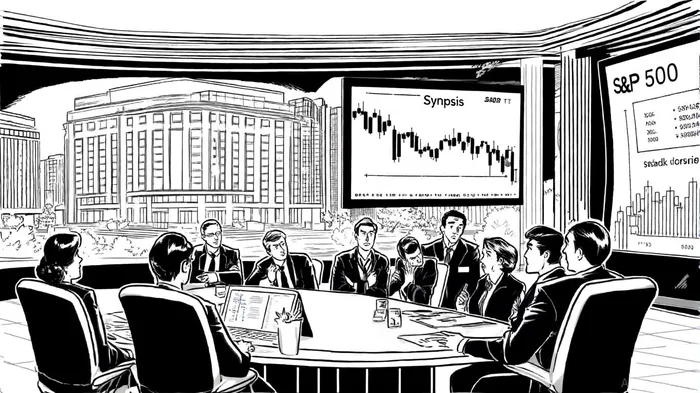
The collapse of SynopsysSNPS--, Inc. (NASDAQ: SNPS) in September 2025 exemplifies the immediate market repercussions of disclosure failures. After the company admitted to underperformance in its IP business and export restrictions disrupting operations in China, its stock plummeted 35.8%, erasing $216.59 per share in value overnight, according to a Business Wire release. Such abrupt corrections highlight the fragility of investor confidence when firms fail to meet transparency standards.
In the crypto sphere, the SEC's handling of the Ripple (XRP) lawsuit reveals a more nuanced approach. Despite dismissing cases against Kraken and Consensys without financial penalties, according to Coingape, the agency's prolonged engagement with Ripple underscores its balancing act between innovation and investor protection. These cases illustrate how disclosure failures-whether in traditional equities or emerging asset classes-can destabilize markets and invite regulatory intervention.
Legal Remedies and Market Corrections: Judicial and Regulatory Shifts
The U.S. Supreme Court's rulings in Macquarie Infrastructure Corp. v. Moab Partners LP and SEC v. Jarkesy have recalibrated the legal landscape for securities litigation. The former clarified that pure omissions cannot be prosecuted under Rule 10b-5(b) unless they render affirmative statements misleading, according to a Skadden update, raising the evidentiary bar for plaintiffs. Meanwhile, Jarkesy reinforced defendants' rights to jury trials in civil penalty cases, shifting enforcement burdens to federal courts in the same Skadden update. These decisions signal a judicial push for procedural rigor, potentially slowing litigation timelines but enhancing the legitimacy of outcomes.
Quantitative trends further illuminate this dynamic. In Q1–Q3 2025, average settlements in AI and biotech securities cases surged to $56 million, a 27% increase from 2024, according to a Cooley report. This rise reflects the growing stakes in high-growth sectors, where exaggerated claims about technological advancements or partnerships-such as those alleged in Quantum Computing Inc.'s class action-can trigger double-digit stock declines, as noted by a StocksToTrade report.
Investor Returns and Sector-Specific Vulnerabilities
A decade-long analysis of securities litigation outcomes reveals stark sectoral disparities. The pharmaceutical and technology industries, despite dominating settlement volumes, tend to resolve cases for lower median amounts ($14 million in 2024), according to the Cooley report. Conversely, healthcare sector settlements, though fewer, command higher median values, suggesting more severe reputational and financial damage per case, as the Cooley report also indicates.
The 2025 Visa case, where the company deposited $375 million into a litigation escrow account, was reported by Seeking Alpha, exemplifying how even non-fatal disclosures can reshape capital structures. For investors, these patterns underscore the importance of sector-specific risk assessments. In AI and biotech, where 12 class actions were filed in H1 2025 alone, the Disclosure Dollar Loss Index (DDL Index) attributes 62% of losses to misrepresentations in noncyclical sectors, according to the Cooley report.
The Future of Securities Litigation: Funding, Enforcement, and Investor Strategy
The surge in third-party litigation funding-growing 69% between 2019 and 2024 to $16.1 billion in assets under management-has amplified the reach of securities lawsuits, according to Risk & Insurance. With 72% of defense attorneys anticipating a rise in class-action filings, the Risk & Insurance article notes, companies face heightened compliance pressures. For investors, this environment demands vigilance in evaluating firms' governance frameworks and disclosure histories.
Moreover, regulatory shifts, including staff reductions at the SEC and DOJ highlighted in the Risk & Insurance article, have created an enforcement vacuum increasingly filled by state attorneys general and private plaintiffs. This decentralization of oversight may lead to inconsistent outcomes, further complicating market corrections.
Conclusion
Securities litigation remains a double-edged sword: it deters corporate misconduct but also introduces volatility that erodes investor returns. As seen in Synopsys' collapse and the Ripple saga, the speed and severity of market corrections depend on the interplay of disclosure quality, judicial rulings, and sector-specific dynamics. For investors, the lesson is clear-transparency is not just a legal imperative but a financial safeguard. In an era where litigation funding and regulatory shifts amplify legal risks, strategic due diligence must account for the full spectrum of securities litigation exposures.





Comentarios
Aún no hay comentarios