
Securities Litigation Risks and Investor Protection: Evaluating the Fallout from Lantheus Holdings' Fraud Investigation
The ongoing securities fraud investigation into Lantheus HoldingsLNTH--, Inc. (NASDAQ: LNTH) offers a stark case study in the intersection of corporate misrepresentation, market volatility, and investor protection. According to a report by Business Wire, the company faces allegations of misleading investors about the financial prospects of its flagship product, Pylarify, which led to a cascade of stock price collapses in 2025 [1]. This analysis examines the financial and reputational risks facing LantheusLNTH--, the mechanics of investor recovery efforts, and broader implications for corporate governance.
Financial Impact: A Double Whammy of Earnings and Litigation
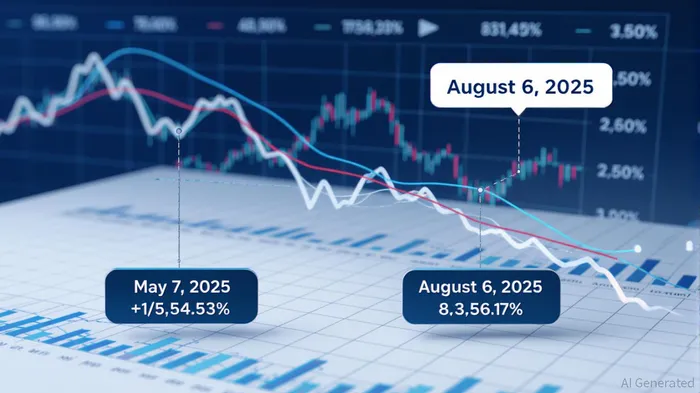
Lantheus' stock price plummeted by 23.2% on May 7, 2025, following the revelation that first-quarter sales of Pylarify had fallen short due to “temporal competitive disruption,” prompting a downward revision of full-year guidance [2]. The damage deepened on August 6, 2025, when the company reported further disappointing results, slashing growth expectations and sending shares down another 28.6% [3]. These declines not only erased billions in market value but also triggered a wave of legal action.
Historical analysis of LNTH's earnings misses from 2022 to 2025 reveals a pattern of medium-term underperformance. When the stock missed expectations, it typically lagged the benchmark by 4–5% over 15–30 days, with negative cumulative alpha persisting beyond 16 days. Short-term (≤10 days) impacts were milder, but the win rate remained near 50%, indicating no consistent directional bias immediately after a miss.
The financial toll extends beyond immediate losses. Securities fraud lawsuits typically impose significant legal costs, and if the court rules in favor of plaintiffs, Lantheus could face substantial compensation payouts. As noted by the Rosen Law Firm, investors who purchased shares between February 26 and August 5, 2025, are now eligible to join a class-action suit alleging that the company “overstated the growth potential of Pylarify” while downplaying competitive and pricing risks [4]. Such litigation often forces companies to divert capital from innovation and operations to legal defense, compounding long-term financial strain.
Reputational Damage: Erosion of Trust in a Competitive Market
Beyond financial metrics, the investigation has tarnished Lantheus' reputation. Pylarify, a radiopharmaceutical agent for prostate cancer imaging, was once touted as a growth engine. However, the alleged misrepresentation of its market dynamics has raised questions about the company's transparency and strategic acumen. As stated by Glancy Prongay & Murray LLP, the lawsuit argues that Lantheus failed to “accurately understand” competitive pressures, leading to “misleading statements” about Pylarify's trajectory [5]. This reputational hit could deter partnerships, delay regulatory approvals, and erode customer confidence in an industry where trust is paramount.
Investor Protection: The Role of Class Actions and Lead Plaintiffs
The case underscores the critical role of securities litigation in holding corporations accountable. Under U.S. law, investors who suffered losses during the alleged fraud window (February 26–August 5, 2025) may seek compensation through the class-action lawsuit Margolis v. Lantheus Holdings, Inc. [6]. A key element of this process is the appointment of a lead plaintiff—typically an investor with losses exceeding $100,000—who oversees litigation strategy and selects counsel [7]. With the deadline for lead plaintiff nominations set for November 10, 2025, multiple law firms, including BlockXYZ-- & Leviton and Edelson Lechtzin LLP, are actively recruiting clients [8].
While class actions provide a mechanism for redress, they also highlight systemic vulnerabilities. The fact that Lantheus' executives allegedly withheld critical risks—such as pricing pressures and competitive threats—until after the stock had already cratered suggests a failure in corporate disclosure practices. This raises broader questions about the adequacy of internal controls and the need for stronger investor education on reading between the lines of earnings reports.
Conclusion: A Cautionary Tale for Investors and Corporations
The Lantheus saga serves as a cautionary tale for both investors and corporate leaders. For investors, it underscores the importance of scrutinizing not just financial results but also the narrative surrounding them. For corporations, it highlights the perils of overreaching optimism without robust risk disclosure. As the legal proceedings unfold, the outcome will likely influence how markets perceive Lantheus' management and its ability to regain credibility. In the interim, the case reinforces the necessity of robust investor protection frameworks and the vigilance of legal counsel in holding firms accountable for securities violations.





Comentarios
Aún no hay comentarios