
Securities Litigation Risks in the Hospitality Sector: Long-Term Implications for RCI Hospitality Holdings Shareholders
The hospitality sector, long characterized by its reliance on cash transactions and complex regulatory environments, has emerged as a focal point for securities litigation in 2025. At the center of this storm is RCI Hospitality HoldingsRICK--, Inc. (RICK), whose executives are accused of orchestrating a 14-year tax evasion and bribery scheme that defrauded New York City and state authorities of over $8 million in sales taxes [1]. This case, now the subject of a securities class action lawsuit, offers a stark illustration of how corporate misconduct can unravel investor trust and trigger cascading financial consequences.
The RCI Case: A Microcosm of Sector Vulnerabilities
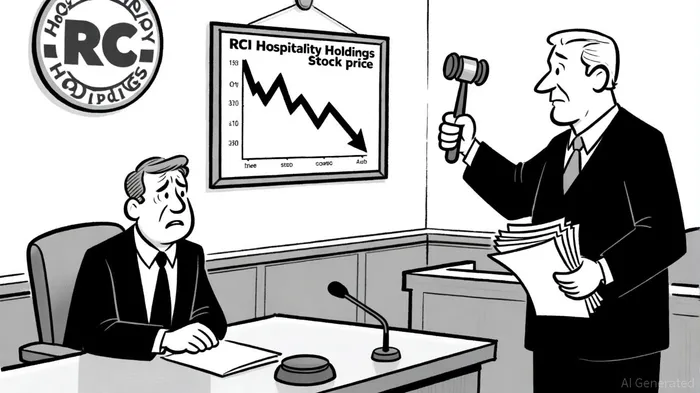
RCI's legal troubles began with a September 16, 2025, announcement by the New York Attorney General, which revealed a systematic fraud scheme involving CEO Eric Langan and CFO Bradley Chhay. The allegations include falsified financial disclosures and bribes to conceal unpaid taxes, leading to a 16.11% plunge in RCI's stock price within days [1]. Investors who purchased RCI securities between December 2021 and September 2025 are now pursuing compensation through class-action litigation, with a November 20, 2025, deadline to request lead plaintiff status [2].
This case mirrors broader trends in the hospitality sector, where cash-heavy operations and fragmented licensing requirements create fertile ground for fraud. According to a report by the U.S. Securities and Exchange Commission (SEC), hospitality-related fraud cases surged by 22% in 2025, driven by opaque revenue streams and regulatory arbitrage [3]. For RCI shareholders, the fallout extends beyond immediate losses: the company's reputation, operational credibility, and access to capital markets are now under scrutiny.
Broader Trends in 2025 Securities Litigation
The RCI case is emblematic of a larger shift in securities litigation. In the first half of 2025, average class-action settlements reached $56 million—a 27% increase from 2024—according to Gibson Dunn's mid-year update [4]. While hospitality is not the most litigated industry, its unique risks amplify the stakes for shareholders. For instance, a 2024 hotel chain settlement of $25 million demonstrated how regulatory actions can mitigate investor losses, but such outcomes are far from guaranteed [3].
Judicial discretion further complicates litigation outcomes. Motions to dismiss, which hinge on the presiding judge's interpretation of material misstatements, remain a critical battleground for defendants [4]. Meanwhile, the “fraud by hindsight” debate—where past disclosures are retroactively criticized—leaves companies in a legal gray area, even as they comply with disclosure standards [5].
Long-Term Financial Implications for RCI Shareholders
For RCI investors, the long-term implications are multifaceted. First, the litigation process itself is a financial drag. Studies show that firms facing securities lawsuits experience an average 12.3% stock price drop around the filing date, with losses often persisting even after settlements [6]. RCI's 16% decline aligns with this pattern, suggesting prolonged underperformance.
Second, reputational damage compounds financial risks. A Harvard Corporate Governance study found that firms embroiled in fraud cases see long-term declines in profitability and operational efficiency, as customer trust erodes and lending terms tighten [6]. For RCI, which operates in a brand-sensitive sector, this could translate to reduced revenue and higher capital costs.
Third, while settlements offer a path to recovery, they are not a panacea. The median 2025 settlement of $14 million pales in comparison to RCI's estimated $150 million in investor losses [3]. Shareholders must weigh the likelihood of full compensation against the costs of protracted litigation and the uncertainty of judicial rulings.
Conclusion: Navigating a High-Risk Landscape
The RCI Hospitality Holdings case underscores the growing securities litigation risks in the hospitality sector. As regulatory scrutiny intensifies and average settlement values rise, investors must adopt a cautious approach. For RCI shareholders, the path forward involves balancing legal action with strategic reassessment of the company's long-term viability. In an industry where cash transactions and regulatory complexity persist, due diligence—and a readiness to act swiftly in the face of misconduct—will remain critical to safeguarding investments.





Comentarios
Aún no hay comentarios