
Securities Litigation Risks at V.F. Corporation: Assessing the Fallout from the Class-Action Lawsuit
V.F. Corporation (VFC) is embroiled in a high-stakes securities class-action lawsuit that has sent shockwaves through its investor base and corporate reputation. The litigation, which targets investors who purchased VFCVFC-- securities between October 30, 2023, and May 20, 2025, centers on allegations of misleading statements about the company's turnaround strategy for its Vans brand and the concealment of material risks[1]. This case has not only triggered a sharp sell-off in VFC's stock but also raised critical questions about the company's governance and long-term viability. For investors, the challenge lies in discerning whether this legal crisis represents a short-term trading opportunity or a red flag for long-term capital preservation.
The Legal and Financial Fallout
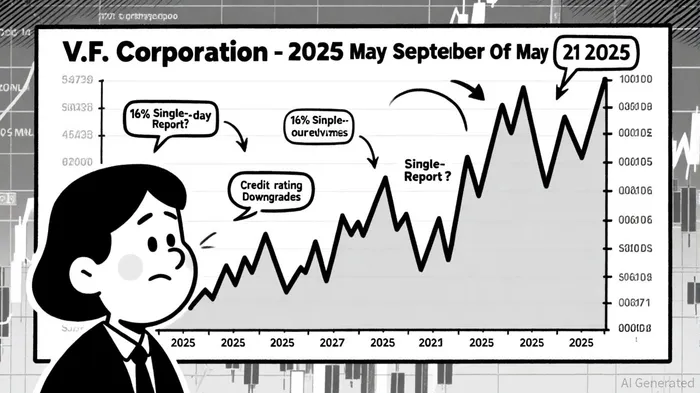
The lawsuit alleges that VFC and its executives overstated the effectiveness of its “Reinvent” strategy for the Vans brand while downplaying risks such as macroeconomic volatility and seasonal demand fluctuations[2]. These claims were exposed on May 21, 2025, when VFC reported fiscal 2025 results showing a 20% revenue decline for Vans—a dramatic deterioration from an 8% loss in prior periods[3]. The company attributed this to deliberate actions to “reset” the brand by cutting unprofitable segments, a move that sent its stock plunging 15.8% in a single day[4].
The financial implications are severe. VFC's credit ratings have been downgraded twice in 2025: S&P Global cut its rating to junk (BB) in November 2024 due to weak earnings and high leverage[5], while Moody's followed in June 2025 with a Ba2 rating, citing ongoing challenges in the Vans turnaround[6]. These downgrades increase borrowing costs and limit the company's flexibility to fund its restructuring efforts. Analysts estimate that VFC's debt-to-EBITDA ratio now exceeds 5x, well above the 3.5x thresholdT-- it had previously targeted[7].
Investor Sentiment and Stock Volatility
VFC's stock has exhibited extreme volatility since the lawsuit's announcement. As of September 19, 2025, the stock trades at $13.71, down 23.63% over the past 52 weeks[8]. Its beta of 1.72 indicates heightened sensitivity to market movements, a reflection of both the legal uncertainty and broader macroeconomic headwinds[9]. While 21 Wall Street analysts maintain a “Hold” consensus, the average price target of $16.20 implies an 18% upside from current levels[10]. However, this optimism is unevenly distributed: major firms like Barclays and Wells Fargo have slashed their price targets by 50% and 33%, respectively, citing the lawsuit's reputational and financial toll[11].
The mixed analyst outlook underscores a key dilemma for investors. Short-term traders might view the stock's 16% drop in May 2025 as a buying opportunity, particularly if the lead plaintiff deadline on November 12, 2025, fails to produce a settlement[12]. Yet long-term investors face a more daunting calculus. The lawsuit's allegations—particularly the claim that VFC's leadership misrepresented its ability to predict revenue growth—raise fundamental questions about the company's strategic credibility.
Short-Term vs. Long-Term Implications
For short-term traders, the lawsuit could create a “buy-the-dip” scenario if the market overreacts to the legal risks. Historical data shows that VFC's stock has rebounded modestly since its May 2025 low, closing at $14.39 on September 25, 2025[13]. This suggests that some investors are already discounting the lawsuit's worst-case outcomes. However, the stock's elevated volatility (beta of 1.72) and the lack of a clear resolution timeline mean that any gains could be swiftly reversed if the case escalates or if VFC's restructuring efforts stall[14].
Long-term investors, by contrast, must grapple with the reputational damage and operational risks. The lawsuit's focus on the Vans brand—a critical growth driver for VFC—highlights the company's struggle to adapt to shifting consumer preferences and global supply chain challenges[15]. Even if the legal case is resolved favorably, VFC's ability to regain investor trust will depend on its capacity to deliver consistent earnings and reduce leverage. The recent credit rating downgrades signal that rating agencies remain skeptical about the company's path to profitability[16].
Conclusion: A Cautionary Tale for Investors
The VFC lawsuit exemplifies the dual-edged nature of securities litigation risks. While the immediate stock price drop has created a potential short-term opportunity for contrarian traders, the broader implications for corporate governance and operational performance are deeply concerning. For long-term investors, the case serves as a stark reminder of the importance of due diligence in assessing management transparency and financial resilience.
As the lead plaintiff deadline approaches, investors should monitor two key developments: (1) the appointment of a lead plaintiff, which could influence the case's trajectory and settlement terms[17], and (2) VFC's progress in its Vans turnaround, including its ability to reduce debt and restore revenue growth. Until these uncertainties are resolved, VFC remains a high-risk proposition, with its stock price likely to remain tethered to the volatile narrative of its legal and operational challenges.





Comentarios
Aún no hay comentarios