
Securities Law Risks and Corporate Governance at Lantheus Holdings: A Closer Look at Investor Protection and Regulatory Exposure
The ongoing securities class-action lawsuit against Lantheus HoldingsLNTH--, Inc. (NASDAQ: LNTH) has cast a spotlight on the intersection of corporate governance, investor protection, and regulatory compliance in the pharmaceutical sector. Filing details reveal that investors who purchased shares between February 26, 2025, and August 5, 2025, are alleging that the company misrepresented the competitive landscape and pricing dynamics of its flagship product, Pylarify, a prostate cancer imaging agent. These claims, if proven, could have far-reaching implications for investor trust and regulatory oversight in the radiopharmaceutical industry.
Allegations and Legal Framework
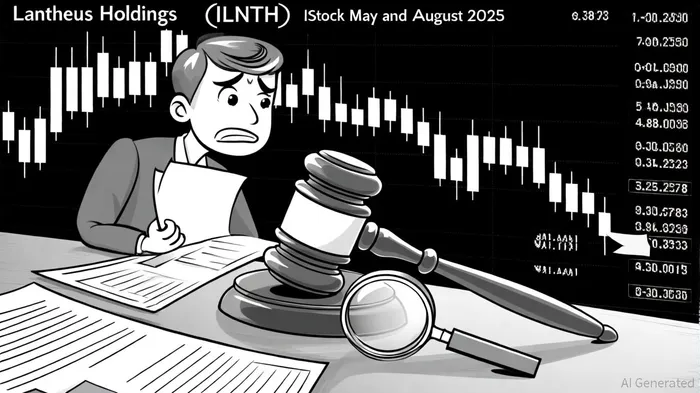
The lawsuit centers on allegations that Lantheus executives overstated Pylarify's market leadership while downplaying risks from pricing erosion and competitive pressures. According to a Bloomberg report and an EDGARIndex analysis, the company's stock price plummeted by 51% between May and August 2025 following the disclosure of underwhelming financial results and revised revenue projections. The plaintiffs argue that these disclosures exposed a lack of accurate market understanding, which had been concealed in prior statements, as alleged in a GlobeNewswire announcement.
Under Rule 10b-5 of the Securities Exchange Act of 1934, the plaintiffs must demonstrate that Lantheus made material misrepresentations, acted with scienter (intent or recklessness), and that these actions directly caused economic harm, as explained in a class-action guide. The case also invokes the Private Securities Litigation Reform Act (PSLRA), which allows investors to seek recovery for losses incurred during the specified class period. A lead plaintiff must be appointed by November 10, 2025, to represent the class, according to an investor alert.
Corporate Governance and Investor Protection
Lantheus' corporate governance practices have come under scrutiny as the lawsuit unfolds. While the company publicly documents its board committee charters and ethical guidelines, the allegations suggest gaps in oversight. For instance, the failure to disclose risks related to Pylarify's pricing strategy and competitive threats raises questions about the effectiveness of internal controls. A Reuters piece and SEC filings show that the company's executives sold shares under a Rule 10b5-1 trading plan in early 2025, potentially signaling insider awareness of impending challenges; the relevant SEC Form 4 supports this observation.
Investor protection mechanisms, such as transparency in financial disclosures and robust board oversight, are critical in preventing securities fraud. The lawsuit underscores the need for stronger governance frameworks to ensure that corporate leaders act in the best interests of shareholders. As noted by legal experts, the case could set a precedent for holding executives accountable for misleading statements in high-growth sectors like radiopharmaceuticals, according to an EDGARIndex assessment.
Regulatory Exposure and Market Implications
The lawsuit has broader implications for regulatory exposure. The U.S. Securities and Exchange Commission (SEC) has historically prioritized enforcement actions against companies that fail to meet disclosure obligations. While no direct SEC enforcement actions have been reported yet, the case aligns with the agency's focus on investor protection in volatile markets, as noted in an EDGARIndex note.
From a market perspective, the litigation could exacerbate stock price volatility and erode institutional confidence. Data compiled by Morningstar, reflected in FT Markets data, indicates that LNTH's stock lost 28.6% of its value in August 2025 alone, reflecting investor anxiety over the company's financial health. If the lawsuit proceeds to trial, potential penalties or settlement costs could further strain Lantheus' balance sheet, impacting its ability to fund R&D or expand its product portfolio.
Conclusion
The Lantheus Holdings lawsuit serves as a cautionary tale for investors and corporate leaders alike. It highlights the importance of rigorous corporate governance, transparent communication, and adherence to securities laws. For investors, the case underscores the need for due diligence in assessing management credibility and market risks. For regulators, it reinforces the role of enforcement in maintaining market integrity. As the legal proceedings unfold, the outcomes could reshape investor expectations and governance standards in the pharmaceutical sector.





Comentarios
Aún no hay comentarios