
Securities Fraud and Market Instability at Fly-E Group: Investor Risk Assessment and Legal Recourse in the Wake of Lithium Battery Scandals
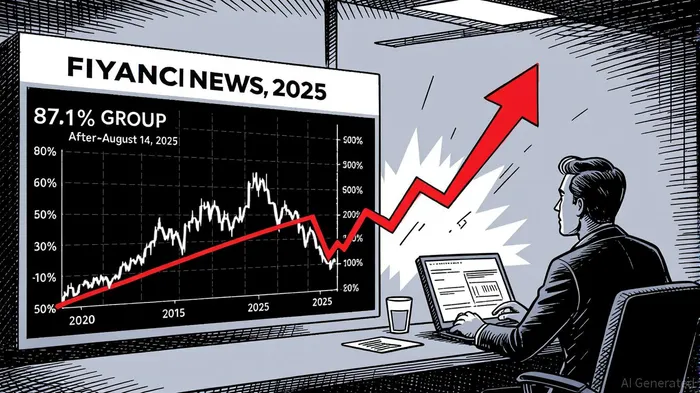
The lithium battery safety crisis at Fly-E GroupFLYE--, Inc. (NASDAQ: FLYE) has spiraled into a full-blown securities scandal, leaving investors reeling from a 87.1% stock price plunge and a cascade of legal challenges. According to a report by the Securities and Exchange Commission (SEC), Fly-E's delayed 10-Q filing on August 14, 2025, revealed a 32.3% year-over-year drop in net revenues for Q1 2026, attributed to lithium battery explosions in E-Bikes and E-Scooters that eroded consumer trust and shifted demand toward oil-powered vehicles[1]. This disclosure, coupled with a $2.0 million quarterly loss, triggered a liquidity crisis and raised red flags about the company's going-concern status[3].
The stock's collapse on August 15, 2025, was no accident. Investors who had bought into Fly-E's “green mobility” narrative now faced a reality check: the company had allegedly downplayed safety risks and supply chain issues while projecting inflated revenue forecasts. As stated by Bragar Eagel & Squire, P.C., a class-action lawsuit alleges that Fly-E's executives misrepresented the reliability of their lithium battery technology during the July 15–August 14, 2025, class period, misleading shareholders about the company's financial health[1]. The lawsuit further notes that Fly-E's delayed 10-Q filing and revenue decline were “material omissions” that directly caused the stock's freefall[2].
For shareholders, the fallout is twofold. First, the lithium battery incidents have exposed systemic risk management failures akin to those seen in the BoeingBA-- 737 MAX debacle, where safety oversights led to catastrophic financial and reputational damage[2]. Second, Fly-E's legal troubles—now including multiple class-action lawsuits and an SEC investigation—highlight the perils of investing in high-risk tech sectors without rigorous due diligence. Investors with losses exceeding $100,000 are urged to act swiftly: lead plaintiff deadlines expire on November 7 and November 10, 2025, as law firms like Glancy Prongay & Murray LLP and the Rosen Law Firm aggressively pursue claims[1][2].
Yet the broader lesson here isn't just about Fly-E—it's about investor risk assessment in an era of disruptive technologies. The U.S. Federal Aviation Administration's (FAA) recent safety alerts on lithium battery hazards underscore a critical truth: innovation without transparency is a recipe for disaster[1]. For Fly-EFLYE--, the lithium battery safety crisis has not only dented sales but also eroded trust in its corporate governance. As one expert analysis notes, “Emerging tech sectors require not just cutting-edge R&D but also robust compliance frameworks to mitigate unforeseen liabilities”[3].
What's next for Fly-E? The company's S-1 filing as an emerging growth company hints at a desperate bid to stabilize its Nasdaq listing, but with retail store closures and a 21% annual revenue decline already reported, the road to recovery looks treacherous[3]. For investors, the priority is clear: reassess exposure to high-risk tech plays, especially those with opaque supply chains or safety controversies. And for those already burned by Fly-E, legal recourse remains a viable path—provided they act before the November deadlines.
In the end, Fly-E's saga is a cautionary tale. As the SEC and courts untangle the web of alleged securities fraud, one thing is certain: in the high-stakes world of tech investing, ignoring red flags—whether in lithium batteries or financial disclosures—comes at your own peril.





Comentarios
Aún no hay comentarios