
Securities Fraud Allegations and Quanex Building Products: Assessing the Impact on Investor Confidence and Stock Valuation
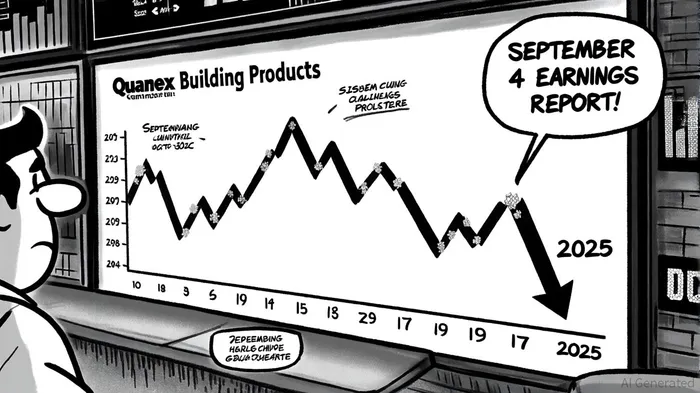
The recent securities fraud allegations against QuanexNX-- Building Products Corporation (NYSE: NX) have sparked significant market volatility and raised critical questions about investor confidence. A class action lawsuit initiated by the Law Offices of Howard G. Smith alleges that Quanex and its executives misled investors by failing to disclose operational deficiencies at its Tyman Mexico facility, which contributed to a sharp earnings decline and a 13% stock price drop on September 5, 2025 [1]. This case underscores the broader implications of securities fraud on corporate valuation and investor trust, particularly in an era where legal actions increasingly shape market dynamics.
Legal Allegations and Operational Mismanagement
The lawsuit claims that Quanex underinvested in tooling and equipment maintenance at its Tyman Mexico facility, leading to operational challenges that degraded financial performance. These issues, identified midyear during the integration of the Tyman acquisition, were allegedly concealed until September 4, 2025, when the company disclosed a significant earnings shortfall and revised its full-year guidance downward [2]. According to a report by BusinessWire, the CEO acknowledged during an earnings call that these problems had been known earlier but were not adequately addressed, compounding investor skepticism [3]. Such operational mismanagement not only eroded EBITDA but also exposed systemic governance flaws, raising concerns about management's transparency.
Stock Price Reaction and Earnings Disappointment
Quanex's stock price plummeted in the wake of the September 4 earnings report. While the company reported a 76.7% year-over-year revenue increase to $495.3 million, driven by the Tyman acquisition, its earnings per share (EPS) of $0.69 fell short of the $0.85 forecast, marking an 18.1% miss [4]. The stock closed at $17.02 on September 8, a 6.4% drop from its $20.91 level on September 5 [5]. This decline reflects the market's punitive reaction to both the earnings miss and the revelation of operational underperformance. Notably, Quanex's adjusted EBITDA of $70.3 million also fell below analyst estimates of $80.57 million, further signaling financial strain [6].
Historical backtesting of NX's performance following earnings misses since 2022 reveals an average 1-day price drop of -3.96% and a cumulative 30-day decline of -18.4%, underscoring the market's sustained skepticism post-disappointment. These results suggest that the recent 6.4% drop is consistent with historical patterns, emphasizing the need for risk-averse strategies in the aftermath of such events.
Investor Protection and Market Reactions
The Law Offices of Howard G. Smith has a track record of pursuing securities fraud cases with measurable market impacts. Historical data from the firm's cases reveals an average stock price drop of 13% in the month preceding a class action filing due to “corrective disclosures” [7]. For instance, DoubleVerifyDV-- Holdings, Inc. (DV) saw its stock fall 36% after allegations of ineffective services were exposed, while StrideLRN--, Inc. (LRN) experienced an 11.7% decline following similar disclosures [8]. These precedents highlight the role of legal actions in correcting market mispricing and enforcing accountability. In Quanex's case, the firm's 75% success rate in achieving settlements—typically recovering 50% of investor losses—suggests that affected shareholders may see partial redress [9].
Corporate Governance and Future Outlook
Quanex's response to the crisis includes debt repayment of $51.25 million and a revised target for $45 million in cost synergies from the Tyman integration [10]. CEO George Wilson emphasized the company's focus on operational stabilization and capital returns, including a $0.08-per-share dividend announced on September 16 [11]. However, the stock's operating margin of -54.7% in Q3 2025—compared to 8.4% in the same period in 2024—underscores persistent challenges [12]. Analysts remain divided: while some maintain a “Strong Buy” rating based on undervaluation, others caution that governance reforms and operational transparency will be critical to restoring investor confidence [13].
Conclusion
The Quanex case exemplifies the interplay between securities fraud, stock valuation, and investor trust. Legal actions by firms like Howard G. Smith not only penalize corporate misconduct but also serve as catalysts for governance reforms. For Quanex, the path forward hinges on addressing operational inefficiencies, demonstrating transparency, and aligning with investor expectations. As markets increasingly prioritize accountability, companies that fail to adapt risk prolonged valuation declines and eroded stakeholder trust.





Comentarios
Aún no hay comentarios