
Securities Class Action Risks and Investment Due Diligence in Biotech Stocks: Navigating Narrow Pipelines and Regulatory Dependency
The Perils of Regulatory Dependency
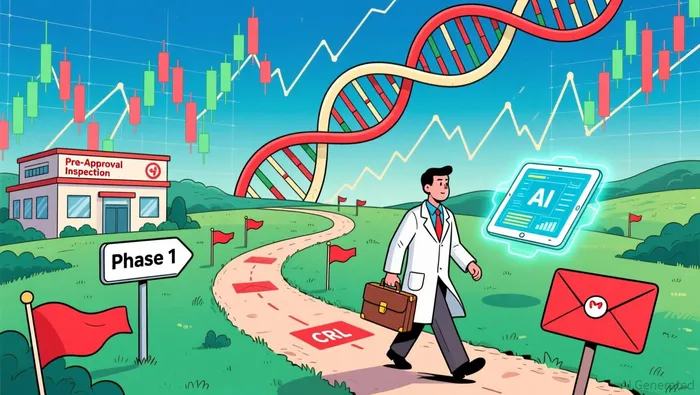
Clinical-stage biotechs are uniquely exposed to regulatory uncertainty. Between 2023 and 2025, 57% of SCAs in the sector were tied to the pre-approval phase of drug development (Phases 1–3 and NDA), according to a Streamline AI piece. Consider the case of MoonLakeMLTX-- Immunotherapeutics, which faced a securities class action after its Phase 3 VELA trials failed, triggering a near 90% stock price drop, according to a WTW report. The company had previously touted its drug candidate's "superior clinical data" and "unique Nanobody structure," allegations later deemed misleading in the WTW report. This case exemplifies how overpromising in the absence of robust clinical validation can lead to both market collapse and legal exposure.
Regulatory dependency is further compounded by the FDA's recent "Radical Transparency" initiative, which mandates real-time publication of Complete Response Letters (CRLs) for NDAs and BLAs, according to an Orrick article. While this policy aims to democratize access to regulatory insights, it also amplifies reputational risks for companies facing setbacks. For instance, a CRL published in openFDA's database can immediately erode investor confidence, as seen in the aftermath of MoonLake's failure, according to the WTW report.
Due Diligence Frameworks: Beyond Clinical Data
Investors must adopt rigorous due diligence frameworks to assess both scientific and regulatory risks. Key components include:
Regulatory Compliance and Documentation:
Clinical-stage biotechs must demonstrate meticulous preparation for FDA submissions, including complete IND, NDA, and BLA applications, according to a Phoenix Strategy article. Allurion Technologies, for example, advanced its FDA Pre-Market Approval (PMA) process by passing pre-approval inspections with "zero findings" and securing no additional clinical data requests during its Day-100 Meeting, according to an Investing.com article. Such milestones signal a company's readiness to navigate regulatory scrutiny.Intellectual Property (IP) Strategy:
A robust patent portfolio is critical for investor confidence. Companies must prove clear ownership of IP and transparency about litigation risks, according to the Phoenix Strategy article. For narrow-pipeline biotechs, IP strength often determines the commercial viability of their sole product candidate.IT and Cybersecurity Due Diligence:
In mergers and acquisitions, IT systems must be validated for compliance with FDA 21 CFR Part 11 and GxP regulations, according to the Intuition Labs article. Cybersecurity vulnerabilities, in particular, pose existential risks, as data breaches can derail clinical trials and damage reputations.
AI and Data-Driven Tools: A New Frontier
Investors increasingly rely on AI-driven models to predict FDA approval probabilities. For example, Python-based frameworks using historical clinical trial data and market reactions can estimate stock price movements post-approval, according to a SparkCo article. Companies like Atomwise and BPGbio leverage deep learning to accelerate drug discovery, improving the likelihood of regulatory success, according to a Labiotech article. However, these tools are not without limitations. Model interpretability remains a hurdle, as regulators demand transparency in AI-driven decisions, according to an Intuition Labs article.
For corporate transparency, AI-powered platforms like Streamline AI and Tonkean automate legal workflows, reducing administrative burdens for biotech firms, according to the Streamline AI piece. These tools help manage complex tasks such as clinical trial agreements and patent applications, ensuring compliance with evolving regulatory standards.
Conclusion: Balancing Innovation and Risk
The biotech sector's allure lies in its potential to deliver groundbreaking therapies, but this comes at the cost of heightened litigation and regulatory risks. Investors must prioritize companies with transparent communication, robust IP strategies, and proven regulatory preparedness. While AI and data-driven tools offer valuable insights, they cannot replace the need for human judgment in assessing the nuances of clinical-stage science. As the FDA's transparency mandate reshapes the landscape, the ability to navigate these challenges will define the next generation of successful biotech investments.





Comentarios
Aún no hay comentarios