
Securities Class Action Litigation and Its Impact on Investor Recovery in the Retail Petcare Sector
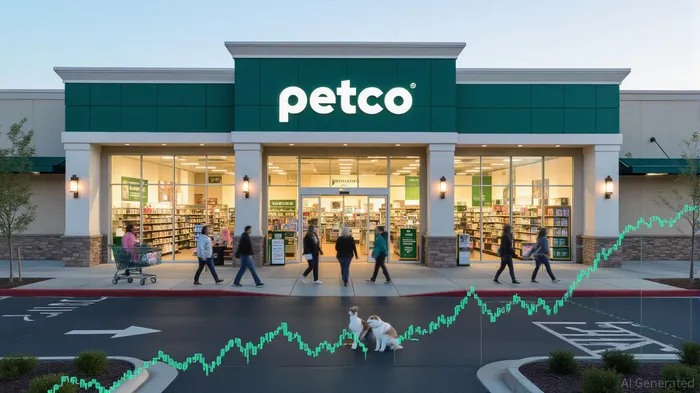
The retail petcare sector, once buoyed by pandemic-driven demand for premium pet products and services, has become a focal point for securities class action litigation. At the center of this legal storm is Petco HealthWOOF-- and Wellness (NASDAQ: WOOF), a company that epitomizes the risks of overreliance on temporary market conditions and the consequences of opaque corporate governance. As of June 2025, Petco faces a high-profile lawsuit alleging violations of federal securities laws, with investors seeking redress for alleged misrepresentations about the sustainability of its business model. This case offers a critical lens through which to examine corporate accountability, market transparency, and the strategic role of legal recourse in safeguarding investor value during business model failures.
The Petco Case: A Cautionary Tale of Pandemic-Driven Optimism
Petco's litigation saga began in January 2021, when the company positioned itself as a leader in the "pet humanization" and "premiumization" trends. During the pandemic, soaring pet adoption rates and a cultural shift toward treating pets as family members drove demand for high-margin products like organic pet food and wellness services. Petco capitalized on this, touting its transformation into a "health-focused pet wellness company" and projecting long-term profitability from these trends.
However, by mid-2023, the company's financial performance began to unravel. Declining comparable sales, a $1.2 billion goodwill impairment, and a series of executive departures signaled cracks in its strategy. In March 2024, management admitted on an investor call that the premium product model was unsustainable, a revelation that triggered a 19.53% stock price drop. The situation worsened in June 2025, when Petco reported a 1.3% year-over-year decline in first-quarter sales, leading to a 23.2% stock price plunge.
The lawsuit, filed in July 2025, alleges that Petco and its executives violated Sections 10(b) and 20(a) of the Securities Exchange Act of 1934 by failing to disclose the fragility of its business model. Specifically, the complaint claims the company overstated the durability of pandemic-driven demand while downplaying the risks of shifting consumer preferences toward cheaper goods. This pattern of alleged misrepresentation highlights a broader issue: the tension between short-term market optimism and long-term strategic realism.
Corporate Accountability and the Cost of Misaligned Expectations
The Petco case underscores the importance of corporate accountability in high-growth sectors. Companies that thrive on temporary demand spikes—such as those tied to public health crises or cultural shifts—must balance investor optimism with transparent risk disclosures. Petco's failure to do so created a disconnect between its public narrative and its operational reality, eroding investor trust and triggering legal action.
This misalignment is not unique to Petco. The broader retail petcare sector has seen similar challenges, with firms like Del Monte Foods (another pandemic-driven success story) also facing litigation over unsustainable business models. These cases reveal a recurring theme: when companies overindex on high-margin strategies without contingency planning, they expose themselves to regulatory scrutiny and investor backlash.
Market Transparency: A Double-Edged Sword
Transparency in corporate communications is both a shield and a sword. For Petco, the lack of transparency during its decline exacerbated investor losses and fueled litigation. Conversely, companies that proactively disclose risks—such as shifting consumer behavior or supply chain vulnerabilities—can mitigate legal exposure and maintain investor confidence.
The Petco litigation also highlights the role of market transparency in investor recovery. While the case is ongoing, it has already prompted regulatory attention and forced the company to restructure its leadership and product offerings. For investors, this underscores the importance of scrutinizing not just financial metrics but also management's strategic rationale and risk disclosures.
Strategic Legal Recourse: A Tool for Investor Protection
Securities class actions serve as a critical mechanism for holding corporations accountable. In the Petco case, the lawsuit seeks to recover damages for investors who purchased shares between January 2021 and June 2025, a period marked by alleged misrepresentations. While the outcome remains uncertain, the filing itself has already influenced market dynamics, pressuring Petco to address governance flaws and align its strategy with market realities.
For investors, this case illustrates the strategic value of legal recourse in protecting value. By leveraging class action lawsuits, shareholders can compel companies to improve transparency, rectify mismanagement, and, in some cases, secure financial compensation. However, such actions are not without risks. The Petco case, like many post-pandemic lawsuits, hinges on proving that the company's statements were materially misleading—a legal standard that requires robust evidence and often results in protracted litigation.
Investment Implications and Strategic Recommendations
The Petco litigation offers several lessons for investors in the retail petcare sector:
Diversify Exposure to High-Growth Sectors: While the petcare industry remains resilient, overreliance on a single company's stock—especially one tied to volatile trends—can amplify risk. Investors should balance their portfolios with a mix of defensive and cyclical assets.
Scrutinize Earnings Guidance and Leadership Changes: Sudden revisions to financial projections or executive departures often signal underlying issues. Petco's downward guidance in 2023 and 2024, coupled with leadership turmoil, were early red flags.
Monitor Legal and Regulatory Developments: Securities litigation can significantly impact stock valuations. Investors should track class action filings and regulatory actions, as these can influence market sentiment and corporate behavior.
Prioritize Companies with Adaptive Business Models: Firms that demonstrate agility in responding to market shifts—such as introducing lower-cost products or diversifying revenue streams—are better positioned to avoid litigation and sustain investor confidence.
Conclusion
The Petco case is a microcosm of the challenges facing the retail petcare sector in the post-pandemic era. It highlights the perils of conflating temporary demand with long-term sustainability and the critical role of legal recourse in holding corporations accountable. For investors, the takeaway is clear: transparency, adaptability, and a healthy skepticism of overly optimistic narratives are essential in navigating high-growth industries. As the litigation unfolds, it will serve as a benchmark for how corporate accountability and market transparency shape investor recovery in an increasingly litigious business environment.





Comentarios
Aún no hay comentarios