
Sector Rotation Strategies in the German Export Crisis: Navigating U.S. Tariff Threats
The clock is ticking for German exporters. With the August 1, 2025, deadline looming for U.S. tariffs on autos, metals, and other sectors, investors face a stark choice: rotate out of vulnerable industries or risk significant losses. While the automotive and metals sectors brace for 25%+ tariffs, pharma, green tech, and domestic infrastructure offer refuge. This article outlines a tactical playbook for investors to navigate this crisis while positioning for long-term growth.
The Auto/Metals Sector: A Looming Disaster
The German auto industry—BMW, Volkswagen, and Daimler—faces existential pressure as U.S. tariffs on vehicles and parts (Section 232) hit 25% on August 1. These tariffs, layered with 50% duties on imported aluminum and steel, could slash export profits.
Why worry?
- Cost inflation: Steel prices in Germany rose 14% year-to-date, squeezing margins.
- Demand destruction: U.S. auto imports from Germany fell 7.7% in May 2025 as buyers pre-emptively cut orders.
- Geopolitical risks: Legal battles over tariff exemptions (e.g., EU's delayed countermeasures) add uncertainty.
Investment advice: Exit auto/metals equities (e.g., DAX-heavy stocks like THG or SREN) before August 1. These sectors may underperform for years unless companies pivot to U.S. manufacturing or secure exemptions.
Pharma and Green Tech: The Tariff-Proof Fortresses
While autos falter, pharma and green tech sectors are shielded by exemptions and strategic foresight.
Pharmaceuticals: A Safe Harbor
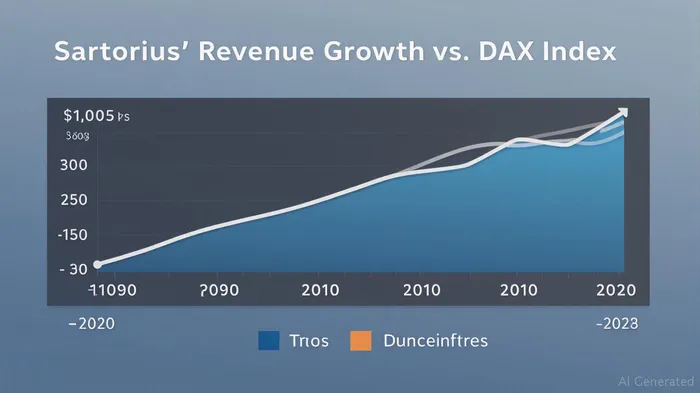
Germany's pharma giants—Bayer, Merck, and Sartorius—benefit from U.S. exemptions on critical drugs and medical devices. Even if tariffs expand, their supply chains are resilient:
- Regulatory safeguards: Annex II protections for APIs (active pharmaceutical ingredients) remain intact.
- Global diversification: Sartorius's biotech equipment sales surged 18% in 2024, fueled by mRNA vaccine demand.
Green Tech: Betting on the Energy Transition
Germany's green tech sector—Siemens Energy, NextEra Europe, and EV battery makers—is thriving despite headwinds:
- EV resilience: U.S.-made German EVs (e.g., Mercedes' Alabama plant) dodge tariffs, driving 19% domestic EV production growth in 2025.
- Infrastructure tailwinds: The EU's €600 billion grid CAPEX plan and hydrogen initiatives (H2Global) provide decades of demand.
Domestic Infrastructure: The Eurozone's New Safe Asset
Investors should also favor domestic infrastructure plays, which benefit from Germany's €46 billion tax reforms and EU funding. Key themes:
1. Grid modernization: Utilities like RWE and EnBW are upgrading networks to support renewable energy.
2. EV charging networks: Allego and IONITY are scaling megawatt stations for trucks and buses.
3. AI-driven efficiency: Siemens' digital twin technology cuts industrial energy costs by 15–20%.
The Critical August 1 Catalyst
The August 1 deadline is a binary event:
- Worst-case scenario: Tariffs bite, triggering a 1–2% GDP contraction (per Moody's). Auto stocks collapse; the DAX drops to 14,000.
- Best-case scenario: U.S.-EU trade talks secure exemptions, lifting pharma/green tech valuations.
Risk Management: Euro Hedging Is Non-Negotiable
With the euro down 8% against the dollar year-to-date, currency risk compounds equity losses. Use currency forwards or ETFs like DBV (short euro exposure) to hedge.
Final Call: Rotate Now, Rebalance Later
Sell: Auto/metals stocks (DAX, BMW, VW).
Buy: Pharma (BAYRY, MRK), green tech (SIEGY, NEE), and infrastructure (RWEGY, ALGEO).
Hedge: Use euro short positions to mitigate currency volatility.
The U.S. tariff war isn't just a German problem—it's a global test of supply chain resilience. Investors who pivot to tariff-proof sectors now will outperform in the next phase of this crisis.







Comentarios
Aún no hay comentarios