
Sector Rotation and Market Catalysts: What to Watch for Volatility and Opportunity in the Next Trading Session
The U.S. economy is navigating a complex macroeconomic landscape as it enters the late stage of its current expansionary cycle. According to a report by the Conference Board, the Leading Economic Index® (LEI) for the U.S. declined by 0.5% in August 2025, signaling growing headwinds amid weak manufacturing orders, labor market softness, and a narrowing yield spread. This six-month decline of 2.8% underscores a slowing growth trajectory, with higher tariffs expected to weigh on momentum through 2026. However, the Philadelphia Federal Reserve's Survey of Professional Forecasters offers a cautiously optimistic outlook, projecting real GDP growth of 1.9% in 2025 and 1.8% in 2026, with unemployment stabilizing around 4.2%. This duality-between decelerating indicators and marginal growth optimism-sets the stage for strategic sector rotation and macro-driven stock selection.
Strategic Sector Positioning: From Growth to Cyclical Rebalancing
As the economic cycle matures, capital is shifting away from the high-flying growth and technology stocks that dominated earlier in the decade. A report by Financial Content highlights a pronounced rotation toward undervalued cyclical sectors such as consumer discretionary, industrials, and materials. This shift is fueled by moderating inflationary pressures, the Federal Reserve's first rate cut of 2025, and historically favorable performance trends for cyclical sectors during the November-to-April period.
Defensive sectors like utilities and healthcare are also gaining traction as investors seek resilience in a high-rate environment. Meanwhile, international markets, particularly the MSCI EAFE index, have outperformed U.S. equities, driven by attractive valuations and favorable currency dynamics. Morgan Stanley Research further notes that U.S. and Japanese equities are likely to remain attractive in 2025, supported by disinflationary trends and potential monetary easing.
Macro-Driven Catalysts: Trade Policy, Inflation, and Global Diversification
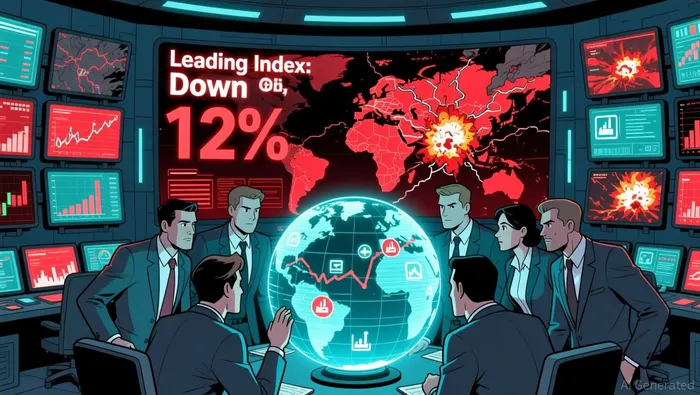 Trade policy developments are emerging as a pivotal macroeconomic catalyst. The U.S. imposition of tariffs has created uncertainty, prompting a market tilt toward defensive and value-sensitive industries. J.P. Morgan Research warns of a broad-based downshift in global growth due to trade policy shifts, with inflationary pressures increasingly concentrated in the U.S.. This environment demands a nuanced approach to sector selection, as policy-driven volatility could amplify divergences between sectors and geographies.
For instance, traditional energy sectors present a bifurcated opportunity: oil services benefit from sustained demand, while renewables face regulatory and cost challenges. Similarly, commercial real estate-particularly office and multifamily REITs-struggles with declining occupancy rates. Conversely, sectors integrating artificial intelligence (AI) infrastructure, defense and aerospace, and healthcare with AI applications are positioned to capitalize on long-term trends and policy tailwinds.
Navigating Volatility: Opportunities and Risks
Investors must balance the allure of cyclical sectors with the risks of overexposure to macroeconomic shocks. The Federal Reserve's evolving rate policy, coupled with potential deregulation and new tariffs, introduces a wildcard element that could disrupt growth and inflation dynamics. A diversified approach-combining exposure to high-conviction cyclical sectors with defensive holdings and international equities-may offer a buffer against volatility. Moreover, the bifurcation in energy and real estate underscores the need for granular stock selection. For example, AI-driven healthcare providers or defense contractors with strong government contracts may outperform broader sector indices, while underperforming sub-sectors like struggling office REITs warrant caution.
Conclusion
The late-stage expansion presents both challenges and opportunities for investors. A strategic rebalancing toward cyclical sectors, paired with a macro-aware approach to trade policy and global diversification, can help navigate the volatility of this phase. As the Federal Reserve's policy trajectory and international growth dynamics unfold, sector-specific insights and disciplined risk management will be critical to capturing upside potential while mitigating downside risks.







Comentarios
Aún no hay comentarios