
Sector Rotation in 2025: The Great Rebalancing as Tech Loses Luster and Healthcare, Energy Shine
As 2025 draws to a close, the S&P 500 has witnessed a dramatic realignment of sector dynamics, driven by macroeconomic uncertainties, AI-driven innovation, and shifting investor sentiment. This article dissects the leading and lagging sectors as of December 31, 2025, while contextualizing the broader "Great Rebalancing" trend that has reshaped capital flows in Q4.
Leading Sectors: AI-Driven Growth and Essential Demand
Communication Services emerged as a standout performer in Q4 2025, with a staggering 30.4% gain over the trailing six months. This surge was fueled by resilient digital advertising spending and the sector's integral role in advancing AI infrastructure (according to FactSet analysis). Schwab's sector analysis further reinforced its "Outperform" rating, citing its alignment with AI adoption.
Health Care experienced a remarkable turnaround, becoming the best-performing S&P 500 sector in October 2025. Factors such as pharmaceutical innovation, AI disruption in diagnostics, and demographic tailwinds (e.g., an aging population) drove this momentum. The Health Care Select Sector SPDRXLV-- (XLV) attracted $872 million in net inflows during the quarter, reflecting strong investor confidence. 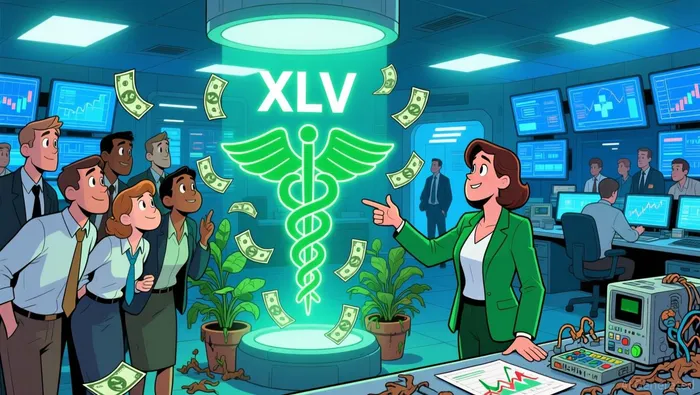
Industrials also gained traction, benefiting from AI-driven automation and infrastructure spending. SchwabSCHW-- highlighted its potential to capitalize on the AI ecosystem, upgrading it to "Outperform".
Lagging Sectors: Overvaluation and Structural Headwinds
Conversely, Consumer Discretionary, Real Estate, and Utilities were downgraded to "Underperform" due to challenges like consumer stress and mixed outlooks for office sector recovery (according to FactSet data). Financials and Energy faced outflows, with the Financial Select Sector SPDR (XLF) losing $698 million and the Energy Select Sector SPDR (XLE) shedding $523 million. These outflows underscored investor caution amid concerns over interest rate volatility and energy transition risks.
The Great Rebalancing: A Shift in Investor Priorities
December 2025 marked a pivotal shift as investors pivoted away from overvalued technology stocks toward defensive and value-oriented sectors. This "Great Rebalancing," as termed by market analysts, was driven by fears of macroeconomic turbulence in 2026, including potential tariff impacts and inflationary pressures (according to market analysts).
Healthcare and Energy became key beneficiaries of this reallocation. Energy companies like Exxon Mobil and NextEra Energy were re-rated as essential infrastructure players supporting the AI ecosystem. Similarly, healthcare's essential demand and innovation-driven growth made it a safe haven amid uncertainty (according to financial analysis).
ETF flows mirrored this trend, with tech-focused mutual funds experiencing significant outflows, while healthcare and energy ETFs saw record inflows (according to market data).
Implications for 2026
The sector rotation observed in Q4 2025 signals a strategic recalibration by investors. As AI adoption accelerates, sectors like Communication Services and Industrials are likely to remain in favor. However, the resurgence of healthcare and energy highlights the growing importance of defensive and essential infrastructure plays in an uncertain macroeconomic environment.
For 2026, the challenge will be balancing exposure to high-growth AI-related sectors with the stability offered by healthcare and energy. Investors must remain agile, leveraging insights from sector rotation trends to navigate potential volatility.







Comentarios
Aún no hay comentarios