
SEC's Taxonomy Balances Innovation and Investor Protection
The U.S. Securities and Exchange Commission (SEC) is moving forward with a long-anticipated "token taxonomy" to clarify how cryptocurrencies are classified under securities law, a move that could redefine the regulatory landscape for digital assets. Chair Paul Atkins outlined the initiative during remarks at the Federal Reserve Bank of Philadelphia's Fintech Conference, emphasizing a framework rooted in the Howey Test—a 1946 Supreme Court standard for identifying investment contracts, according to a Benzinga report. The plan seeks to categorize crypto assets into four groups, with most tokens trading today notNOT-- classified as securities, as noted in a Cryptobriefing analysis.
Atkins detailed that digital commodities tied to decentralized systems, collectibles like NFTs, and utility tokens such as memberships or tickets would fall outside securities regulation, according to the Cryptobriefing analysis. In contrast, tokenized securities—representing financial ownership—would remain under the SEC's purview, as noted in the Cryptobriefing analysis. 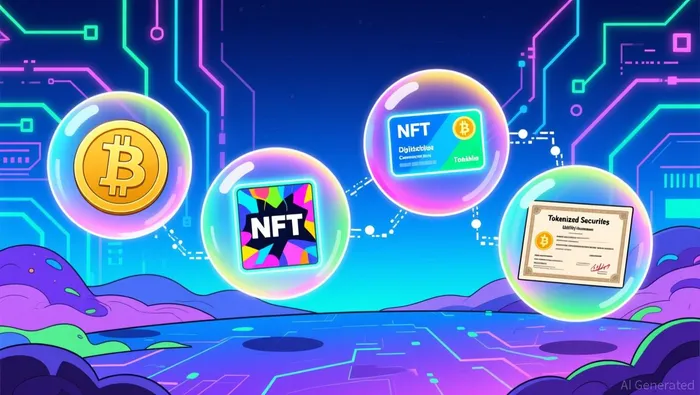 Crucially, the taxonomy acknowledges that investment contracts may lose their securities status once projects decentralize or issuers cease active control, according to a Benzinga report. "Most crypto tokens trading today are not themselves securities," Atkins stated, noting that initial offerings could still be subject to securities laws but not necessarily ongoing transactions, as noted in a Cryptobriefing analysis.
The initiative aligns with broader efforts to modernize crypto oversight, including the SEC's "Project Crypto," which aims to streamline compliance for developers and investors, according to a Benzinga report. Atkins also highlighted plans to allow certain tokens to trade on non-SEC regulated platforms, such as those overseen by the Commodity Futures Trading Commission (CFTC) or state regulators, according to the Benzinga report. This approach contrasts with former Chair Gary Gensler's enforcement-heavy strategy, focusing instead on balancing innovation with investor protection, according to a Blockonomi report.
Meanwhile, the SEC's collaboration with Congress is gaining momentum. Multiple market structure bills, including the House-passed CLARITY Act and Senate proposals, seek to resolve jurisdictional disputes between the SEC and CFTC over digital assets, as noted in a CryptoSlate report. The Senate Agriculture Committee's draft bill, for instance, defines "digital commodities" like BitcoinBTC-- and EthereumETH-- under CFTC oversight while reserving SEC authority for "investment contracts," as described in a Cryptopolitan analysis. These legislative efforts aim to create a unified regulatory framework, reducing ambiguity for firms navigating overlapping mandates, according to a Coinotag report.
The regulatory shift has also spurred market innovation. Nasdaq recently submitted a groundbreaking application to the SEC to launch a tokenized trading platform, enabling blockchain-based settlement of securities, as described in a Carlton Fields report. This move aligns with the Trump administration's push to position the U.S. as the "crypto capital of the world," as noted in a Carlton Fields report. If approved, Nasdaq's platform would allow investors to trade tokenized securities alongside traditional assets, leveraging a permissioned blockchain operated by the Depository Trust Company (DTC), according to the Carlton Fields report.
Atkins reiterated that the new taxonomy does not signal a relaxation of enforcement. "Fraud is fraud," he emphasized, reaffirming the SEC's commitment to penalizing misconduct, according to a Blockonomi report. The agency will maintain authority over tokenized versions of traditional assets, such as blockchain-based stocks, as noted in the Blockonomi report. Additionally, the SEC is exploring exemptions for "super-apps" that handle multiple asset types under a single regulatory umbrella, according to a Benzinga report.
As the SEC finalizes its guidelines, stakeholders are closely monitoring how the taxonomy will interact with pending legislation and market developments. With Congress aiming to pass comprehensive crypto laws by late 2025, according to a Benzinga report, the U.S. appears poised to solidify its role as a global fintech leader, according to Bernstein, which cited the GENIUS and CLARITY Acts as catalysts for institutional adoption, as noted in a CoinDesk report.
---






Comentarios
Aún no hay comentarios