
The SEC's Delay on Grayscale Polkadot Trust ETF and Its Implications for Institutional Adoption of Crypto
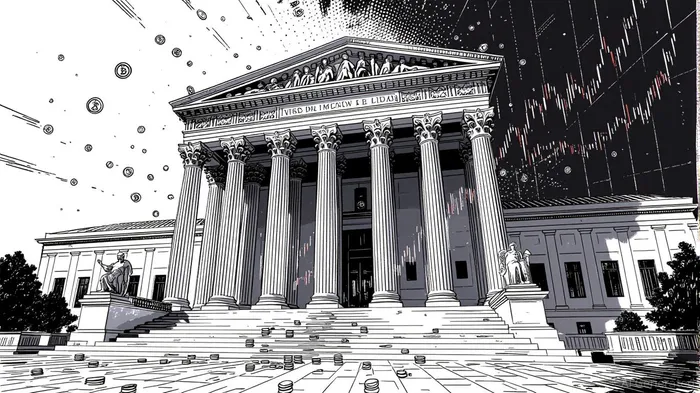
The U.S. Securities and Exchange Commission’s (SEC) prolonged review of the Grayscale PolkadotDOT-- Trust ETF has become a focal point for institutional investors navigating the evolving crypto landscape. Initially slated for approval by June 2025, the decision was pushed to November 8, 2025, reflecting the SEC’s cautious approach to evaluating digital assetDAAQ-- products [1]. This delay, part of a broader pattern affecting XRPXRP--, SolanaSOL--, and LitecoinLTC-- ETFs, underscores the agency’s prioritization of investor protection, market integrity, and custody frameworks [2]. For institutional investors, the implications are twofold: strategic market positioning must adapt to regulatory uncertainty, while risk assessment frameworks must account for prolonged volatility and shifting compliance landscapes.
Strategic Market Positioning in a Regulatory Vacuum
Institutional adoption of crypto ETFs hinges on regulatory clarity, yet the SEC’s delays have forced investors to adopt a dual strategy. On one hand, firms are hedging bets by allocating capital to already-approved products like BitcoinBTC-- and EthereumETH-- ETFs, which have attracted over $30.7 billion in net inflows since their launch [4]. On the other, they are preparing for a potential influx of altcoin ETFs by diversifying exposure to projects with strong utility, such as Polkadot’s cross-chain interoperability or XRP’s cross-border payment solutions [5].
For example, Grayscale’s Polkadot ETF, if approved, could provide institutional access to DOT without the complexities of direct custody, leveraging CoinbaseCOIN-- Custody’s infrastructure [1]. This mirrors the success of Bitcoin ETFs, which normalized crypto for pension funds and family offices by offering regulated liquidity [1]. However, the SEC’s extended review periods—now pushing into October and December 2025 for other ETFs—have created a “wait-and-see” environment. Institutions are increasingly adopting multi-strategy platforms that balance exposure to approved ETFs with staking-enabled products and futures, mitigating risks from regulatory ambiguity [3].
Regulatory Risk Assessment: Balancing Innovation and Compliance
The SEC’s delays highlight its focus on mitigating risks such as market manipulation, custody vulnerabilities, and investor education. For instance, the agency has requested additional time to assess generic listing rules for spot crypto ETFs, a move that could streamline future approvals but prolongs current uncertainty [2]. Institutions are responding by embedding regulatory risk into their investment frameworks.
One key area is custody. The SEC’s scrutiny of custodial arrangements—such as Coinbase Custody’s role in the Polkadot ETF—has prompted firms to prioritize partnerships with institutional-grade custodians compliant with SEC guidelines [1]. Similarly, the recent GENIUS Act, which mandates 1:1 reserves for stablecoins, has set a precedent for transparency, reducing counterparty risks for stablecoin-linked ETFs [3].
Another risk factor is macroeconomic volatility. While Bitcoin ETFs have demonstrated resilience, their performance remains correlated with Fed policy. For example, Bitcoin’s dip below $110K in Q3 2025 coincided with Fed rate cut uncertainty, illustrating how traditional macro factors still dominate institutional decision-making [5]. This has led to a hybrid approach: investors are pairing crypto ETFs with traditional assets to hedge against sector-specific shocks.
Broader Market Implications and the Path Forward
The SEC’s actions are shaping a broader narrative around crypto’s institutional legitimacy. Delays, while frustrating, may ultimately strengthen market foundations by ensuring robust frameworks for custody, liquidity, and investor protection [4]. For example, the SEC’s collaboration with exchanges like Nasdaq to develop standardized listing rules could reduce approval timelines for future ETFs, fostering a more predictable environment [2].
However, prolonged uncertainty risks stifling innovation. The SUISUI-- token’s 0.5% price dip following the SEC’s delay of the 21Shares SUI ETF illustrates how regulatory signals directly impact market sentiment [2]. Institutions are thus prioritizing tokens with clear use cases and regulatory alignment, such as Solana’s high-throughput blockchain or XRP’s established payment network [5].
Conclusion
The SEC’s delay on the Grayscale Polkadot Trust ETF is emblematic of a regulatory balancing act: fostering innovation while safeguarding investors. For institutional players, this means adopting agile strategies that blend approved products with forward-looking bets on utility-driven assets. As the SEC works toward a unified framework, the crypto market’s institutional adoption will likely hinge on three pillars: regulatory clarity, custody innovation, and macroeconomic resilience. The November 2025 decision on the Polkadot ETF could serve as a litmus test for whether the SEC’s cautious approach will catalyze or constrain the next wave of institutional capital.
Source:
[1] SEC delays Grayscale's Polkadot ETF decision until June [https://www.mitrade.com/insights/news/live-news/article-3-780825-20250425]
[2] SEC Delays 7 Crypto ETF Decisions Until October 2025 Deadlines [https://yellow.com/news/sec-delays-7-crypto-etf-decisions-until-october-2025-deadlines]
[3] GENIUS Act explained: What it means for crypto and digital assets [https://www.ssga.com/us/en/intermediary/insights/genius-act-explained-what-it-means-for-crypto-and-digital-assets]
[4] Crypto Safety: September 2025 Outlook Contents Export [https://aurpay.net/aurspace/safe-crypto-investments-2025-q3/]
[5] As Crypto Gains Momentum, Solana and XRP Shine [https://www.cmegroup.com/openmarkets/equity-index/2025/As-Crypto-Gains-Momentum-Solana-and-XRP-Shine.html]





Comentarios
Aún no hay comentarios