
SEC Backs Crypto Custody Education, Launches Blockchain Securities Pilot
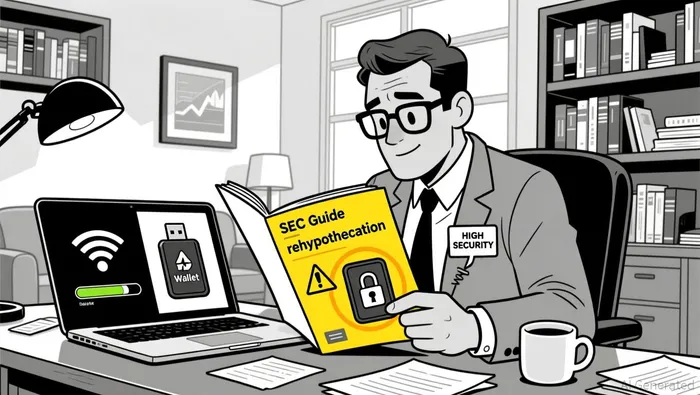
The SEC has shifted its focus to investor education, recently releasing a detailed guide on crypto asset custody for retail investors. The guide outlines different methods for holding crypto assets and highlights the benefits and risks associated with each. It is part of a broader regulatory pivot under new leadership at the agency.
The guide covers the basics of crypto custody, emphasizing the importance of understanding the difference between hot and cold wallets. Hot wallets, connected to the internet, are convenient for transactions but more vulnerable to cyber threats. Cold wallets, such as hardware devices or paper backups, offer greater security but carry the risk of permanent loss if mishandled.
In a notable move, the SEC has also approved a pilot program for a major stock clearinghouse to test blockchain-based recordings of securities. This initiative, set to begin in the second half of next year, will involve minting and burning tokens representing existing securities held in custody. The pilot is a three-year project aimed at exploring the potential of blockchain technology in traditional financial systems.
A New Approach to Regulation
The release of the custody guide signals a shift in the SEC's approach to crypto regulation. Previously, under Chair Gary Gensler, the agency took a more aggressive stance against crypto firms. Now, under Chair Paul Atkins, the SEC appears to be embracing a more educational and collaborative tone.
The guide is being celebrated by some in the crypto community as a positive step toward mainstream adoption. Jake Claver, CEO of Digital Ascension Group, noted that the SEC is providing "huge value" to investors by clarifying custody practices and risks. This educational approach may help demystify crypto for a broader audience.
The timing of the guide is significant, coming just after the SEC approved a pilot for blockchain-based securities. The DTCC has been given the green light to begin experimenting with tokenizing financial assets. This development could pave the way for more innovative uses of blockchain in traditional finance.
Investor Education and Market Implications
Retail investors are now being encouraged to understand the nuances of crypto custody. The SEC's guide explains how self-custody and third-party custody differ and outlines key questions investors should ask when choosing a custodian. It also warns against practices like rehypothecation, where custodians may use deposited crypto as collateral for their own purposes.
The guide's emphasis on security underscores the risks investors face in the crypto space. It advises against sharing private keys or seed phrases and recommends using strong passwords and multi-factor authentication. These tips are designed to help prevent common types of fraud and theft.
 The release of the custody guide may also influence how new crypto products are marketed and structured. For example, the Nicholas Crypto Income ETF (BLOX), which offers exposure to digital assets and generates income through options strategies, has seen positive inflows since its launch in June. The ETF's three-sleeved structure includes equity holdings and exposure to bitcoinBTC-- and etherETH-- ETFs, and an options sleeve for income generation.
Market Reactions and Future Outlook
The market's reaction to the SEC's actions has been mixed. While some investors and industry players see the custody guide as a positive development, others remain wary of regulatory overreach. Unicoin recently rejected the agency's offer to negotiate a settlement. CEO Alex Konanykhin claimed the SEC's actions have caused significant financial harm to the company and its investors.
The SEC's recent actions suggest a potential softening in the regulatory environment. Since the election of President Donald Trump, the agency has backed off from several high-profile crypto investigations. This shift has led to speculation that the SEC may be moving toward a more balanced approach that encourages innovation while ensuring investor protection.
**** Looking ahead, the success of the SEC's investor education initiatives will depend on how well they resonate with the public. If the agency continues to provide clear, actionable guidance, it could help build trust in the crypto market. However, if enforcement actions remain inconsistent or overly punitive, the industry could still face significant uncertainty.
As the crypto sector continues to evolve, the SEC's focus on education and pilot programs may help bridge the gap between traditional finance and digital assets. Whether this approach leads to long-term stability or further regulatory challenges remains to be seen.







Comentarios
Aún no hay comentarios