
SEC Announces Four Roundtable Discussions on Crypto Regulation
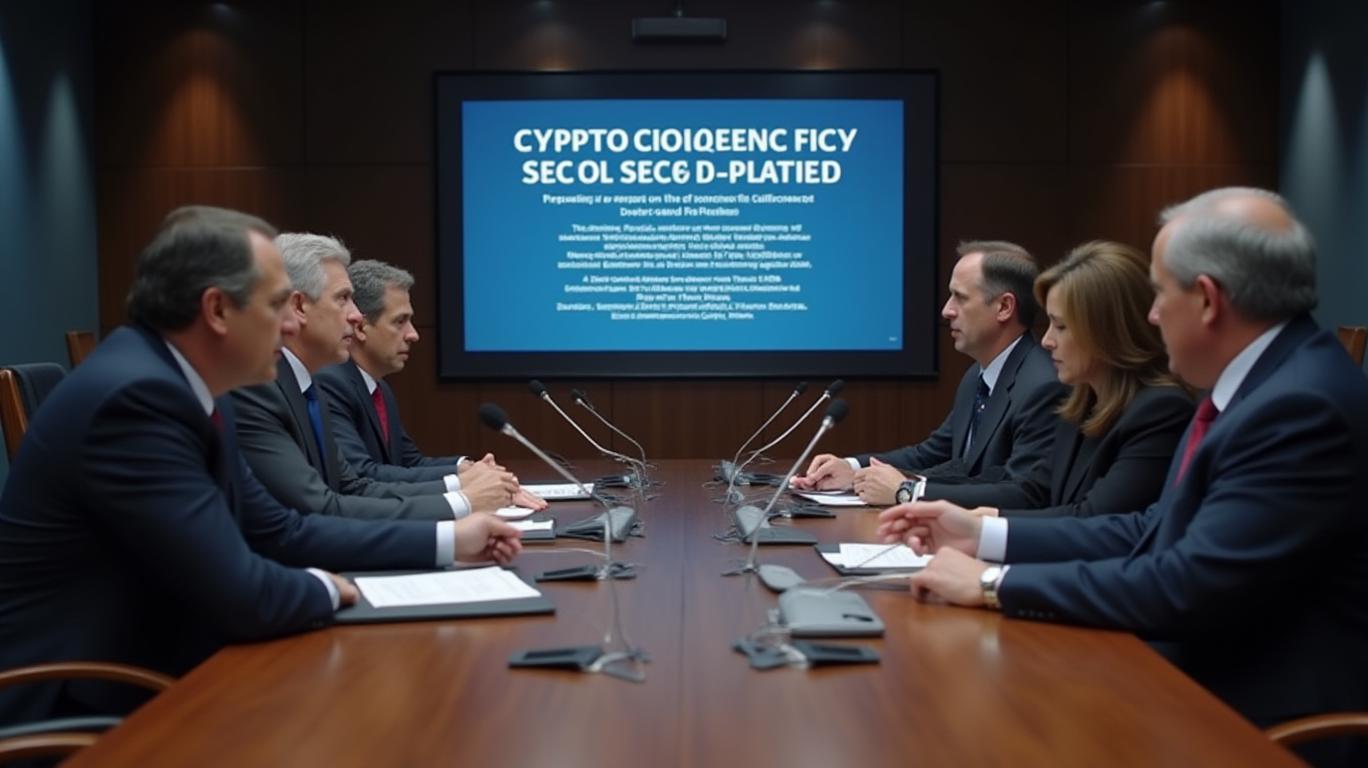
The U.S. Securities and Exchange Commission's (SEC) Crypto TaskTASK-- Force has announced a series of four roundtable discussions scheduled for this spring, focusing on key areas within the cryptocurrency and blockchain ecosystem. These discussions will cover decentralized finance (DeFi), tokenization, and crypto custody, among other topics. The first roundtable, titled “Between a BlockXYZ-- and a Hard Place: Tailoring Regulation for Crypto Trading,” is set for April 11, with subsequent discussions on April 25, May 12, and June 6. Each event will be held in Washington, D.C., and livestreamed for public access.
The roundtables aim to facilitate dialogue between regulators and industry stakeholders, providing a platform for in-depth conversations on the regulatory challenges and opportunities presented by emerging technologies. The task force has previously hosted several public roundtables, covering core issues such as digital asset classification and crypto trading platforms. These discussions have been crucial in shaping the SEC's approach to regulating the crypto space, ensuring that policies are both innovative and protective of investor interests.
The upcoming roundtables are expected to build on this foundation, exploring how regulatory frameworks can be tailored to accommodate the unique characteristics of DeFi, tokenization, and crypto custody. DeFi has garnered significant attention due to its potential to disrupt traditional financial services by offering decentralized alternatives to lending, borrowing, and trading. Tokenization, on the other hand, involves the conversion of real-world assets into digital tokens, enabling fractional ownership and enhanced liquidity. Crypto custody addresses the critical issue of securely storing digital assets, a concern that has become increasingly relevant as institutional investors enter the market.
The SEC's proactive approach to engaging with the industry reflects a broader shift in regulatory strategy, one that recognizes the need for collaboration and flexibility in an ever-changing technological landscape. By hosting these roundtables, the SEC is not only seeking to gather insights from industry experts but also to demonstrate its commitment to fostering a regulatory environment that supports innovation while safeguarding investor protection. The outcomes of these discussions are likely to inform future policy decisions, shaping the regulatory framework for digital assets in the United States.
The task force's efforts are part of a broader initiative to address the regulatory challenges posed by the crypto industry. The roundtables are expected to address these and other challenges, providing a forum for stakeholders to share their perspectives and collaborate on solutions. The discussions will likely focus on developing a harmonized token classification framework, regulatory interoperability, and shared standards for token trading and custody. By fostering ongoing dialogue and coordination, the SEC aims to create a regulatory environment that supports the sustainable development of tokenized economies and blockchain innovation.
At the first roundtable, Miles Jennings, general counsel at a16z crypto, criticized the SEC’s past approach to crypto, stating that it failed to protect investors, support capital formation, or create efficient markets. Commissioner Hester Peirce noted that the roundtables are an opportunity for the SEC to hear lively discussions among experts about regulatory issues and potential solutions. The task force, launched in January by Acting SEC Chairman Mark T. Uyeda, aims to set clear rules, offer practical paths for registration, build effective disclosure frameworks, and use enforcement resources wisely.
Furthermore, the SEC is exploring how it could provide a framework or markers to craft rules for NFTs as an asset category. This comes after the SEC announced that crypto mining does not violate securities laws. The task force's efforts are part of a broader initiative to address the regulatory challenges posed by the crypto industry, ensuring that policies are both innovative and protective of investor interests. The outcomes of these discussions are likely to inform future policy decisions, shaping the regulatory framework for digital assets in the United States.







Comentarios
Aún no hay comentarios