
Seasonal Risk Exposure in Insurance and Real Estate: Uncovering December Vulnerabilities and Strategic Positioning
The insurance and real estate sectors face a paradox in December: while the month is often associated with holiday optimism, it harbors underappreciated vulnerabilities that amplify risk exposure. From staffing reductions and deferred maintenance to the compounding effects of climate-driven catastrophes, December-specific behavioral patterns create unique challenges for insurers and real estate investors. Drawing on recent claims data and underwriting trends, this analysis explores how these seasonal dynamics shape risk profiles and outlines strategic positioning for investors navigating this complex landscape.
December Vulnerabilities: Staffing, Maintenance, and Climate Compounding
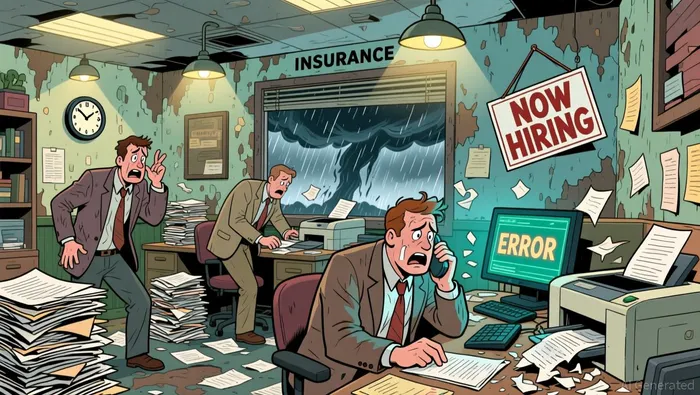
The "quiet week" of December-traditionally marked by reduced staffing and delayed maintenance-has become a critical risk amplifier. According to a report, staffing shortages in the insurance sector have led to adjusters managing caseloads of 150–200 claims at a time, slowing resolution times and increasing error rates. This strain is compounded by deferred maintenance in real estate, where 60% of U.S. homeowners delayed essential repairs in 2025 due to financial pressures. The consequences are stark: a $200 roof repair, if ignored, can escalate to $15,000–$50,000 in damages, directly inflating insured loss amounts.
Climate events further exacerbate these vulnerabilities. The 2025 Los Angeles wildfires, for instance, caused $40 billion in insured losses, while record-warm Atlantic waters heightened hurricane risk. Tariffs on construction materials have added $7,500–$10,000 to rebuilding costs for single-family homes, complicating claims processing and inflating repair timelines. These factors create a feedback loop: deferred maintenance increases property fragility, while staffing shortages delay claims resolution, leaving insurers exposed to larger payouts.
Underwriting Trends: A Hardening Market Amid Softening Glimmers
The property insurance market has shown signs of softening in 2025, with rate reductions for well-performing accounts and expanded capacity from primary insurers. However, this stability is fragile. Catastrophe claims accounted for 42% of total claims in 2024, with wind and hail perils seeing severity jumps of 23.5% and 30.7%, respectively. Insurers are increasingly leveraging advanced analytics and AI to model risk, yet eroding public data sources-such as NOAA's disaster loss database-introduce uncertainty.
For real estate investors, the hardening liability insurance market remains a concern. Rising legal exposure, including nuclear verdicts, has driven premium increases of nearly 12% annually. In high-risk areas like Florida, homeowners insurance premiums surged 47% from 2019 to 2024, with metro areas like Miami seeing 322% increases. Insurers are withdrawing from volatile markets, leaving gaps that state-sponsored programs struggle to fill.
Strategic Positioning: Risk-Preparedness and Investment Implications
Investors must prioritize risk-preparedness strategies that align with December-specific vulnerabilities. For insurers, this means:
1. Leveraging AI and automation to mitigate staffing shortages. The AI claims processing market is projected to grow from $514 million in 2024 to $2.7 billion by 2034, offering faster resolution and reducing reliance on under-resourced adjusters.
2. Expanding E&S market participation. The E&S (Excess & Surplus) market has grown to address gaps in admitted coverage, particularly in wildfire-prone regions like California. Catastrophe bonds, which transfer risk to capital markets, also provide a hedge against extreme weather events.
For real estate investors, the focus should be on resilience-driven asset management:
- Incorporate climate risk assessments into property valuations. Data-driven modeling is essential to align coverage with actual risk profiles.
- Prioritize defensible spaces and fire-resistant materials in high-risk areas. Properties with such features see reduced insurance costs and improved coverage availability.
- Avoid deferred maintenance at all costs. Emergency repairs cost 12 times more than preventative ones, and 2.9 million policies could be voided due to neglect.
Conclusion: Navigating the December Paradox
December's vulnerabilities-staffing gaps, deferred maintenance, and climate volatility-pose systemic risks to both insurers and real estate investors. While the insurance market shows tentative softening, the underlying trends of rising catastrophe severity and economic uncertainty demand proactive strategies. Investors who integrate risk-preparedness measures, embrace technological innovation, and prioritize resilience will be best positioned to navigate the seasonal paradox and capitalize on emerging opportunities in 2026.







Comentarios
Aún no hay comentarios