
SDIC Power: Riding the Renewable Wave Amid Transition Pains
The first half of 2025 brought mixed results for SDIC Power, a state-owned giant in China's energy sector. While total electricity generation dipped slightly, the company's renewable energy division—led by SDIC Huajing Power—delivered a standout 15% output growth, underscoring its strategic pivot to clean energy. This divergence highlights the dual realities of the energy transition: short-term turbulence in legacy assets and long-term promise in renewables. For investors, the question is whether the latter outweighs the former.
H1 Results: A Slip in Total Output, a Leap in Renewables
SDIC's total gross electricity generation fell 0.54% year-on-year to 77.06 terawatt-hours (TWh) in H1 2025. The decline was driven by a 21% drop in thermal power output—a casualty of falling coal demand and policy pressure to decarbonize. Meanwhile, renewables surged:
- Solar output jumped 41.5%, fueled by new subsidy-free projects.
- Hydropower rose 10.3%, benefiting from improved reservoir management at key stations.
- Wind grew 2.9%, though this paled against solar's explosive pace.
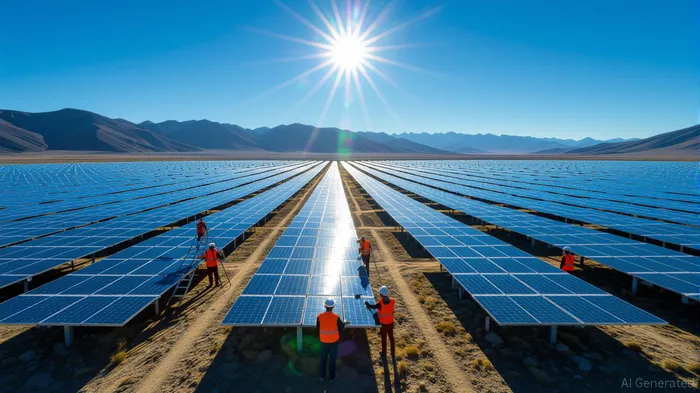
The star performer was SDIC Huajing Power, the renewables unit, which reported a 15% increase in output, a clear sign of execution strength in China's green energy push.
Drivers of Renewables Growth: Policy and Projects
The company's success hinges on two pillars: policy tailwinds and strategic execution.
1. China's Carbon Neutrality Ambitions:
Beijing's goal to achieve carbon neutrality by 2060—and its intermediate targets—has created a policy goldmine for renewable firms. Subsidy-free projects, priority grid access, and preferential financing are accelerating capacity additions. SDIC Huajing Power has leveraged these incentives to expand solar and wind capacity by nearly 170 MW in Q2 alone.
2. Project Execution Excellence:
The company's focus on subsidy-free solar (which now accounts for 13% of total capacity) has been pivotal. These projects, though lower-margin than subsidized ones, offer higher scalability and alignment with market trends. For instance, the Lianghekou Hydropower Station's full reservoir storage in 2024 provided a regulatory boost, enabling 47.78 TWh of hydropower in H1—a record for the asset.
Challenges: Tariffs, Thermal, and Water Risks
Despite the renewables boom, three headwinds linger:
1. Declining Tariffs:
The average on-grid tariff for domestic holdings fell 6.4% to 0.353 RMB/kWh as renewables (with lower margins) displaced thermal power. This pressures profitability in the near term.
2. Thermal Power's Decline:
Thermal's 21% output drop isn't just a short-term hit—it signals permanent structural weakness. While SDIC plans to phase out fossil fuels, managing stranded assets and maintaining liquidity during the transition is critical.
3. Hydropower's Dependency on Water:
Hydropower's 10% growth relied on exceptional reservoir storage at Lianghekou, but other stations faced water shortages. In regions like Dachaoshan, climate volatility could disrupt output, highlighting the need for diversified renewables.
Valuation and Investment Thesis
At a market cap of $16.6 billion (as of July 14, 2025), SDIC Power trades at 12x trailing EBITDA—fairly priced for a sector in transition. The key question is whether the renewables growth can offset legacy headwinds.
Bull Case:
- Renewables hit 50% of generation by 2030 (as targeted), driving top-line growth.
- Scale economies in solar/wind and energy storage (now 1.2% of capacity) reduce costs.
- Beijing's green financing initiatives provide capital to fund expansion.
Bear Case:
- Tariffs drop further as renewables' share rises, squeezing margins.
- Thermal power's decline accelerates faster than renewables' uptake.
- Water scarcity or policy shifts disrupt hydropower's reliability.
Investment Recommendation: Buy for the Transition
SDIC Power is a long-term buy for investors betting on China's energy transition. While near-term earnings face pressure from tariff declines and thermal headwinds, the company's renewables growth and strategic alignment with Beijing's goals position it to capture structural upside.
Key Risks to Monitor:
- Tariff trends: Watch for further declines or stabilization.
- Capacity additions: Track solar/wind projects vs. 2030 targets.
- Water levels: Monitor hydropower stations in water-stressed regions.
In a sector where patience is rewarded, SDIC's execution in renewables—and its role in China's net-zero blueprint—make it a compelling play for investors willing to endure short-term turbulence.
This analysis is for informational purposes only and not a recommendation to buy or sell securities.







Comentarios
Aún no hay comentarios