
Scroll DAO's Governance Collapse: A Wake-Up Call for DeFi Investors
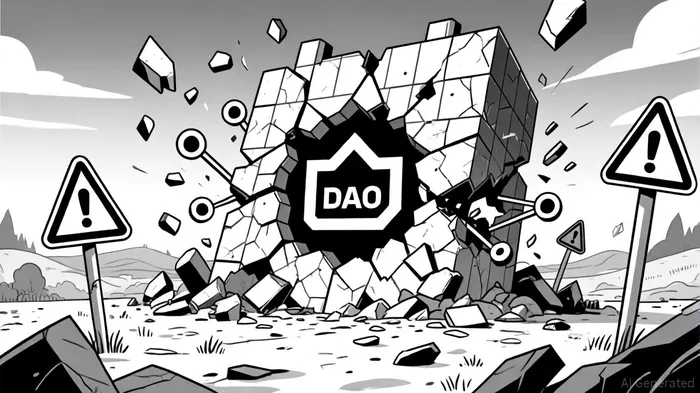
The recent governance collapse of Scroll DAO has exposed systemic vulnerabilities in decentralized finance (DeFi) protocols, offering a stark reminder of the fragility inherent in institutional design. As the DAO paused its governance process amid leadership resignations and confusion over active proposals[2], the incident underscores a critical juncture for DeFi investors: the need to reevaluate risk diversification and governance resilience in an ecosystem increasingly prone to centralized decay.
Institutional Fragility: The Scroll DAO Case Study
Scroll DAO's governance pause highlights a paradox at the heart of DeFi: the tension between decentralization and operational efficiency. According to delegate Olimpio, the DAO's leadership faced ambiguity over which proposals were active and whether they would be honored[2]. This reflects a broader issue in DAOs—low voter participation (typically less than 10% of token holders[4]) and high token concentration, which enable a small group to dominate decision-making. The reliance on token-based voting systems, while foundational to DAOs, also introduces risks such as treasury exploits and vote manipulation[3].
The collapse of Scroll DAO's governance structure is not an isolated incident. DeFi protocols have long grappled with systemic vulnerabilities, including liquidity mismatches and collateral volatility[1]. For example, algorithmic stablecoins like TerraUSD (UST) and Iron Finance (IRON/TITAN) collapsed due to uncollateralized mechanisms and unsustainable incentives[2]. These failures reveal a common thread: when DeFi protocols prioritize scalability over robust governance, they create fragile systems prone to cascading failures.
Lessons from DeFi's Past: The Stablecoin Debacle
The TerraUSD collapse in May 2022 serves as a cautionary tale. UST's algorithmic design relied on market confidence and automated supply adjustments, which proved insufficient during periods of stress[2]. Similarly, Scroll DAO's governance pause demonstrates how centralized control can emerge even in protocols designed to be decentralized. As one analyst noted, “The illusion of decentralization often masks a lack of accountability and transparency”[2].
This fragility is compounded by the interconnectedness of DeFi platforms. When a single protocol fails, liquidity mismatches can spread rapidly across the ecosystem[1]. For instance, stablecoins backed by traditional financial assets like commercial paper face risks when central bank policy rates rise, eroding collateral value and triggering runs[2]. The automated liquidation processes in DeFi exacerbate these risks, creating feedback loops that amplify market downturns[3].
Risk Diversification: A Path Forward
To mitigate such risks, DeFi protocols must adopt diversified strategies. One approach is to avoid over-reliance on single assets or protocols. The on-chain RWA (Real-World Asset) market, which has grown from $5 billion in 2022 to over $25 billion by mid-2025, offers a model for spreading risk[2]. Platforms like Figure are tokenizing real estate and private credit, reducing exposure to crypto-native volatility[2].
Institutional-grade tools are also emerging to strengthen governance. Platforms like Snapshot, Safe, and Tally now enable secure, cross-chain decision-making for organizations managing over $30 billion in assets[3]. Quadratic voting and delegation mechanisms are being adopted to address participation imbalances[3]. Meanwhile, Layer 2 solutions and AI-driven analytics are enhancing scalability and governance efficiency[3].
A balanced asset allocation strategy is equally critical. Data from Solv Protocol suggests that a 40% stablecoin and 35% native asset allocation can buffer against market fluctuations[4]. This approach contrasts with the all-or-nothing bets that doomed projects like Terra and Scroll.
Conclusion: A Wake-Up Call for Investors
Scroll DAO's collapse is not just a governance failure—it is a wake-up call for DeFi investors. The incident underscores the need for rigorous due diligence on institutional design, token economics, and risk diversification. As DeFi matures, protocols that prioritize transparency, decentralized governance, and diversified asset strategies will likely outperform those clinging to fragile, centralized models.
For investors, the lesson is clear: the future of DeFi lies not in chasing speculative gains but in building resilient systems capable of withstanding the next crisis.







Comentarios
Aún no hay comentarios