
E.W. Scripps' Strategic Rejection of Sinclair's Takeover and Implications for Broadcast Consolidation
The recent rejection of SinclairSBGI-- Broadcast Group's $622 million takeover bid by E.W. Scripps' board of directors has ignited a broader conversation about shareholder value, M&A dynamics, and the long-term resilience of traditional broadcast media. This decision, announced in late December 2025, underscores the complex interplay between defensive corporate strategies and the evolving media landscape. By examining the rationale behind Scripps' rejection, the immediate market reactions, and the broader industry trends, investors can better assess the implications for broadcast consolidation and the future of media resilience.
Shareholder Value and Defensive Tactics
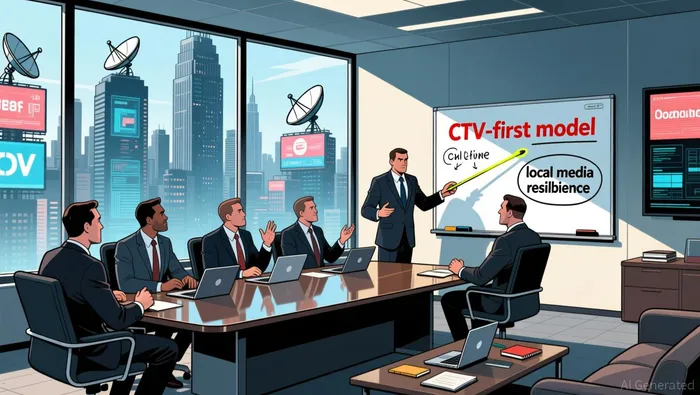
Scripps' board unanimously rejected Sinclair's $7-per-share offer, which combined cash and stock, citing concerns that the deal would not enhance shareholder value. The board emphasized its commitment to evaluating strategic alternatives that align with long-term goals, including a transition to a connected TV (CTV)-first model and strengthening local media operations. To deter the unsolicited bid, ScrippsSSP-- deployed a limited-duration shareholder rights plan-a "poison pill"-in late November 2025, signaling its intent to prioritize independent growth over a potentially undervalued acquisition.
The market's immediate response was mixed. While the board defended its stance, Scripps' stock fell 8.5% in after-hours trading following the rejection, reflecting investor skepticism about the company's ability to outperform a premium offer. Sinclair, meanwhile, framed its bid as a strategic move to expand its broadcast footprint amid industry challenges such as cord-cutting and declining ad revenue. However, Scripps' leadership argued that the proposal underestimated the company's potential to adapt to digital transformation and leverage political advertising cycles for revenue growth.
M&A Dynamics in a Shifting Regulatory Environment
The rejection of Sinclair's bid occurs amid heightened M&A activity in the broadcast sector, driven by regulatory shifts and economic pressures. Relaxed ownership rules under the Trump-era FCC have created a more favorable environment for consolidation, with companies like Nexstar Media and Sinclair positioned to benefit from reduced regulatory barriers. However, Scripps' decision highlights a growing trend: boards are increasingly prioritizing strategic autonomy over short-term premiums, particularly in an industry facing existential threats from digital platforms.
Comparative case studies illustrate this trend. For instance, Paramount's pending $8 billion merger with Skydance and Telia's $620 million divestiture of its Nordic TV business to Schibsted Media reflect a broader industry shift toward digital-first strategies and operational efficiency. These transactions emphasize core competencies, such as streaming and content production, over traditional broadcast assets. Similarly, Scripps' focus on station swaps, AI-driven operational tools, and CTV adoption aligns with a long-term vision of resilience in a fragmented media ecosystem.
Long-Term Resilience and Strategic Adaptation
Scripps' rejection of Sinclair's bid also underscores the company's confidence in its ability to navigate the challenges of a rapidly evolving media landscape. Despite a decline in Local Media segment revenues in early 2025, the board anticipates a recovery as advertiser demand stabilizes and expenses normalize. This optimism is bolstered by strategic moves such as the recent station swap with Gray Media, which enhances geographical diversification and market presence.
The broader industry's resilience, however, remains under scrutiny. While M&A is seen as a key avenue for survival, the long-term sustainability of traditional broadcast models is increasingly tied to digital transformation. As noted by risk managers in the WTW analysis, cultural integration and intellectual property due diligence remain critical challenges in media M&A, with implications extending beyond immediate financial outcomes. For Scripps, the rejection of Sinclair's bid signals a commitment to selective asset reallocation and innovation, rather than a hasty exit from the broadcast sector.
Conclusion
E.W. Scripps' strategic rejection of Sinclair's takeover bid reflects a nuanced approach to balancing shareholder value, regulatory dynamics, and long-term resilience. While the immediate market reaction was negative, the board's emphasis on independent growth and digital adaptation aligns with broader industry trends. As consolidation continues to shape the media landscape, investors must weigh the short-term premiums of acquisitions against the long-term viability of companies that prioritize innovation and operational flexibility. For Scripps, the path forward hinges on its ability to execute its CTV-first strategy and capitalize on the political advertising cycle-factors that could ultimately determine its success in an increasingly competitive and technology-driven market.





Comentarios
Aún no hay comentarios