
SCHZ: Tariffs More Moderate Than Expected
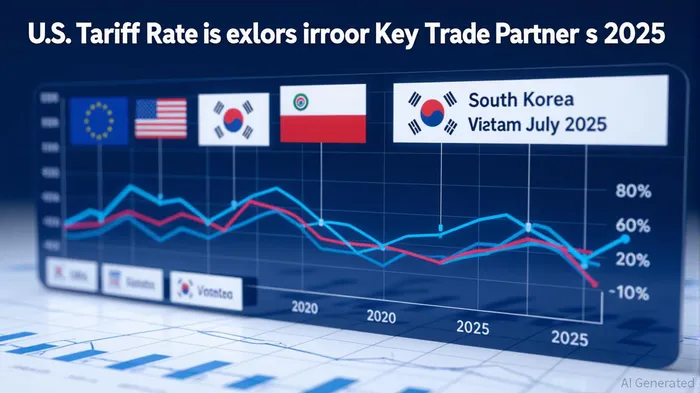
The U.S. trade policy landscape in 2025 has shifted in ways that investors have largely underestimated. What was once a narrative of escalating tariffs and trade wars is now one of measured restraint. President Trump's recent announcements—reducing reciprocal tariff rates for the EU and South Korea to 15% from 20%, and trimming Indonesia's rate from 32% to 19%—signal a strategic recalibration. These adjustments, alongside the Federal Circuit's stay of legal challenges to fentanyl-related tariffs, suggest a more diplomatic and targeted approach to trade policy.
For investors, this moderation presents a unique opportunity: the Schwab U.S. Small-Cap ETF (SCHA), often mistakenly referred to as SCHZ in this context, is poised to outperform in a prolonged but tempered trade war environment. Small-cap stocks, historically more volatile than their large-cap counterparts, have demonstrated resilience in the face of trade uncertainty. SCHA's diversified portfolio of 1,706 holdings, spanning sectors like technology, industrials, and healthcare, positions it to capitalize on both domestic economic growth and the reduced drag of aggressive tariffs.
The Case for SCHA in a Moderated Trade War
Small-cap equities have historically outperformed during periods of trade stabilization. Between 2020 and 2025, SCHA delivered a 10.72% annualized return over three years, outpacing its Morningstar Small Blend category. This performance was driven by its exposure to innovation-driven sectors such as fintech (Affirm Holdings) and aerospace (Rocket Lab), which thrive in environments where trade barriers are lifted or softened.
The recent moderation in tariffs reduces the risk of supply chain disruptions and currency volatility, both of which disproportionately affect small-cap companies. For instance, SCHA's exposure to U.S. Treasuries and government-related bonds—mirrored in the Bloomberg U.S. Aggregate Bond Index it tracks—provides a buffer against trade-related market swings. Meanwhile, its 0.04% expense ratio ensures that investors retain a larger portion of gains in a low-fee, high-growth environment.
Sector Resilience and Strategic Diversification
SCHA's top holdings, including DuolingoDUOL-- and BWX TechnologiesBWXT--, are less reliant on global supply chains and more focused on domestic demand and digital transformation. This aligns with the administration's “America First” policy, which now emphasizes partnerships over punitive tariffs. For example, the U.S.-Indonesia trade agreement announced in July 2025 reflects a shift toward collaboration, reducing risks for SCHA's export-oriented companies.
Moreover, SCHA's weighted average market cap of $3.8 billion ensures it captures growth in nimble, high-potential firms. These companies often benefit from policy-driven tailwinds, such as infrastructure spending and clean energy incentives, which remain intact despite the moderated trade agenda.
A Cautionary Note on Volatility
While the current trade climate is favorable, SCHA's beta of 1.20 relative to the S&P 500 means it remains more volatile than the broader market. Investors should consider this when allocating capital, particularly in the short term. However, the fund's 27.3% annualized volatility has decreased to 24.2% in recent months, indicating a stabilization that could persist as trade tensions ease.
Investment Thesis and Action Plan
The key takeaway for investors is that delayed and moderated tariff escalations reduce the macroeconomic headwinds that have historically hurt small-cap performance. SCHA's low-cost structure, sector diversification, and alignment with domestic growth trends make it an attractive bet for those seeking long-term capital appreciation in a more predictable trade environment.
Action Steps for Investors:
1. Allocate a portion of equity exposure to SCHA to capitalize on its outperformance in trade-stabilized markets.
2. Monitor the administration's trade negotiations, particularly with the EU and ASEAN nations, for further tariff adjustments.
3. Rebalance portfolios to include SCHA as a core holding, given its low correlation to high-yield bonds and emerging market equities.
In conclusion, the U.S. trade policy shift from escalation to moderation has created a favorable backdrop for small-cap stocks. SCHA, with its blend of innovation-driven growth and defensive characteristics, is well-positioned to deliver returns in this environment. For investors who recognize the nuance in today's trade dynamics, this is a compelling opportunity to outperform the market.







Comentarios
Aún no hay comentarios