
Back-to-School Retail Resilience: Why Famous Footwear Is a Strategic Play in Consumer Discretionary
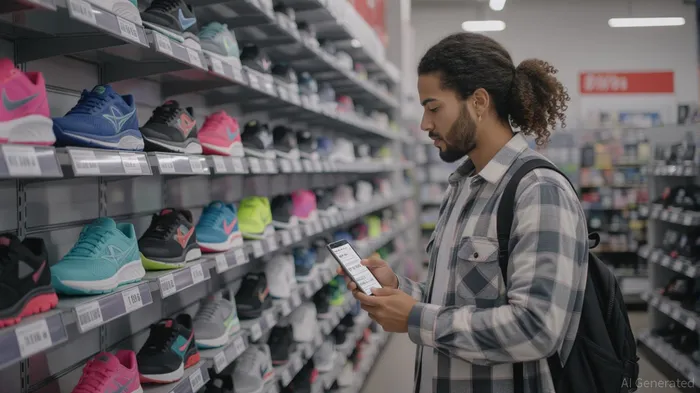
The back-to-school season has long been a barometer for retail resilience, testing brands’ ability to adapt to shifting consumer priorities and economic headwinds. In Q3 2025, Famous Footwear has emerged as a standout performer, leveraging strategic partnerships, omnichannel innovation, and a deep understanding of value-driven consumer behavior to capture market share. As the broader retail sector grapples with post-pandemic spending patterns and inflationary pressures, the brand’s focus on athletic and sport-inspired styles, combined with its digital-first approach, positions it as a compelling investment in the consumer discretionary space.
Strategic Partnerships and Product Differentiation
Famous Footwear’s Q3 success was anchored by its collaboration with Jordan Brand, which delivered “powerful results” during the back-to-school rollout [1]. This partnership not only capitalized on the enduring popularity of Jordan’s athletic and lifestyle footwear but also aligned with a broader industry trend: the growing demand for sport-inspired styles. According to a report by Consensus Advisors, running footwear and running-influenced designs saw sales increases of 19–42% in Q2 2025, driven by consumers seeking both performance and versatility [2]. By curating high-demand athletic brands and integrating them into its omnichannel strategy, Famous Footwear has positioned itself as a one-stop destination for consumers prioritizing quality and functionality.
Omnichannel as a Competitive Edge
The brand’s omnichannel model remains a cornerstone of its strategy, blending in-store expertise with digital convenience. Data from McKinsey’s State of the U.S. Consumer report underscores that 54% of shoppers prefer a mix of online and in-store experiences, emphasizing the enduring value of physical retail [3]. Famous Footwear’s ability to offer seamless transitions between channels—such as buy-online-pickup-in-store (BOPIS) and personalized digital marketing—has enabled it to maintain full-price selling, a critical metric in an era where discounting erodes margins. This approach mirrors Nike’s broader industry shift, which aims for 60% of sales to be direct-to-consumer by 2025 [3].
Aligning with Value-Driven Consumer Behavior
Post-pandemic spending patterns in Q3 2025 reveal a cautious consumer base prioritizing essentials over discretionary purchases. A McKinsey analysis notes that younger generations, particularly Millennials, are favoring practical gifting and early shopping, often opting for athletic footwear as a versatile, multi-use product [3]. Famous Footwear’s emphasis on national brands and sport-inspired styles taps into this demand, offering consumers perceived value without compromising on quality. This is further reinforced by the brand’s recent leadership changes: newly appointed President Michael Edwards has prioritized digital commerce as a growth driver, a move that aligns with the sector’s broader shift toward e-commerce [2].
Broader Retail Trends and Investment Implications
The footwear sector’s resilience in Q3 2025 is not isolated to Famous Footwear. The global athleisure market, valued at $358 billion in 2023, is projected to grow at a 9.3% compound annual rate through 2030, driven by the blurring lines between performance and fashion [4]. Brands like LululemonLULU-- and Vuori have thrived by catering to this demand, but Famous Footwear’s strength lies in its ability to aggregate multiple national brands under one roof, offering a curated selection that appeals to a broad demographic. This model is particularly effective in a landscape where tariffs and rising costs have forced competitors like Under ArmourUAA-- and CrocsCROX-- to implement price increases [1].
Conclusion
Famous Footwear’s Q3 2025 performance underscores its strategic agility in navigating a complex retail environment. By aligning with Jordan Brand’s cultural cachet, refining its omnichannel capabilities, and catering to the demand for sport-inspired footwear, the brand has positioned itself to outperform peers. As consumer spending remains value-driven and omnichannel adoption accelerates, Famous Footwear’s ability to balance digital innovation with in-store expertise makes it a compelling play in the consumer discretionary sector. For investors, the brand’s focus on quality, convenience, and adaptability offers a blueprint for long-term resilience in an evolving market.
**Source:[1] Earnings Wrap: NikeNKE-- Reports Latest Results + More, [https://footwearnews.com/business/earnings/footwear-brands-retailers-earnings-sales-reports-1203162641/][2] The Weekly Consensus, [https://consensusadvisors.com/08252025/][3] An update on US consumer sentiment, [https://www.mckinsey.com/industries/consumer-packaged-goods/our-insights/the-state-of-the-us-consumer][4] Athleisure Faceoff: How Lululemon, Vuori, AloALMS-- and Fabletics, [https://dmsretail.com/RetailNews/athleisure-faceoff-how-lululemon-vuori-alo-and-fabletics-are-making-their-case-to-consumers/]







Comentarios
Aún no hay comentarios