
New-School Ciders: Holiday Surge or Fragile Growth?
The global cider market faces significant disagreement over its future trajectory, with recent reports presenting starkly different growth scenarios. One projection sees the market expanding from $16.38 billion in 2024 to $27.5 billion by 2032, implying a 6.5% compound annual growth rate (CAGR). Another, more conservative outlook estimates growth from $14.18 billion in 2025 to $16.58 billion by 2030, suggesting a markedly lower 3.19% CAGR. These divergent forecasts likely stem from differing definitions of the market landscape and varying assumptions about consumer adoption rates for craft versus mainstream products.
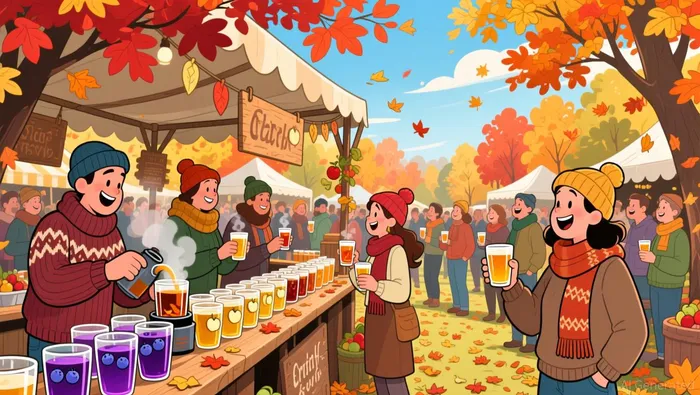
Holiday periods consistently generate a significant sales boost, acting as a crucial seasonal peak for cider producers. Fall and winter seasons, characterized by autumnal and fruit-forward flavors, see heightened consumer demand, particularly around holidays. This seasonal surge provides a welcome lift amidst generally slower sales periods, but it also creates a challenge for year-round stability. Expanding beyond these predictable peaks proves difficult, hampered by persistent competition from ready-to-drink alternatives and complex distribution hurdles within emerging markets. While innovation in flavors like blueberry and dragonfruit, alongside lower-alcohol and non-alcoholic options, fuels growth ambitions, translating seasonal excitement into sustained monthly volume remains a core challenge for the industry.
Despite the optimism surrounding craft ciders, particularly their appeal to health-conscious and sustainability-focused consumers, mass-market offerings still hold the dominant share of the overall market. Premium craft ciders, especially apple-based bottles, are prominent, but their growth occurs alongside the continued presence of traditional large-scale producers. This creates a dual dynamic where consumer preference is visibly shifting towards artisanal methods and local sourcing, yet the bulk of market value and volume remains concentrated within established, non-craft segments. This tension between growing craft appeal and entrenched mass-market dominance influences pricing power and distribution strategies throughout the supply chain, impacting profitability and cash flow timelines for players at every level.
Competitive Dynamics & Margin Vulnerability
The rapidly expanding U.S. craft cider market presents significant opportunities, yet competitive pressures and scaling hurdles threaten margin stability. Valued at $1.85 billion in 2025, the sector is forecast to grow annually at 9.8% through 2032, reaching a projected $3.25 billion. This growth is partly fueled by a substantial shift to digital channels, with online sales now accounting for 30% of total volume. While holiday-season limited editions and premium flavors boost short-term margins, small producers struggle to replicate these gains at scale.
Holiday-driven demand for unique cider variants like cranberry, mulled, or spice-infused brews creates temporary margin spikes. However, these seasonal products require complex supply chains and specialized marketing, making consistent profitability difficult for smaller players. Meanwhile, mass-market brands like Angry Orchard leverage their distribution networks and production scale to pressure price premiums, squeezing craft margins. Over 1,250 small producers face intense competition and regulatory hurdles, limiting their ability to expand efficiently.
The surge in online sales, while expanding reach, introduces significant cost and logistical friction. Fulfilling direct-to-consumer orders demands warehousing, packaging customization, and delivery infrastructure – expenses often absorbed by thin-margin craft operators. This complexity is exacerbated by regional competition, as seen in high-per-capita consumption areas like Oregon, where new entrants like Alchemy and Apple Outlaw intensify local market saturation. Without controlled scaling or differentiated positioning, these hidden costs erode the very margin advantages seasonal launches aim to create.
Fragile Premium Pricing Dynamics
Despite strong consumer interest in craft options, the cider market faces a unique pricing tension. Young drinkers recognize premium qualities and will pay a significant up to 50% premium, yet cider's deep-rooted identity as a casual, affordable beverage creates underlying resistance to sustained price hikes. This duality means even successful craft brands must navigate carefully; pushing prices too far risks alienating price-sensitive core consumers who still view cider primarily as a low-cost refreshment.
Regulatory pressure adds another layer of uncertainty. Sustainability claims and labeling standards for "natural," "organic," and "craft" descriptors are becoming stricter globally. Brands marketing premium positioning based on these attributes face compliance costs and potential market confusion if rules shift or enforcement tightens. Meeting evolving packaging regulations, particularly around recyclability and material sourcing, could also squeeze margins for smaller, craft-focused producers.
Compounding these demand-side risks are persistent supply chain vulnerabilities. Reliance on specific apple varieties and regional growing conditions makes production susceptible to weather events, pests, and logistical bottlenecks. While seasonal innovations and regional festivals drive excitement, inconsistent fruit quality or harvest failures can disrupt production schedules and premium product launches. Furthermore, legal disputes over proprietary recipes or brand identities within the competitive craft segment add operational friction and potential financial liability. These factors collectively mean strong consumer interest alone isn't a guarantee; navigating regulatory shifts and supply chain instability remains critical for sustaining growth and premium pricing in the craft cider segment.







Comentarios
Aún no hay comentarios