
Schindler's Strategic Expansion in the European Hospitality Sector: Long-Term Value Creation Through Infrastructure Contracts in a Post-Pandemic Recovery
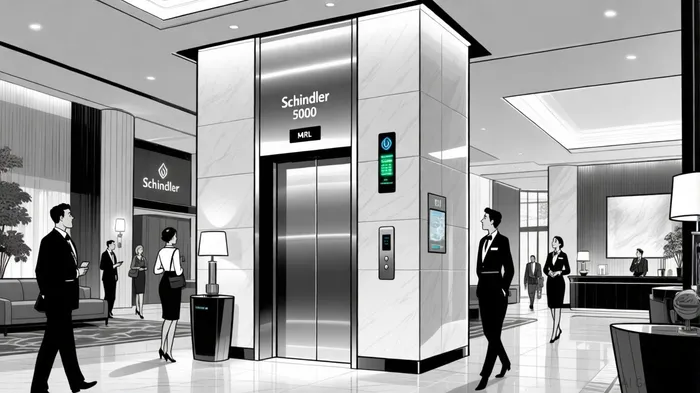
The post-pandemic recovery of the European hospitality sector has created a fertile ground for infrastructure innovation, with companies like Schindler positioning themselves at the intersection of mobility solutions and long-term value creation. As hotels and resorts modernize to meet evolving guest expectations and sustainability mandates, Schindler's tailored elevator and escalator systems—particularly the Schindler 5000 MRL model—have emerged as critical enablers of operational efficiency and guest satisfaction. This analysis explores how Schindler's strategic focus on digitalization, energy efficiency, and scalable infrastructure aligns with the European hospitality sector's post-pandemic priorities, offering compelling investment potential.
Strategic Initiatives: Digitalization and Sustainability as Cornerstones
Schindler's recent product innovations underscore its commitment to future-ready infrastructure. The Schindler 5000 MRL elevator, designed for mid-rise hospitality buildings, integrates regenerative drives, LED lighting, and IoT-enabled connectivity through Schindler Ahead—a digital platform that optimizes traffic flow and predictive maintenance [3]. These features not only reduce energy consumption by up to 40% compared to traditional systems but also enhance guest experiences through seamless mobility [4]. For instance, the Schindler PORT destination control system, which streamlines elevator dispatching, has been shown to reduce wait times by 30% in high-traffic environments like hotel lobbies [1].
Schindler's emphasis on modernization further strengthens its value proposition. Programs like ReStore and ReNew allow hotels to retrofit aging infrastructure with energy-efficient components, aligning with the European Union's Green Deal objectives and reducing long-term operational costs [5]. This dual focus on new installations and upgrades positions Schindler to capitalize on both greenfield developments and brownfield renovations in the hospitality sector.
Market Dynamics: A Booming European Hotel Investment Landscape
The European hospitality sector is undergoing a significant transformation, driven by surging investment and a shift toward sustainable development. According to a report by Deloitte, European hotel investment transactions reached €17.4 billion in 2024, fueled by easing interest rates and robust travel demand [2]. This growth is expected to continue into 2025, with strategic partnerships and joint ventures becoming increasingly common as operators seek to optimize capital efficiency [2].
Schindler's infrastructure solutions are uniquely positioned to support this momentum. For example, the company's plug-and-play Schindler X8 elevator, which requires no machine room and can be installed in just weeks, addresses the urgent need for rapid deployment in new hotel projects [5]. Additionally, Schindler's presence in key European markets—such as its North American operations in Seattle, Washington, which serve as a model for scalable service delivery—demonstrates its capacity to execute large-scale contracts efficiently [3].
Long-Term Value Creation: Beyond Contracts to Ecosystem Integration
While specific Schindler infrastructure contracts in the European hospitality sector for 2023–2025 remain undisclosed, the company's broader strategic initiatives suggest a strong pipeline. For instance, Schindler's involvement in projects like the 29-elevator installation at Toronto's World on Yonge community highlights its ability to manage complex, high-volume contracts—a skill transferable to European hotel developments [4]. Moreover, the company's digital solutions, such as Schindler Ahead, create recurring revenue streams through subscription-based monitoring and analytics, enhancing long-term profitability [1].
The European hospitality sector's focus on cost management and performance optimization further amplifies Schindler's value. By reducing energy costs and minimizing downtime through predictive maintenance, Schindler's systems directly contribute to hotel operators' bottom lines. This alignment with client priorities ensures sustained demand, even in economically uncertain environments.
Conclusion: A Resilient Investment in the Future of Mobility
Schindler's strategic expansion in the European hospitality sector is underpinned by its ability to deliver infrastructure that meets the dual demands of sustainability and operational excellence. As the sector rebounds from pandemic-related disruptions, Schindler's focus on digitalization, energy efficiency, and scalable solutions positions it as a key enabler of long-term value creation. While direct contract data for 2023–2025 remains limited, the broader market trends and Schindler's proven track record in global projects suggest a robust outlook. For investors, this represents an opportunity to align with a company that is not only adapting to industry shifts but actively shaping them.







Comentarios
Aún no hay comentarios