
SCHI’s $0.0921 Dividend Amid Shifting Bond Market Dynamics
The Schwab 5-10 Year Corporate Bond ETF (SCHI) recently declared a dividend of $0.0921 per share, marking a notable shift in its distribution history. This payout, while consistent with the ETF’s monthly dividend cadenceCADE--, sits at the lower end of its historical range, reflecting broader challenges in the fixed-income market. Below, we analyze the implications of this dividend within the context of SCHI’s performance, bond market headwinds, and investor strategy.
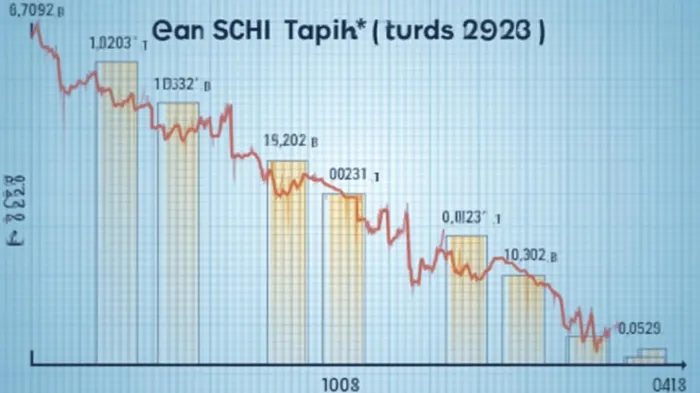
Dividend Context: A Dip in Income
SCHI’s dividend of $0.0921, announced in late 2024, contrasts with its higher distributions in recent years. For example, in December 2023, the ETF paid $0.233 per share, and in June 2024, it distributed $0.2025. This drop aligns with a broader trend of reduced income across bond ETFs as rising interest rates compress bond prices and limit reinvestment opportunities.
The fund’s trailing 12-month yield has also declined, from 1.68% in early 2024 to an estimated 1.3% as of late 2024, underscoring the pressure on fixed-income investors.
Market Headwinds: Rate Risks and Inflation
The drop in dividends stems from two primary factors:
1. Fed Policy Uncertainty: The Federal Reserve’s prolonged pause on rate cuts has kept yields elevated. The 10-year Treasury yield approached 4.8% in early 2024, its highest in decades, squeezing returns on existing bonds.
2. Inflation Risks: Proposed fiscal policies—such as tariffs and tax cuts—have raised concerns about sustained inflation, limiting the Fed’s ability to ease rates. This environment pressures bond prices, particularly in the 5-10 year segment tracked by SCHI.
Corporate bond spreads—the extra yield over Treasuries—have compressed as investors prioritize safety, reducing SCHI’s income potential.
Advisor Insights: Equity Income Gains Favor
The data shows a clear shift in investor preferences:
- 59% of advisors now prioritize dividend-paying equities over bond strategies for income generation, citing higher yields and growth potential.
- Bond ETFs like SCHI face competition from actively managed alternatives such as the ALPS/SMITH Core Plus Bond ETF (SMTH), which offers higher starting yields (4.5–5.5%) and active duration management to mitigate rate risks.
SCHI’s Fundamentals: Low Costs, Broad Diversification
Despite the yield pressures, SCHI retains strengths:
- Expense Ratio: At 0.04%, it is among the cheapest bond ETFs, minimizing drag on returns.
- Index Tracking: The ETF holds ~90% of its assets in the Bloomberg US 5-10 Year Corporate Bond Index, ensuring broad exposure to investment-grade corporates.
- Historical Stability: Over five years, SCHI’s annualized return has averaged +5.2%, outperforming its category average.
Investment Considerations
- Duration Risk: Investors should note SCHI’s average duration of ~6.5 years, making it sensitive to rate hikes. Shorter-duration bond ETFs may be preferable in a rising-rate environment.
- Credit Quality: SCHI’s focus on investment-grade bonds reduces default risk, but inflation-driven credit downgrades remain a tailwind.
- Portfolio Role: While its yield has fallen, SCHI still offers diversification benefits for equity-heavy portfolios. Pair it with defensive equities like the Schwab U.S. Dividend Equity ETF (SCHD) for balanced income.
Conclusion
The $0.0921 dividend from SCHI signals the challenges bond investors face in a high-rate environment. While its income has dipped, the ETF’s low costs and broad diversification justify its place in a diversified portfolio. However, investors seeking higher yields may want to pair SCHI with equity income strategies or shorter-duration bond funds.
As of late 2024, SCHI’s 5-year annualized return of +5.2% and its expense ratio of 0.04% remain compelling compared to actively managed bond funds charging 0.5–1.0%. Yet, with the 10-year Treasury yield near 5%, the path to meaningful income growth for bond ETFs remains narrow—underscoring the need for caution and diversification.
In short, SCHI remains a solid core holding for bond exposure but demands a long-term view in an environment where patience—and a diversified strategy—are key.







Comentarios
Aún no hay comentarios