
Scandinavia's Defense Sector: A Strategic Investment Opportunity Amid Geopolitical Shifts
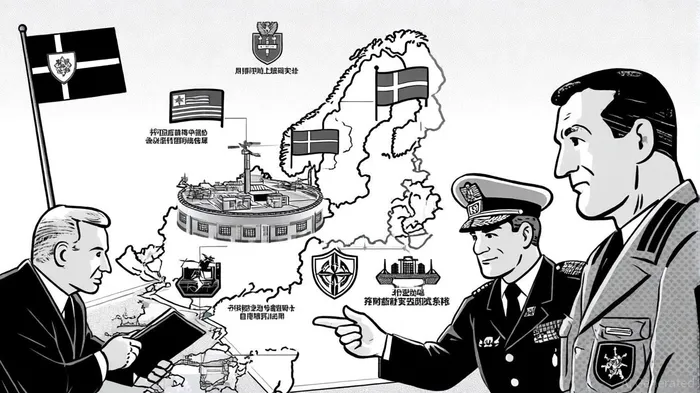
The Nordic region has long been a beacon of stability and innovation, but the geopolitical landscape is shifting rapidly. The war in Ukraine, NATO's renewed focus on collective defense, and rising Arctic tensions have catalyzed a transformation in defense spending across Scandinavia. For investors, this represents a unique window to capitalize on sector-specific opportunities in Sweden, Norway, and Denmark, where strategic realignment and fiscal commitments are reshaping national security priorities.
Sweden: A Case Study in Rapid Military Modernization
Sweden's defense spending trajectory is among the most striking in the region. According to a report by Reuters, the country's 2026 budget allocates 80 billion Swedish crowns ($8.5 billion) to bolster military readiness, including investments in civil defense and advanced technology systems[3]. This marks a significant departure from historical norms, as Sweden—traditionally a neutral actor—has accelerated its NATO membership application process in response to regional instability[1].
The Swedish government's emphasis on dual-use technologies, such as AI-driven surveillance and cyber defense, aligns with broader European Union (EU) initiatives to reduce dependency on non-European suppliers[3]. For investors, this signals a surge in demand for domestic defense contractors and tech firms specializing in secure communications and autonomous systems.
Norway: Arctic Security and Long-Term Strategic Planning
While specific budget figures for Norway remain opaque, the country's strategic focus on Arctic security underscores its commitment to defense modernization. Norway's geographic position—bordering Russia's Arctic territories—has made it a critical NATO ally in the region. A 2025 analysis by Visitnordic notes that Norway has prioritized investments in maritime surveillance, missile defense, and Arctic-capable military infrastructure[2].
The Norwegian government's 2024 defense white paper emphasized a 10-year modernization plan, with a particular focus on enhancing the Royal Norwegian Navy's capabilities[2]. This includes procuring long-range strike systems and expanding joint exercises with NATO partners. For investors, this creates opportunities in shipbuilding, energy-efficient military equipment, and logistics networks tailored to Arctic conditions.
Denmark: Balancing Fiscal Prudence and Geopolitical Realities
Denmark's defense spending trends reflect a more cautious approach compared to its neighbors. However, the country's recent decision to increase its defense budget to 2.5% of GDP—a threshold recommended by NATO—signals a shift in priorities[2]. This adjustment is driven by concerns over Baltic security and the need to reinforce NATO's eastern flank.
Denmark's investments are concentrated in cyber defense and rapid response units, with a focus on interoperability with other NATO members. A 2025 report by Visitnordic highlights Denmark's collaboration with Sweden and Finland to develop shared defense platforms, including joint procurement of fighter jets and naval vessels[2]. This regional cooperation model reduces costs and creates a cohesive Nordic defense ecosystem, which could attract investors seeking stable, long-term returns.
Geopolitical Risks and Investment Opportunities
The Nordic defense sector's growth is inextricably linked to geopolitical risks. The war in Ukraine has exposed vulnerabilities in European supply chains and energy security, prompting Scandinavia to diversify its defense suppliers and prioritize domestic production. For example, Sweden's recent partnership with European defense firms to co-develop next-generation radar systems illustrates this trend[3].
NATO's 2025 Strategic Concept further amplifies these dynamics, emphasizing the need for enhanced collective defense in the Nordic-Baltic region[2]. This has spurred investments in early warning systems, space-based surveillance, and hybrid warfare preparedness. Investors should also consider the role of green defense technologies, as Nordic countries integrate sustainability into their military operations—a niche market with growing global relevance.
Conclusion
The Nordic defense sector is undergoing a strategic renaissance, driven by geopolitical imperatives and a redefined role in NATO. While Sweden leads the charge with concrete budget allocations and technological innovation, Norway and Denmark are embedding themselves as critical players in Arctic and Baltic security. For investors, the key lies in identifying firms that align with these strategic priorities—whether through advanced technology, regional collaboration, or sustainability-focused defense solutions. As the region continues to recalibrate its security posture, the defense sector offers a compelling blend of resilience and growth potential.







Comentarios
Aún no hay comentarios