
SBI's XRP Integration in Japan: A Catalyst for Institutional Adoption of Digital Assets
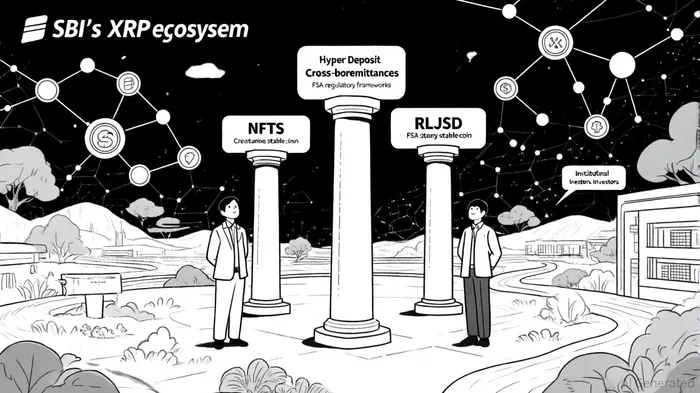
Japan's financial landscape is undergoing a seismic shift as SBI Holdings, the nation's largest banking group, accelerates its integration of XRPXRP-- into traditional banking infrastructure. This strategic move, underpinned by a decade-long partnership with Ripple and aligned with evolving regulatory frameworks, is positioning Japan as a global leader in institutional-grade digital asset adoption. By combining technical innovation with policy foresight, SBI is notNOT-- only reshaping domestic financial systems but also setting a precedent for how emerging markets can bridge the gap between legacy institutions and blockchain-based solutions.
Strategic Infrastructure: Hyper Deposit and XRP's Embedded Utility
SBI's Hyper Deposit service, launched in September 2025, represents a groundbreaking fusion of traditional banking and cryptocurrency incentives. The product allows customers to open yen deposit accounts seamlessly linked to their SBI Shinsei Bank and SBI Securities accounts, enabling instant access to liquidity without manual transfers[1]. Crucially, users receive XRP rewards upon account activation, incentivizing participation in the XRP ecosystem[2]. This model not only enhances user engagement but also demonstrates XRP's utility as a bridge between fiat and digital assets.
The technical architecture of Hyper Deposit leverages Ripple's On-Demand Liquidity (ODL) technology, which has been a cornerstone of SBI's cross-border payment solutions since 2021[3]. By automating fund flows and offering competitive interest rates (0.42% annual yield), SBI is creating a self-sustaining loop where XRP serves as both a reward mechanism and a facilitator of financial efficiency. Furthermore, the integration of XRP into mortgage programs and reward points conversion (via the Aplus credit card) underscores its growing role in everyday financial activities[4].
Regulatory Alignment: FSA's Framework for Crypto Mainstreaming
Japan's regulatory environment has been a critical enabler of SBI's XRP-driven initiatives. The Financial Services Agency (FSA) has introduced a series of reforms in 2025, including the reclassification of certain digital assets as securities under the Financial Instruments and Exchange Act (FIEA). This shift allows for the creation of regulated crypto ETFs, with SBI filing proposals for Japan's first Bitcoin-XRP ETF and a hybrid “Digital Gold Crypto ETF”[5]. These products, expected to launch by 2026, will provide institutional investors with a familiar, compliant vehicle to access XRP and BitcoinBTC--, reducing barriers to entry.
Complementing this, Japan's move to a flat 20% capital gains tax on crypto profits (replacing a progressive rate of up to 55%) has further aligned incentives for institutional adoption[6]. The FSA has also relaxed reserve requirements for stablecoins, enabling SBI VC Trade to secure the country's first stablecoin license for USDC[7]. These reforms reflect a broader “New Capitalism” strategy aimed at transforming Japan into an investment-driven economy while maintaining investor protections.
Ripple's Ecosystem Expansion: NFTs, RLUSD, and Institutional Demand
SBI's collaboration with Ripple extends beyond payments into NFTs and stablecoins, amplifying XRP's utility. For instance, SBI has issued XRP-based NFTs for events like Expo 2025 Osaka, embedding the asset into cultural and commercial ecosystems[8]. Meanwhile, the planned introduction of Ripple's RLUSD stablecoin in Japan by early 2026—facilitated through a memorandum of understanding between SBI and Ripple—signals a strategic push to anchor XRP in institutional-grade stablecoin infrastructure[9].
These initiatives are expected to drive institutional demand for XRP. With 80% of Japanese banks reportedly targeting XRP adoption by 2025[10], and SBI's proposed XRP buyback program and $50 million investment in Circle[11], the asset is increasingly viewed as a cornerstone of Japan's digital financial infrastructure.
Challenges and Skepticism: A Test of Long-Term Commitment
Despite these advancements, skepticism persists. Critics point to a history of unfulfilled promises around XRP adoption in Japan, particularly regarding cross-border payment dominance[12]. However, SBI's methodical approach—prioritizing regulatory alignment, technical integration, and user incentives—suggests a more sustainable path. The success of Hyper Deposit and the FSA's progressive stance indicate that Japan is not merely experimenting with crypto but actively building a framework for its institutionalization.
Conclusion: A Blueprint for Global Adoption
SBI's XRP integration in Japan exemplifies how strategic infrastructure development and regulatory alignment can catalyze institutional adoption of digital assets. By embedding XRP into banking products, cross-border solutions, and regulated investment vehicles, SBI is creating a blueprint for other markets to follow. As Japan's reforms gain traction and Ripple's ecosystem expands, XRP's role as a bridge between traditional and digital finance is poised to become a defining narrative in the crypto industry.






Comentarios
Aún no hay comentarios