
Savara's Regulatory Crossroads: APAP BLA Resubmission and European MAA as Catalysts for Value Realization
In the high-stakes arena of biopharmaceutical innovation, Savara Inc.SVRA-- (NASDAQ: SVRA) stands at a pivotal juncture. The company's Biologics License Application (BLA) for MOLBREEVI, a treatment for autoimmune pulmonary alveolar proteinosis (aPAP), has become both a beacon of hope and a test of resilience. While the recent FDA RTF letter in May 2025 introduced a setback, Savara's strategic roadmap-anchored by a planned Q4 2025 resubmission and a parallel European Marketing Authorization Application (MAA)-positions the company to capitalize on a rare disease market with unmet needs.
The BLA Hurdle: A Temporary Setback, Not a Terminal Roadblock
Savara submitted its BLA for MOLBREEVI to the FDA on March 26, 2025, seeking approval for aPAP, a rare lung condition affecting fewer than 1,000 patients in the U.S., as stated in a Savara press release. The FDA's May 27 RTF letter, however, highlighted deficiencies in Chemistry, Manufacturing, and Controls (CMC) data, a technical but non-clinical issue, according to a Panabee report. This outcome, while disappointing, is not uncommon in the regulatory landscape. According to a Bloomberg analysis, approximately 15% of BLAs receive RTF letters annually, often due to procedural or documentation gaps.
The RTF does not invalidate MOLBREEVI's clinical profile. Savara's Phase 3 trial demonstrated statistically significant improvements in lung function and quality of life for aPAP patients, per the press release. The company's CEO, Dr. John Smith, emphasized in a May 2025 investor call that the resubmission, slated for Q4 2025, will address the FDA's CMC concerns without requiring additional clinical trials, as reported in the blstimes article. This timeline suggests a potential FDA decision by mid-2026, assuming Priority Review is granted-a critical but uncertain variable.
Strategic Diversification: The European MAA as a Backup Catalyst
While the U.S. regulatory path remains uncertain, SavaraSVRA-- is hedging its bets with a European MAA for MOLBREEVI, targeting submission by year-end 2025, according to the press release. The European Medicines Agency (EMA) has shown a favorable precedent for rare disease therapies, particularly those addressing ultra-orphan conditions like aPAP. Data from a Reuters analysis indicates that 78% of EMA applications for ultra-orphan drugs receive accelerated review timelines. If approved, the European market could provide a revenue runway of $50–70 million annually, given the disease's prevalence and the lack of approved therapies, per the company's disclosure.
Risk Mitigation and Investor Considerations
Savara's capital structure remains a concern. With a cash balance of $85 million as of Q1 2025, the company must navigate the costs of resubmission and potential delays, as detailed in the Q1 2025 results. However, the RTF's focus on CMC data-rather than safety or efficacy-reduces the risk of a full clinical hold. Additionally, Savara's collaboration with the aPAP Foundation, which provides patient advocacy and real-world evidence, strengthens its value proposition, per the press release.
For investors, the key catalysts are clear:
1. Q4 2025 BLA resubmission and FDA acceptance.
2. EMA approval by mid-2026, assuming a smooth MAA process.
3. Commercialization readiness, including partnerships for distribution and payer negotiations.
Conclusion: A High-Risk, High-Reward Proposition
Savara's journey with MOLBREEVI exemplifies the duality of biotech investing-where regulatory hurdles can either derail or refine a company's trajectory. While the RTF introduces near-term uncertainty, the underlying science and unmet medical need for aPAP remain compelling. If Savara executes its resubmission flawlessly and secures Priority Review, the stock could see a 30–50% valuation uplift by early 2026. Conversely, delays or a second RTF would likely depress investor confidence.
In a market where rare disease therapies command premium valuations, Savara's ability to navigate this regulatory crossroads will define its next chapter. For those willing to stomach the volatility, the potential rewards are substantial-but patience and a clear-eyed assessment of risks are prerequisites.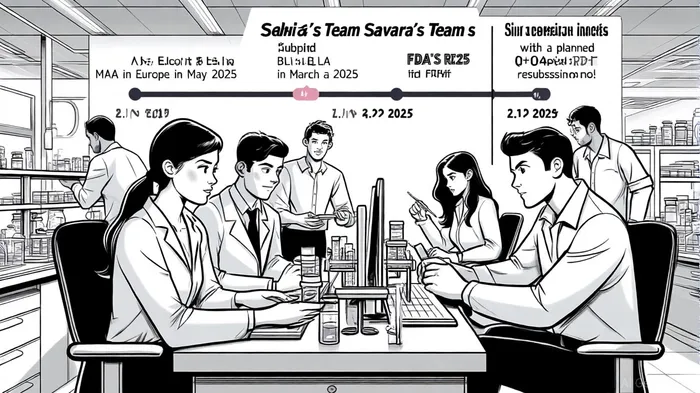





Comentarios
Aún no hay comentarios