
Saudi-Iran Diplomacy: Geopolitical Shifts and Investment Opportunities
The visit of Saudi Defense Minister Prince Khalid bin Salman to Tehran on April 17, 2025, marks a pivotal moment in Gulf geopolitics. As Iran and the U.S. prepare for indirect talks in Oman, the Saudi-Iranian dialogue aims to stabilize regional security, foster economic ties, and address shared challenges like the Gaza crisis and conflicts in Syria and Yemen. This diplomatic thaw, paired with lingering U.S. sanctions on Iran, presents both opportunities and risks for investors across energy, defense, and infrastructure sectors.
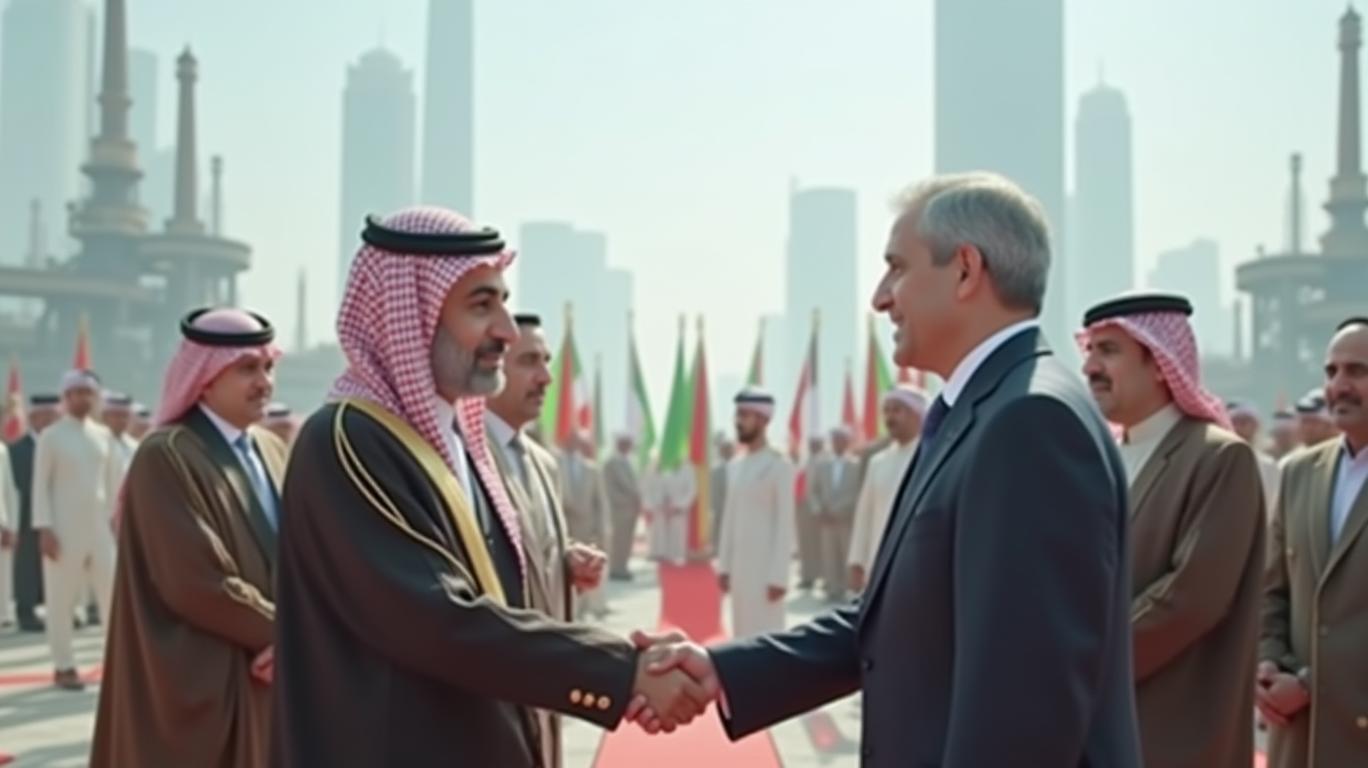
Geopolitical Context: A Fragile Rapprochement
The Saudi-Iran visit underscores a cautious détente between two regional powers historically at odds. Key agenda items include coordinating responses to regional instability, formalizing defense collaboration, and signaling support for upcoming Iran-U.S. talks. While the visit aims to reduce tensions, it occurs amid persistent U.S. sanctions targeting Iran’s oil exports, which account for roughly 40% of Tehran’s revenues.
The U.S. Treasury’s recent sanctions on a Chinese "teapot" refinery—accused of purchasing over $1 billion in Iranian crude—highlight the administration’s resolve to curb Tehran’s oil income. Concurrently, OPEC+’s April 2025 decision to boost oil production by 411,000 barrels per day (bpd) reflects geopolitical pressures to stabilize global prices.
Investment Implications
Energy Sector: Sanctions and Supply Chain Shifts
Iran’s exclusion from OPEC+ production agreements complicates its oil market access. However, its ties with China—its largest buyer—remain robust, with Beijing relying on Iranian crude to offset supply gaps. Investors in energy infrastructure, such as LNG terminals and refining capacity, may benefit from Gulf nations’ diversification strategies. For instance, Saudi Aramco and UAE’s ADNOC are expanding equity stakes in U.S. LNG projects like Woodside’s Louisiana terminal, leveraging geopolitical alignment with the Trump administration.
Meanwhile, Qatar’s March 2025 gas deal with Syria—via Jordan’s Aqaba port—demonstrates how regional players navigate sanctions through indirect trade. Investors in natural gas pipelines or storage facilities in the Eastern Mediterranean may see long-term value, though sanctions risks persist.
Defense and Security: Pragmatic Cooperation
While major defense deals are unlikely, Saudi-Iran discussions could yield agreements on joint counterterrorism operations or cybersecurity initiatives. Defense contractors with regional ties, such as those providing surveillance technology or logistics support, may see incremental opportunities. The U.S. military’s enduring presence in the Gulf also underpins demand for defense services, even as Riyadh explores partnerships with non-Western suppliers like China and Russia.
Infrastructure and Trade: Regional Rebuilding
Stable Saudi-Iran relations could unlock funding for post-war reconstruction in Syria, Yemen, and Gaza. Investors in construction materials or renewable energy projects—such as solar farms in the Gulf—might benefit from cross-border initiatives. The World Bank estimates that Gaza’s reconstruction alone will require over $4 billion, creating opportunities for firms specializing in disaster recovery.
Risks and Challenges
- U.S. Sanctions Enforcement: The Treasury’s April 2025 sanctions on Chinese entities underscore the risks of investing in Iran’s oil trade. Secondary sanctions could deter global firms from engaging with Tehran’s economy.
- Geopolitical Volatility: OPEC+ production decisions and U.S. tariffs on Gulf crude exports—such as the 39% levy on Saudi oil—threaten market stability. A would reveal these dynamics.
- Domestic Opposition: Hardliners in both Iran and Saudi Arabia may resist deeper collaboration, especially on issues like Iran’s missile program or support for proxies.
Conclusion
The Saudi-Iran dialogue signals a strategic pivot toward regional stability, with tangible benefits for investors in energy, defense, and infrastructure. However, success hinges on the April U.S.-Iran talks, which could ease sanctions and unlock Iran’s economic potential. Key data points include:
- $1 billion: The value of Iranian crude purchased by a sanctioned Chinese refinery, illustrating the limits of sanctions enforcement.
- 411,000 bpd: OPEC+’s production boost, reflecting geopolitical pressures to lower oil prices.
- $4 billion: Estimated Gaza reconstruction costs, highlighting demand for regional investment.
While risks remain—from U.S. sanctions to OPEC+ volatility—the thaw in Saudi-Iran ties opens pathways for strategic investments in a region central to global energy and security.
This analysis synthesizes geopolitical developments and market data to guide investment decisions, emphasizing opportunities in energy diversification, regional infrastructure, and pragmatic defense partnerships.







Comentarios
Aún no hay comentarios