
Saudi CMA-Rawasi's Strategic Rebranding to Alternative Capital Company: A Signal of Shifting Investment Priorities in the Kingdom
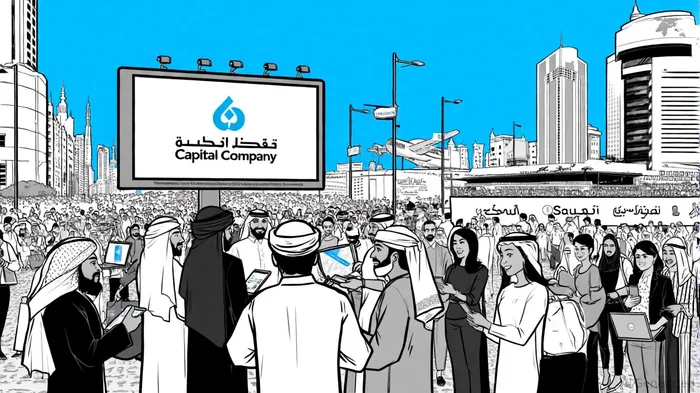
The rebranding of Saudi Arabia's CMA-Rawasi to the Alternative Capital Company in 2025 marks a pivotal shift in the Kingdom's financial strategy, signaling a deliberate pivot toward alternative asset management and global capital integration. This transformation, aligned with Saudi Vision 2030 and the Capital Market Authority's (CMA) 2024–2026 strategic plan, reflects a broader ambition to diversify the economy, attract foreign investment, and position the Kingdom as a regional and global financial hub. For investors in alternative assets, the rebranding heralds both opportunities and challenges, reshaping the regulatory, structural, and market dynamics of the Saudi capital ecosystem.
Strategic Rationale: Vision 2030 and the CMA's 2024–2026 Plan
The rebranding is underpinned by the CMA's strategic goals to deepen the capital market's role in financing and investment. By 2025, the CMA aims to increase the stock market's value to 80.8% of GDP, a target achieved through initiatives such as expanding sukuk (Islamic bonds) and debt instruments, enhancing asset management competitiveness, and introducing innovative mechanisms like Special Purpose Acquisition Companies (SPACs) and Saudi Depositary Receipts, according to an Arab News report. These reforms are designed to attract both domestic and international investors, with SPACs in the parallel market (Nomu) already showing promise in boosting liquidity and market accessibility, as noted in a BDO analysis.
The rebranding of Rawasi Financial Solutions, a key player in corporate and real estate investment advisory, further underscores this alignment. By integrating its services with the CMA's broader objectives, the firm is positioned to support Vision 2030's economic diversification goals, particularly in sectors like infrastructure, renewable energy, and technology, as noted in the Arab News report. This strategic realignment not only strengthens the capital market's role in financing non-oil sectors but also signals a shift toward a more inclusive and competitive financial ecosystem.
Regulatory Reforms and Investor Opportunities
The rebranding coincides with a wave of regulatory changes aimed at modernizing Saudi Arabia's investment framework. Royal Decree No. M/19, effective February 2025, replaces the outdated Foreign Investment Law of 2000, introducing a unified legal framework that streamlines business operations and enhances investor protections, according to a Youssef Law overview. Key reforms include equal treatment for local and foreign investors, simplified registration processes, and expanded dispute resolution mechanisms such as arbitration and mediation. Additionally, the Ministry of Investment (MISA) has introduced a new investor registration system that eliminates sector-specific licenses, allowing foreign investors to operate across multiple industries, as noted in the Youssef Law overview.
For alternative asset investors, these reforms create a more transparent and accessible environment. The CMA's proposal of "simplified investment funds" with reduced costs and regulatory flexibility is particularly noteworthy. These funds cater to institutional and qualified investors, offering lighter regulatory requirements and greater contractual flexibility between fund managers and investors, according to an Asharq Al-Awsat report. Furthermore, the expansion of real estate investment trusts (REITs) and enhanced disclosures on debt holdings provide new avenues for capital deployment in real estate and infrastructure projects, as the Asharq Al-Awsat report highlights.
However, the regulatory landscape is not without constraints. A 49% cap on foreign ownership in publicly traded companies, with exemptions for strategic investors and Qualified Foreign Institutional Investors (QFIIs), introduces a layer of complexity. While this restriction aims to maintain financial stability, it also necessitates creative structuring for foreign investors seeking larger stakes in Saudi-listed firms, a point underscored by the Asharq Al-Awsat report.
Market Reactions and Economic Impact
The market has responded positively to these reforms. In 2024, the CMA reported record-breaking assets under management exceeding one trillion SAR, with a 20.9% year-on-year growth rate. Foreign inflows surged to SAR 218 billion in 2024, a 10.1% increase compared to the previous year, driven by the Kingdom's regulatory enhancements and Vision 2030's global appeal, according to a Zawya report. The IPO pipeline has also gained momentum, with 12 companies listing on the Saudi Exchange in the first four months of 2025, raising over SAR 7.1 billion, as reported by The Arabian Post.
The rebranding's impact extends beyond traditional equities. The aviation sector, for instance, is set to benefit from the CMA's approval of Flynas' IPO, a budget airline planning to expand its fleet to 160 aircraft by 2030, according to the Arabian Post report. Similarly, the Public Investment Fund (PIF)'s revised 2030 target of $2.67 trillion in assets under management underscores its role as a capital anchor for large-scale infrastructure and sustainability projects, as described in a LinkedIn analysis.
Post-Rebranding Initiatives and Sectoral Focus
The Alternative Capital Company's post-rebranding strategies emphasize alternative assets such as private equity (PE), private credit (PC), and venture capital (VC). The PIF's localization strategy is directing investors toward structural buyouts and growth investments in sectors like healthcare, education, and renewable energy, supported by Public-Private Partnerships (PPPs), as discussed in the LinkedIn analysis. In private credit, the focus is on addressing liquidity gaps in mega-projects and scaling technology companies, exemplified by FinTech unicorn Tamara's $2.4 billion facility, a detail noted in the LinkedIn analysis.
Venture capital is thriving, particularly in FinTech, with early-stage investments in AI, cybersecurity, and deep tech solutions gaining traction. Fintech platforms like erad and HALA are democratizing access to alternative investments, offering Sharia-compliant sukuk-based crowdfunding and embedded financial services to SMEs, as highlighted in a PragmaticCoders list. These platforms align with Vision 2030's goal of enhancing SME participation in the national economy, while also addressing the financing needs of small businesses.
Strategic Partnerships and Global Integration
The rebranding has also spurred strategic partnerships between Saudi institutions and global players. For example, Hassana Investment Company's collaboration with Warburg Pincus highlights the Kingdom's growing emphasis on leveraging global capital and expertise, reported in an AlternativesWatch report. Similarly, the PIF's role in co-investments and supply chain partnerships for infrastructure and sustainability projects positions Saudi Arabia as a key player in the global alternative asset market, a theme echoed in the LinkedIn analysis.
Conclusion: A New Era for Alternative Asset Investors
The rebranding of Saudi CMA-Rawasi to the Alternative Capital Company is more than a name change-it is a strategic signal of the Kingdom's commitment to transforming its financial landscape. For alternative asset investors, this shift opens doors to a more dynamic, regulated, and globally integrated market. While regulatory constraints and market-specific challenges remain, the combination of Vision 2030's economic diversification goals, the CMA's reforms, and the PIF's strategic initiatives creates a compelling case for long-term investment. As Saudi Arabia continues to refine its capital market infrastructure, the Alternative Capital Company's role in facilitating access to alternative assets will likely become a cornerstone of the Kingdom's financial evolution.







Comentarios
Aún no hay comentarios