
Saudi Basic Industries Corp (SABIC): Strategic Position in the Global Transition to Circular Plastics
In the race to decarbonize global industries and close the plastics circularity gap, Saudi Basic Industries Corp (SABIC) has emerged as a pivotal player. As the world grapples with the environmental and economic challenges of plastic waste, SABIC's strategic investments in circular plastics and decarbonization align with both global sustainability goals and the long-term financial interests of investors. By leveraging cutting-edge petrochemical innovations and forging high-impact partnerships, SABIC is not only addressing urgent environmental concerns but also positioning itself to capture a growing market for sustainable materials.
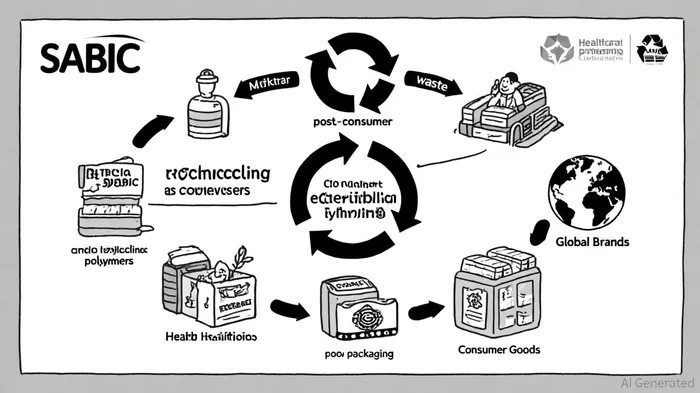
Circular Plastics: A Cornerstone of SABIC's Growth Strategy
SABIC's TRUCIRCLE™ portfolio has become a flagship of its circular economy initiatives. The company's collaboration with Zuyderland Medical Center in the Netherlands exemplifies its innovative approach: non-contaminated medical plastic waste is converted into pyrolysis oil, which is then used to produce certified circular polyethylene (PE) with up to 49% recycled content. This material now finds applications in healthcare packaging, including vascular surgery guide wires and surgical drapes, as reported in a PlasticsToday report. Such breakthroughs underscore SABIC's ability to transform waste streams into high-value products, a critical factor in scaling circular plastics adoption.
Beyond healthcare, SABIC has expanded its circular polymer capacity through partnerships with global brands. For instance, its joint venture with Plastic Energy to build the world's first commercial unit for mixed plastic waste conversion was noted in a Chemical Research Insight feature, and its collaboration with Polivouga and Nueva Pescanova Group to develop the first frozen food packaging using certified circular polyethylene was reported by PlasticsToday. These efforts are supported by SABIC's ambitious target of achieving 1 million metric tons of annual circular polymer capacity by 2030, a goal that aligns with a projected market valuation of USD 1,096.99 million by 2032 (as covered by Chemical Research Insight).
Decarbonization: A Multi-Pathway Roadmap to Carbon Neutrality
SABIC's decarbonization strategy is equally robust. The company's Carbon Neutrality Roadmap outlines five key pathways-reliability, energy efficiency, renewable energy, electrification, and carbon capture-to achieve a 20% reduction in greenhouse gas emissions by 2030 and full carbon neutrality by 2050. A standout initiative is its partnership with BASF and Linde to construct the world's first large-scale electrically heated steam cracker, expected to cut CO₂ emissions by up to 90%. Additionally, SABIC's Carbon Capture Use and Storage (CCUS) hub in Jubail aims to capture 4 million metric tons of CO₂ annually by 2030, a move that directly supports Saudi Vision 2030's energy transition goals.
Financially, SABIC's commitment to decarbonization is underpinned by strong performance. In 2024, the company reported revenue of SAR 139.98 billion (US$37.33 billion) and an EBITDA margin of 13.9%, driven by innovation and portfolio optimization, as outlined in its sustainability strategy. Despite reducing its 2025 GDP growth forecast to 2.2% due to global trade uncertainties (reported by PlasticsToday), SABIC remains poised for strategic investment, with planned expenditures of $3.5–4 billion in 2025, including the Fujian petrochemical complex in China (also reported by PlasticsToday).
Third-Party Validation and Market Leadership
SABIC's leadership in the circular plastics sector is further validated by industry recognition. Ranked among the top 10 companies in the circular polymer industry for 2025 by Chemical Research Insight, SABIC has received accolades such as the 2023 Sustainability Leadership Award from the American Chemistry Council for its ocean-bound plastic initiatives (reported by PlasticsToday). Its blockchain pilot project to track circular feedstock in customer products is described in SABIC's sustainability materials, and the development of Gen 2 LNP™ ELCRIN™ iQ resin for upcycling PET waste was highlighted by Chemical Research Insight, demonstrating its technological edge.
Conclusion: A Sustainable Path to Long-Term Growth
SABIC's dual focus on circular plastics and decarbonization positions it as a leader in the transition to a low-carbon, resource-efficient economy. By combining advanced recycling technologies, strategic partnerships, and a clear roadmap to carbon neutrality, SABIC is addressing both regulatory pressures and consumer demand for sustainable solutions. For investors, the company's alignment with global sustainability trends, robust financials, and ambitious growth targets make it a compelling long-term bet. As the circular economy gains momentum, SABIC's ability to innovate and scale will likely drive value creation for years to come.







Comentarios
Aún no hay comentarios