
Saudi Arabia's Strategic Capital Reallocation and Its Implications for Mecca's Real Estate Sector
Strategic Rationale: Capital Reallocation and Market Liberalization
The PIF's stake sale is not merely a financial maneuver but a strategic recalibration. By partially divesting its holdings in Masar, the fund aims to optimize liquidity while retaining a controlling stake. This approach aligns with global trends where sovereign wealth funds increasingly prioritize dynamic portfolio management to balance long-term growth with short-term flexibility according to Zawya.
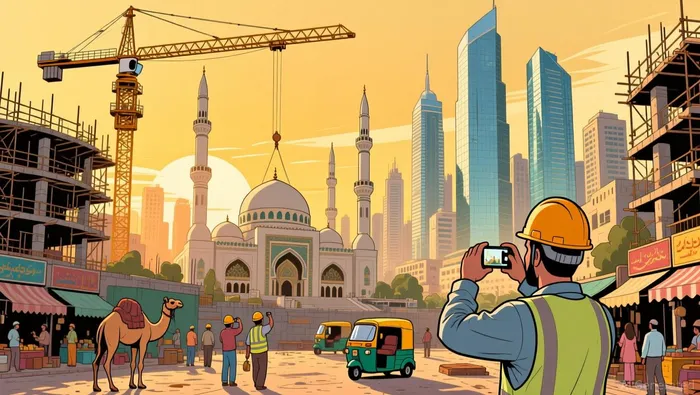 More importantly, the sale underscores Saudi Arabia's commitment to opening its real estate sector to foreign investment. Regulatory changes permitting foreign ownership in Mecca and Medina properties have already begun to reshape the landscape according to Arab News. As noted by experts at the Real Estate Future Forum, these reforms are designed to attract international capital by leveraging the Kingdom's religious tourism potential and infrastructure investments according to Arab News. The Masar project, with its 38,000 hotel rooms and 13,000 residential units, exemplifies this vision, positioning Mecca as a global hub for both pilgrimage and leisure tourism according to Gulf News.
Implications for Mecca's Real Estate Sector
The PIF's stake sale has immediate and long-term implications for Mecca's property market. First, the oversubscribed nature of the offering-despite a 90-day lock-up period-demonstrates strong investor confidence in the project's viability according to Zawya. This confidence is further bolstered by the project's scale and its alignment with Saudi Arabia's economic diversification goals. According to a report by Bloomberg, Umm Al Qura's shares have surged 47% in 2025, outperforming many Saudi equities according to Bloomberg.
Second, the sale signals a shift toward market-driven valuation mechanisms. By pricing the stake at SAR 19.8 per share, PIF has set a benchmark for future transactions, potentially encouraging private equity and institutional investors to enter the market according to Zawya. This is particularly significant for Mecca, where real estate has historically been dominated by state actors. The involvement of Citigroup and SNB Capital as joint bookrunners also highlights the internationalization of Saudi capital markets according to Zawya.
Foreign Investment and Economic Projections
The liberalization of Mecca's real estate sector is expected to catalyze foreign investment inflows. The Capital Market Authority's (CMA) recent decision to allow foreign ownership in Mecca and Medina properties has already drawn interest from global investors according to Arab News. Standard Chartered, a key player in Saudi Arabia's financial ecosystem, has described the Kingdom's real estate market as a "fundamental investment boom," citing its alignment with Vision 2030's tourism and infrastructure goals according to Arab News.
Expert projections further reinforce this optimism. Housing price forecasts for Mecca indicate a gradual upward trend, with average prices expected to rise from 207,124 SAR in January 2026 to 211,723 SAR by December 2026 according to Wallet Investor. These projections, while cautious, reflect the sector's resilience amid broader market volatility. The Masar project's anticipated completion could amplify this growth, as it is designed to accommodate both pilgrims and tourists, creating a dual demand driver according to Gulf News.
Conclusion: A New Era for Mecca's Real Estate
The PIF's stake sale in Umm Al Qura marks a pivotal moment in Saudi Arabia's economic transformation. By combining strategic capital reallocation with market liberalization, the Kingdom is not only diversifying its revenue streams but also positioning Mecca as a global real estate destination. The success of the Masar project-and the broader Mecca real estate market-will hinge on sustained regulatory clarity, infrastructure development, and the ability to attract both domestic and international investors. As the 90-day lock-up period concludes on November 26, 2025 according to Zawya, all eyes will be on how this transaction reshapes the dynamics of one of the world's most historically and economically significant cities.







Comentarios
Aún no hay comentarios