
Saudi Arabia's Automotive Revolution: How the PIF-Hyundai JV is Dominating the Middle East's EV Future
The Middle East’s automotive sector is on the cusp of a transformation, and Saudi Arabia is positioning itself as the regional leader. The Public Investment Fund (PIF)-Hyundai Motor Company joint venture (JV), Hyundai Motor Manufacturing Middle East (HMMME), is not merely a manufacturing plant—it is a strategic masterstroke to capture high-growth demand in a underpenetrated market. This partnership leverages Saudi Arabia’s Vision 2030 industrial policy, Hyundai’s global scale, and PIF’s capital firepower to establish dominance in the region’s automotive sector while accelerating economic diversification. For investors, this is a rare opportunity to bet on a first-mover advantage in a market poised for exponential growth.
The Strategic Alignment of Giants
The JV’s $500 million investment and 50,000-vehicle annual production capacity (split between ICE and EV models) are just the beginning. Groundbreaking in May 2025 and first production slated for late 2026 mark rapid execution, underscoring PIF’s urgency to transform Saudi into a global automotive hub. The 70%-30% equity split ensures PIF retains strategic ownership, while Hyundai’s technical expertise bridges the gapGAP-- between Saudi’s ambition and global manufacturing standards.
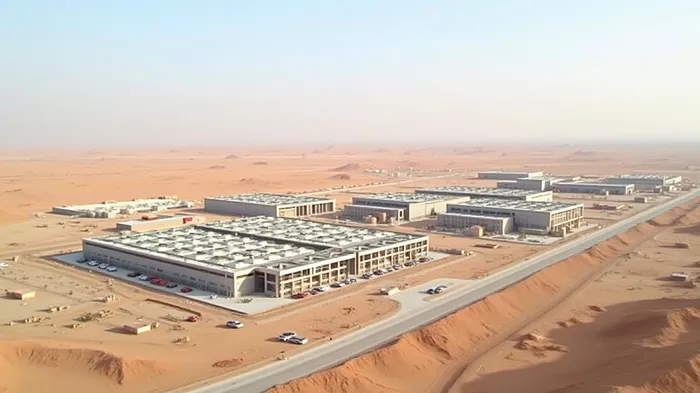
This partnership is a pillar of Vision 2030, Saudi’s blueprint to diversify its economy away from oil. The automotive sector directly supports multiple priorities: creating jobs (thousands of roles in manufacturing and supply chains), boosting domestic industry, and reducing reliance on imports. With EV adoption in the Gulf lagging behind global averages—currently under 5% of new vehicle sales—the JV’s focus on electrification aligns with Saudi’s net-zero goals and positions it to capitalize on a $20 billion EV market opportunity projected for the region by 2030.
EV Adoption: A Tailwind for Growth
The Middle East’s EV market is underpenetrated but ripe for disruption. Hyundai’s EV lineup, including its IONIQ models and plans for 12 BEV models by 2025, will be critical to attracting buyers. Meanwhile, PIF’s infrastructure investments—such as EVIQ’s 5,000 fast chargers by 2030—are dismantling range anxiety and building a supportive ecosystem.
The JV’s localization strategy extends beyond vehicles. Partnerships like PIF’s joint venture with tire manufacturer Pirelli ensure critical components are produced locally, reducing reliance on imports and creating supply chain resilience. This vertical integration—paired with Hyundai’s automation and smart manufacturing—will drive cost efficiencies and quality standards competitive with global peers.
Supply Chain Localization: Reducing Import Reliance
Saudi Arabia currently imports over 90% of its vehicles, a drain on foreign exchange reserves and a missed opportunity for domestic industrial growth. The HMMME plant is designed to reverse this. By producing core components like batteries and EV systems locally, the JV reduces costs and creates multiplier effects across industries. For example, PIF’s TASARU initiative streamlines automotive logistics, while Ceer Motors (PIF’s homegrown EV brand) and Lucid Group (PIF’s $1 billion-backed luxury EV company) form an ecosystem of innovation.
The economic impact is profound: 30,000+ jobs by 2034 (including indirect roles), $8 billion added to GDP, and a strengthened manufacturing base. This is not just about cars—it’s about building a 21st-century industrial economy.
Why Investors Should Act Now
The PIF-Hyundai JV is a first-mover advantage in a $200 billion regional automotive market. Here’s why investors must allocate capital:
- Untapped Market Potential: Gulf EV sales are projected to grow at a 35% CAGR through 2030, but penetration remains low. Hyundai’s global scale and PIF’s infrastructure investments will accelerate adoption.
- PIF’s Portfolio Power: PIF’s stakes in Lucid, Ceer, and EVIQ create a synergistic ecosystem. Allocating to PIF-linked equities or Saudi’s sovereign wealth fund instruments (e.g., PIF’s public listings) offers exposure to this growth.
- Hyundai’s Global Reach: Hyundai’s Strategy 2025 prioritizes EVs and hydrogen, aligning with the JV’s tech roadmap. Investors can benefit through Hyundai’s stock or regional automotive ETFs.
Conclusion: A Golden Opportunity in a Strategic Market
The PIF-Hyundai JV is more than a factory—it’s a catalyst for Saudi Arabia’s industrial revolution. By combining PIF’s capital, Hyundai’s manufacturing prowess, and Vision 2030’s ambition, this partnership is primed to dominate the Middle East’s automotive sector while unlocking economic diversification. With EV adoption in its infancy and supply chain localization driving cost efficiencies, the region is ripe for exponential growth.
For investors, the time to act is now. Allocate to Hyundai Motor Company (HYMLY), PIF-linked equities, or broader automotive ETFs (e.g., Guggenheim Electric Vehicles ETF) to capture this once-in-a-generation opportunity in a market where the first movers will dominate for decades.
The wheels are in motion—don’t miss the ride.







Comentarios
Aún no hay comentarios