
Sats Terminal and the Bitcoin Credit Layer: Unlocking Institutional Adoption and New Financial Use Cases
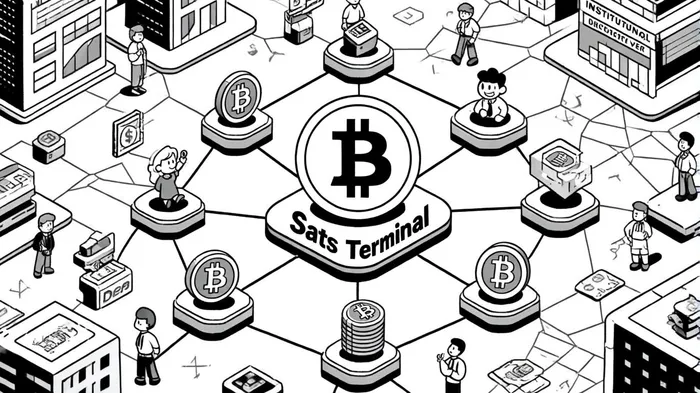
The BitcoinBTC-- ecosystem is undergoing a seismic shift. What was once a digital store of value—often compared to gold—is now rapidly evolving into a dynamic financial asset. At the heart of this transformation is the development of a Bitcoin credit layer, a foundational infrastructure that enables lending, derivatives, and yield generation. Sats Terminal, a San Francisco-based Bitcoin DeFi aggregation protocol, is leading this charge. By building tools that unlock liquidity and institutional-grade financial instruments, the company is positioning Bitcoin to rival traditional assets in utility and scalability.
The Rise of the Bitcoin Credit Layer
Sats Terminal's mission is to transform Bitcoin from a passive asset into a productive one. The platform, co-founded by Rishabh Java and Stanislav Havryliuk, has raised $1.7 million in pre-seed funding from prominent investors like CoinbaseCOIN-- Ventures and Draper Associates[1]. This capital is being deployed to develop a credit layer that allows users to borrow against their Bitcoin holdings without selling the asset. This innovation is critical: it preserves long-term exposure to Bitcoin's price appreciation while providing immediate liquidity for use cases like yield generation, risk management, or operational capital[2].
The credit layer's potential is vast. According to a report by Cryptopolitan, Bitcoin-backed loans could reach tens of billions of dollars in volume over the next decade[3]. This is not just speculative optimism—Sats Terminal has already demonstrated traction. In its first six months, the platform routed $20 million in trading volume across decentralized exchanges and bridges, integrating with over 20 partner apps, including Xverse and Magic Eden[4]. By aggregating fragmented protocols, Sats Terminal simplifies access to Bitcoin DeFi, reducing friction for both retail and institutional users.
Institutional Adoption: A New Era for Bitcoin
The development of a robust credit layer is a catalyst for institutional adoption. Historically, Bitcoin's lack of financial infrastructure limited its appeal to traditional investors. However, regulatory clarity—such as the SEC's repeal of SAB 121 in 2024—has removed barriers for banks and asset managers to engage with on-chain financial operations[5]. Sats Terminal's infrastructure aligns with this shift, offering tools that mirror traditional credit markets. For example, Bitcoin-backed loans function similarly to gold-backed credit instruments, enabling institutions to leverage their holdings without liquidation[6].
Moreover, Sats Terminal's aggregation of staking, token swaps, and bridging protocols addresses a key pain point: fragmentation. Institutional players often struggle to navigate the disjointed Bitcoin DeFi landscape. By providing a unified interface, Sats Terminal reduces operational complexity, making it easier for large investors to deploy capital efficiently[7]. This is particularly relevant as corporate entities like MicroStrategy increasingly treat Bitcoin as a yield-generating asset. In 2024, MicroStrategy's BTC Yield indicator recorded a 26.4% annualized yield, underscoring Bitcoin's potential beyond mere speculation[8].
Expanding Bitcoin's Utility: Derivatives, Risk Management, and Yield
The credit layer also opens the door to advanced financial instruments. Derivatives, such as Bitcoin-backed Credit Default Swaps (CDS), allow institutions to hedge against counterparty risk without selling their holdings[9]. While derivatives can amplify systemic risk in traditional markets, Sats Terminal's decentralized approach mitigates this by leveraging Bitcoin's inherent security and transparency[10]. For example, the platform's integration with yield protocols enables users to earn interest on collateralized Bitcoin, creating a closed-loop system where liquidity is continuously recycled[11].
Yield generation is another area of rapid growth. CoinShares predicts a Bitcoin yield revolution in 2025, driven by platforms like Sats Terminal that aggregate staking and lending opportunities[12]. This trend is already evident in the derivatives market, where Bitcoin perpetual swaps accounted for $58.5 trillion in trading volume in 2024—over 55% of the total crypto derivatives market[13]. As these markets mature, they will become essential for liquidity provision and capital efficiency, further cementing Bitcoin's role in institutional portfolios.
The Road Ahead: Challenges and Opportunities
Despite its promise, the Bitcoin credit layer faces hurdles. Regulatory scrutiny remains a wildcard, and the risk of over-leveraging in decentralized markets could lead to instability. However, Sats Terminal's focus on institutional-grade tools—such as real-time risk analytics and multi-signature collateral management—positions it to navigate these challenges[14]. The company's recent partnerships with projects like SatLayer, which is pioneering Bitcoin's universal yield layer, also highlight its commitment to innovation[15].
Conclusion
Sats Terminal is not just building a credit layer for Bitcoin—it is redefining the asset's role in the global financial system. By enabling liquidity, derivatives, and yield generation, the platform is creating a bridge between Bitcoin's current state and its future potential. For investors, this represents a unique opportunity to capitalize on the next phase of Bitcoin's evolution. As institutional adoption accelerates and the credit layer matures, Sats Terminal's infrastructure could become a cornerstone of the Bitcoin economy.





Comentarios
Aún no hay comentarios