
Sasol's Insect Oil Innovation and Strategic Treasury Moves: A Case for Undervaluation and Sustainable Growth
Insect Oil Innovation: A Bio-Circular Leap Forward
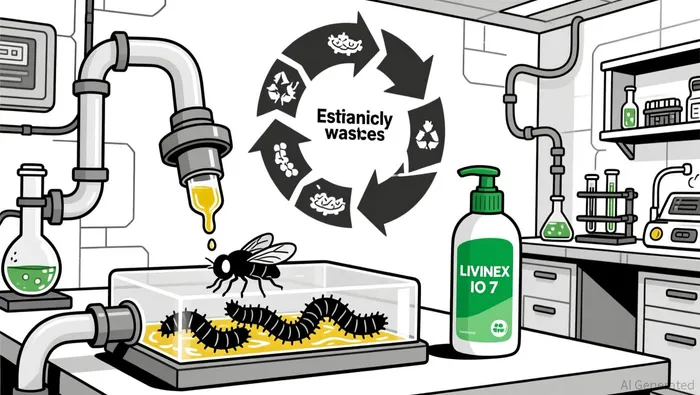
Sasol's 2025 launch of LIVINEX IO 7, a nonionic surfactant derived from black soldier fly larvae oil, marks a pivotal shift in its sustainability strategy. This product, marketed as a palm oil- and deforestation-free alternative, addresses critical environmental concerns while maintaining compatibility with existing formulations. By leveraging insect oil-a by-product of sustainable protein production for animal feed-Sasol transforms organic waste into high-value chemical feedstock. This innovation not only mitigates land-use conflicts but also positions the company to capitalize on the 8.24% CAGR projected growth of the $8.59 billion white oil market through 2034.
The scalability of LIVINEX IO 7 is further underscored by its "drop-in" functionality, allowing customers to transition to sustainable solutions without reformulating products. With over 4,000 clients across 80 countries, Sasol's ability to meet global demand for eco-friendly surfactants is a strategic differentiator. Plans to expand into the personal care sector within 12 months signal a broader diversification of revenue streams, reducing reliance on cyclical energy markets.
Strategic Treasury Moves: Balancing Resilience and Growth
Sasol's treasury strategy for 2023–2025 reflects a recalibration toward operational stability and ESG-aligned capital allocation. The company has prioritized its Southern Africa Energy & Chemicals segment, which generates the majority of its revenue through integrated value chains. By optimizing coal quality and plant availability-key metrics highlighted in Q1 FY26 performance reports-Sasol has improved margins despite pricing headwinds. This operational discipline is critical in a context where elevated debt levels and global tariffs pose risks.
The 2025 Capital Markets Day (CMD) roadmap underscores a pragmatic approach to capital spending. While the company has scaled back investments in certain environmental initiatives, it remains committed to core value-creation opportunities as outlined in its CMD presentation. CEO Simon Baloyi's leadership has been instrumental in this pivot, with Southern Africa operations achieving a fatality-free year in 2025-a testament to improved safety and operational efficiency. These moves, coupled with engagement with policymakers to mitigate tariff impacts, demonstrate a treasury strategy that balances short-term resilience with long-term sustainability.
Financial Valuation: The Case for Undervaluation
Sasol's current valuation metrics paint a stark picture of undervaluation. Trading at R123.20 per share, the stock's Price-to-Intrinsic-Value-Projected-FCF ratio of 0.51 indicates a significant discount to its projected free cash flow. Analysts attribute this gap to lingering concerns over carbon emissions. However, the company's Insect Oil Innovation and ESG-aligned product pipeline-such as white oil for pharmaceuticals and cosmetics-position it to capture premium pricing in sustainability-focused markets.
The projected growth of the nitrogenous fertilizer market (from $128.26 billion in 2024 to $224.55 billion by 2034) further amplifies Sasol's potential. As a key player in this sector, the company's integrated value chains and innovation in circular chemistry could drive earnings growth, narrowing the valuation gap over time.
Conclusion: A Sustainable Path to Value Realization
Sasol's Insect Oil Innovation and strategic treasury moves collectively address the twin imperatives of undervaluation and sustainability-driven growth. By commercializing cutting-edge bio-circular products and refining capital allocation, the company is aligning its operations with global decarbonization trends and investor expectations. While near-term challenges persist-ranging from pricing pressures to ESG scrutiny-the long-term trajectory suggests a compelling case for value realization. For investors, Sasol's current valuation offers an opportunity to participate in a transformational journey that bridges energy transition and industrial innovation.





Comentarios
Aún no hay comentarios