
Sasol’s Hidden Value: A Catalyst-Driven Revaluation on the Horizon
In a world where energy transition assets command premium valuations, Sasol LimitedSSL-- (SSL) stands out as a stark anomaly. Despite its vast gas reserves in Mozambique, a discounted asset base, and imminent policy-driven tailwinds in South Africa, Sasol trades at a valuation so deeply discounted it defies logic. Let me be clear: This is a company primed for a revaluation—and the catalysts are here now.
The Undervalued Asset Base: A Bargain at Every Turn
Sasol’s valuation metrics scream opportunity. Its price-to-book ratio of 0.29—nearly a third of its equity value—suggests the market has written off its assets. Compare this to peers like NextEra Energy (NEE), trading at 3.8x P/B, or Ørsted (ORSTED.Copenhagen) at 16.8x EV/EBITDA. Sasol’s EV/EBITDA of 2.84 is a fraction of its renewable-focused rivals, even as it generates a robust 30.58% free cash flow yield, a metric that would make Warren Buffett salivate.
The disconnect is staggering. Sasol’s net loss for FY2025 stems from operational headwinds, not asset quality. Its book value per share (ZAR 232.47) dwarfs its current share price (ZAR 3,720), implying the stock is priced as if its assets are worth less than scrap. This is a valuation floor with upside potential once catalysts materialize.
Mozambique’s LNG Milestones: The Catalyst That Could Double the Stock
The linchpin of Sasol’s revaluation is its Rovuma LNG project in Mozambique. While delays pushed first production to late 2028, the project has hit critical inflection points:
- 90% of front-end engineering design (FEED) is complete, resolving technical hurdles.
- A 20-year sales agreement with a South Korean buyer secures 3 million tons/year of LNG, locking in revenue.
- A carbon capture partnership with Japanese firms aims to slash emissions by 15% by 2030, aligning with global climate mandates.
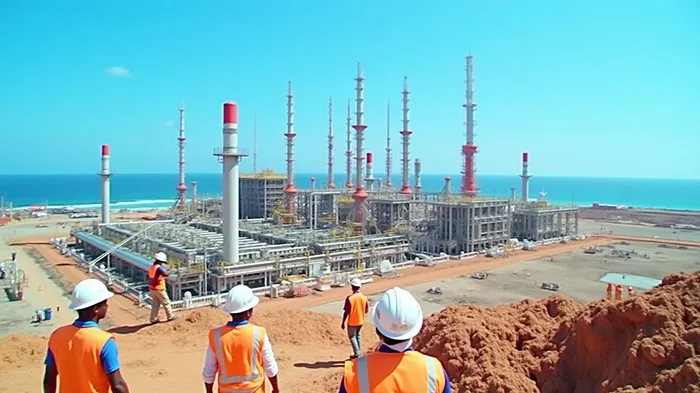
The project’s completion will transform Sasol’s earnings. At peak capacity of 12 million tons/year, Rovuma could add $2.4 billion annually in revenue—more than doubling Sasol’s current market cap. With LNG prices near decade highs, this is a timing sweet spot.
South Africa’s Regulatory Tailwinds: A Local Content Windfall
South Africa’s energy policies are now Sasol’s ally. The Integrated Resource Plan (IRP) 2025 mandates a 35% renewable energy share by 2030, but its local content requirements are the hidden gem. New rules require 40% of gas infrastructure spending to flow to local suppliers, 30% for renewables, and 10% for skills development.
For Sasol, this means:
- Cost savings through local procurement.
- Access to subsidies for projects compliant with BBBEE (Broad-Based Black Economic Empowerment) criteria.
- A shield against international competition, as rivals face higher compliance costs.
The Electricity Regulation Act Amendment of 2025 further tightens the screws, mandating 35% local content for renewables. Sasol’s scale and partnerships with South African firms position it to dominate these carve-outs.
The Risk-Adjusted Case for Immediate Action
Yes, Sasol carries risks: A Debt/Equity ratio of 0.88 and an Altman Z-Score of 1.82 (below the bankruptcy threshold of 3) raise eyebrows. But its $13.1 billion free cash flow (LTM) and the Rovuma LNG’s revenue potential create a liquidity cushion.
The stock’s -50% YTD drop has priced in nearly all pessimism. With LNG production starting in 2028 and regulatory tailwinds boosting margins, Sasol’s valuation could normalize to 5x EV/EBITDA—a 164% upside from current levels.
Conclusion: Buy the Discount, Sell the Doubters
Sasol is a valuation paradox—a company with $8 billion in equity trading at $2.3 billion, sitting atop $13 billion in cash flow and a game-changing LNG project. The catalysts are in place: Rovuma’s ramp-up, South Africa’s regulatory push, and a global LNG boom.
The question is not whether Sasol will revalue—it’s when. For investors with a 2-3 year horizon, this is a once-in-a-decade opportunity. Act now, before the market catches on.
Investors: The time to buy Sasol is now.





Comentarios
Aún no hay comentarios