
Sappi's Proposed European Graphic Paper JV: Strategic Relevance and Valuation Implications
The European graphic paper market is undergoing a profound transformation, driven by sustainability mandates, digitalization, and shifting consumer preferences. As the sector grapples with declining demand for traditional print media and overcapacity challenges, consolidation has emerged as a critical strategy for survival and competitiveness. Sappi Limited and UPM-Kymmene Corporation's proposed 50:50 joint venture (JV) to combine their European graphic paper operations represents a pivotal move in this evolving landscape. This analysis evaluates the strategic relevance and valuation implications of the JV, contextualizing its positioning against broader industry trends and competitive dynamics.
Market Dynamics and Strategic Rationale
The European graphic paper market is part of a broader paper industry projected to grow at a CAGR of 4.31% from 2025 to 2030, reaching 87.84 million tonnes by 2030. This growth is fueled by EU policies mandating recyclable or reusable packaging by 2030, which are redirecting demand toward fiber-based materials. However, the graphic paper segment itself faces structural headwinds, including declining demand for newsprint and office paper due to digitalization.
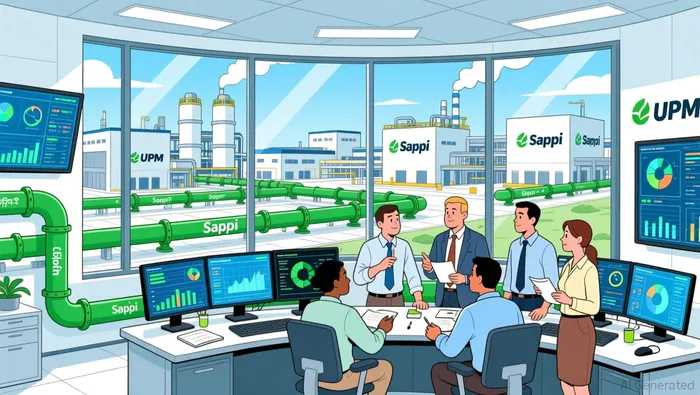
Sappi and UPM's JV is a direct response to these challenges. By consolidating their European graphic paper businesses, the two firms aim to address overcapacity, reduce energy costs, and streamline operations. The JV will integrate eight UPM mills and four Sappi mills across Europe, generating annual synergies of at least €100 million through asset optimization and logistics improvements. This move aligns with both companies' strategies to divest from a declining market and pivot toward higher-growth areas such as packaging and specialty papers.
Valuation Metrics and Financial Implications
The proposed JV is valued at €1.42 billion, excluding synergies, with UPM's Communication Papers business alone carrying a valuation of €1.1 billion-equivalent to a 4.6x EBITDA multiple based on the last 12 months according to company releases. Sappi's contribution, valued at €320 million, reflects its focus on reducing debt and strengthening its balance sheet. The transaction structure, which includes cash payments and shared ownership, underscores the partners' commitment to risk-sharing and operational flexibility.
Comparative analysis with industry peers reveals that the valuation aligns with broader trends in the sector. For instance, the European pulp and paper industry's valuation metrics are increasingly influenced by ESG performance and long-term sustainability capabilities. Sappi's recent sustainability-linked bond issuance in March 2025, raising €300 million, further highlights its emphasis on aligning financial strategy with environmental goals.
Competitive Positioning and Industry Consolidation
The JV positions Sappi and UPM to compete more effectively in a consolidating market. Key competitors such as Stora Enso and International PaperIP-- are also leveraging forest assets and advanced manufacturing technologies to meet sustainability targets. However, the Sappi-UPM JV stands out for its scale and focus on operational efficiency. By combining their European mills, the partners aim to rationalize supply, reduce carbon emissions, and improve capacity utilization-a critical advantage in a sector where energy costs and regulatory compliance are rising according to industry analysis.
Recent industry consolidations, such as Sappi's 2022 divestiture of three European graphic paper mills to AURELIUS for €272 million, illustrate the broader trend of firms exiting non-core segments according to industry reports. Similarly, UPM's strategic realignment to prioritize renewable fibers and decarbonization solutions mirrors the JV's focus on long-term growth according to company announcements. These moves reflect a sector-wide shift toward sustainability and operational resilience, with the Sappi-UPM JV serving as a benchmark for value creation through collaboration.
Challenges and Risks
Despite its strategic merits, the JV faces risks. Regulatory approvals and shareholder consent are required for the transaction to finalize by the end of 2026. Additionally, the graphic paper market's susceptibility to digital disruption and fluctuating energy prices could impact the JV's profitability. The success of the venture will depend on its ability to innovate in niche segments, such as premium packaging and specialty papers, where demand remains resilient.
Conclusion
Sappi and UPM's proposed JV represents a strategic and financially sound response to the structural challenges facing the European graphic paper market. By consolidating operations, the partners aim to enhance efficiency, reduce costs, and align with sustainability mandates-key drivers of competitiveness in a rapidly evolving industry. The valuation metrics, while modest, reflect the sector's emphasis on ESG performance and operational resilience. For investors, the JV underscores the importance of adaptability in a consolidating market, offering a model for navigating the transition from traditional graphic papers to high-growth, sustainable segments.







Comentarios
Aún no hay comentarios