
Santander's Strategic Realignment in European Consumer Finance: Operational Efficiency and Market Consolidation Opportunities
Banco Santander's strategic realignment in the European consumer finance sector has positioned it as a formidable player in a rapidly consolidating market. By leveraging post-merger integrations, cost synergies, and digital-first innovations, the Spanish banking giant is reshaping its operations to capitalize on operational efficiency and market expansion opportunities. This analysis explores how Santander's recent moves-ranging from the unification of Openbank and SantanderSAN-- Consumer Finance to high-profile acquisitions like TSB-reflect a calculated approach to strengthening its competitive edge in a challenging regulatory and economic environment.
Operational Efficiency: Streamlining Systems and Cutting Costs
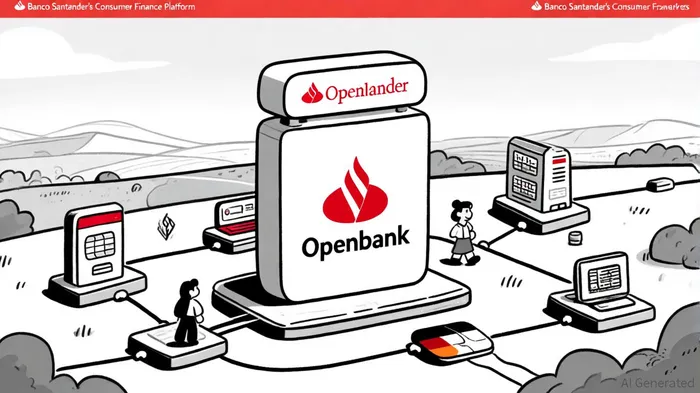
Santander's integration of Openbank and Santander Consumer Finance (SCF) into a single legal entity under the Openbank brand marks a pivotal step in its operational efficiency strategy. This consolidation, first implemented in Germany, aims to eliminate redundancies and unify customer offerings across Europe. According to a report by Santander's press room, the integration is expected to simplify operations, reduce reliance on external providers, and enhance data processing capabilities through platforms like Gravity (back-end) and ODS (front-end) [1]. These technological advancements have already driven cost synergies in the U.S. market, where Openbank by Santander reached 100,000 customers within six months, generating lower-cost deposits for the bank's retail and auto lending operations [2].
The efficiency gains are further underscored by Santander's improved financial metrics. In Q2 2025, the bank reported a record €3.4 billion profit and an efficiency ratio of 41.5%, its best in over 15 years [3]. This improvement aligns with its ONE Transformation program, which prioritizes digital investments to reduce operating expenses while expanding customer reach. For instance, Santander's efficiency ratio dropped to 44.1% by 2023 despite a 6% rise in operating expenses, demonstrating its ability to balance cost management with innovation [4].
Market Consolidation: Scaling Through Strategic Acquisitions
Santander's aggressive acquisition strategy has accelerated market consolidation in Europe. The acquisition of TSB in the UK for £2.65 billion is a prime example. By integrating TSB's 5.2 million customers and branch network, Santander became the third-largest retail bank in the UK, directly challenging traditional players like Barclays and Lloyds [5]. This move, driven by the need for scale amid low interest rates and regulatory pressures, is projected to generate £400 million in cost savings-55% of TSB's expense base-through the consolidation of back-office functions and branch networks [6]. However, challenges remain, particularly in integrating TSB's legacy IT systems with Santander's digital infrastructure, a process that could delay full synergy realization.
In Germany, Santander's $3.82 billion acquisition of Viridium Gruppe-a life insurance company-further diversifies its consumer finance offerings, while its PLN 3.1 billion purchase of 60% of Santander Consumer Bank SA in Poland reinforces its regional footprint [7]. These acquisitions align with broader European trends, where banks are increasingly consolidating to achieve economies of scale and counter rising operational costs. As noted by Retail Banker International, such M&A activity is reshaping competition, with regulators closely monitoring the balance between market efficiency and antitrust risks [8].
Financial Performance and Investor Implications
Santander's strategic realignment is translating into robust financial performance. The bank's 2025 first-half attributable profit of €6.833 billion-a 13% year-over-year increase-has enabled a €1.7 billion share buyback program, reflecting confidence in its capital structure [3]. Additionally, Santander reaffirmed its 2025 financial targets, including a 16% return on tangible equity (RoTE) and €10 billion in share buybacks from 2025 and 2026 earnings [3]. These metrics signal a disciplined approach to capital allocation, with the TSB acquisition expected to elevate the UK's RoTE to 16% by 2028 [9].
For investors, Santander's focus on operational efficiency and market consolidation presents both opportunities and risks. On the upside, the integration of digital platforms and cost-cutting measures could sustain profitability even in a high-interest-rate environment. However, challenges such as IT integration complexities in the TSB deal and regulatory scrutiny of European banking consolidation may temper short-term gains.
Conclusion
Banco Santander's strategic realignment in European consumer finance underscores its commitment to operational excellence and market leadership. By unifying digital platforms, pursuing accretive acquisitions, and optimizing cost structures, the bank is well-positioned to navigate a fragmented and regulated sector. While challenges like IT integration and regulatory oversight persist, Santander's track record of efficiency gains and its ambitious financial targets suggest a compelling long-term investment case for those willing to navigate the complexities of post-merger integration.





Comentarios
Aún no hay comentarios