
Santander's Branch Closures: A Sign of Deeper Troubles?
Generado por agente de IAHarrison Brooks
miércoles, 19 de marzo de 2025, 5:23 am ET3 min de lectura
SAN--
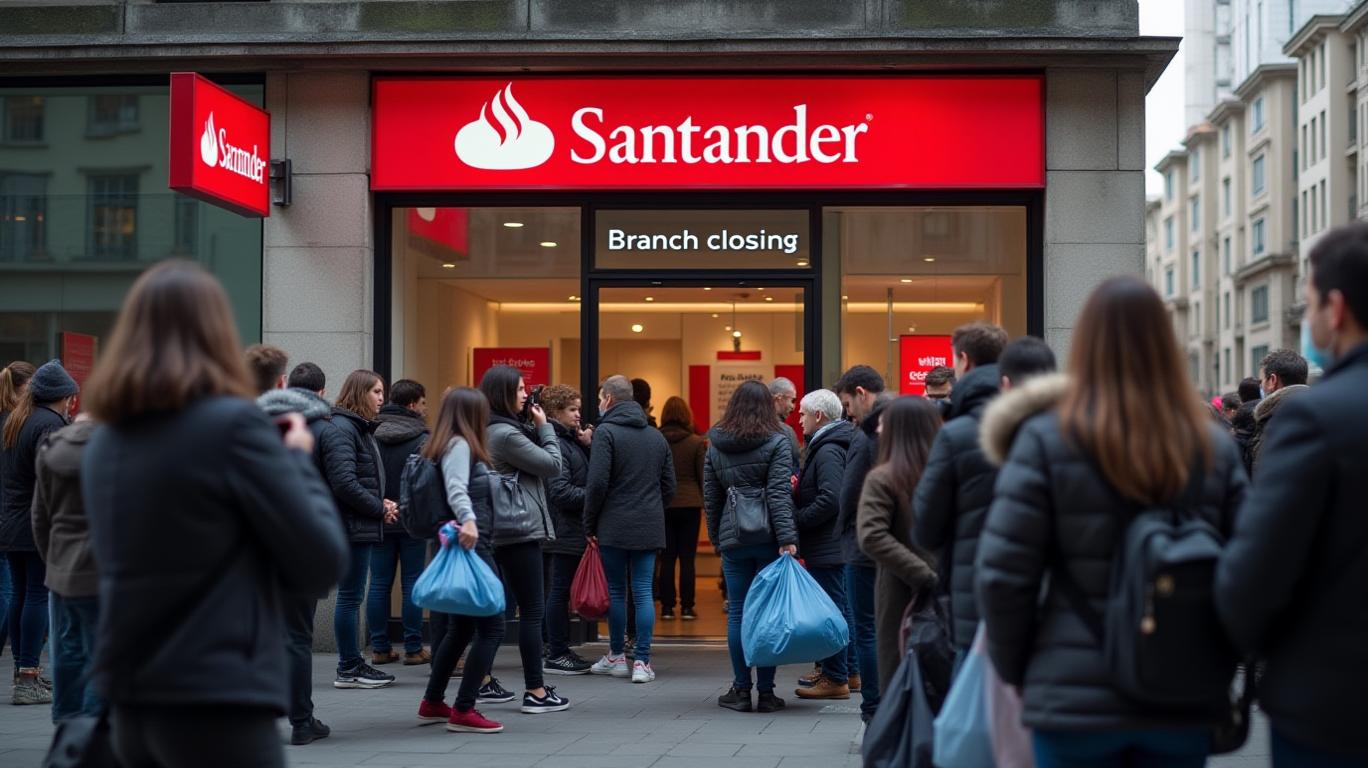
In the ever-evolving landscape of global finance, Santander's recent announcement to shut nearly 100 branches in the UK has sent shockwaves through the industry. The Spanish banking giant, which first entered the UK market in 2004 with the acquisition of Abbey National, has long been a significant player on the British high street. However, the decision to close 95 branches, putting 750 jobs at risk, raises serious questions about the bank's long-term commitment to the UK and its broader strategic goals.
The primary factors driving Santander's decision to close branches are the shift in customer behavior towards online banking and the need to adapt to changing market conditions. According to the bank, financial transactions completed in branches fell 61% since 2019 while the use of internet banking to open accounts and conduct banking rose. This data supports the bank's decision to close branches as a response to the decreasing demand for in-person banking services.
However, the closure of branches is just one piece of a larger puzzle. SantanderSAN-- has been grappling with a costly scandal over mis-sold car finance, which has significantly impacted its UK operations. In October 2024, the bank announced 1,400 job cuts across its British business as part of cost-reduction efforts. The bank has also set aside £295 million to cover potential compensation costs related to the car finance commission scandal, contributing to a significant decline in the bank's third-quarter profits.
The decision to close branches and reduce staff also reflects Santander's broader cost-cutting measures, including the planned reduction of 1,400 jobs under a scheme referred to as "Project Nike." This cost-cutting effort is part of a broader strategic review that includes considering a potential exit from the UK market. The bank's executive chair, Ana Botín, has stated that the UK remains a core market, but the bank is also exploring options to focus on regions with higher growth potential, such as the United States.
The decision to close branches and reduce staff sends a signal to investors and stakeholders that Santander is adapting to changing customer behavior and seeking to optimize its operations. However, it also raises questions about the bank's long-term commitment to the UK market and its ability to attract and retain international investment. The bank's decision to close branches and reduce staff is part of a broader strategic review that includes considering a potential exit from the UK market, which could have significant implications for the UK's banking landscape and its attractiveness as a destination for foreign investment.
The closure of branches is just one piece of a larger puzzle. Santander has been grappling with a costly scandal over mis-sold car finance, which has significantly impacted its UK operations. In October 2024, the bank announced 1,400 job cuts across its British business as part of cost-reduction efforts. The bank has also set aside £295 million to cover potential compensation costs related to the car finance commission scandal, contributing to a significant decline in the bank's third-quarter profits.
The decision to close branches and reduce staff also reflects Santander's broader cost-cutting measures, including the planned reduction of 1,400 jobs under a scheme referred to as "Project Nike." This cost-cutting effort is part of a broader strategic review that includes considering a potential exit from the UK market. The bank's executive chair, Ana Botín, has stated that the UK remains a core market, but the bank is also exploring options to focus on regions with higher growth potential, such as the United States.
The decision to close branches and reduce staff sends a signal to investors and stakeholders that Santander is adapting to changing customer behavior and seeking to optimize its operations. However, it also raises questions about the bank's long-term commitment to the UK market and its ability to attract and retain international investment. The bank's decision to close branches and reduce staff is part of a broader strategic review that includes considering a potential exit from the UK market, which could have significant implications for the UK's banking landscape and its attractiveness as a destination for foreign investment.
The closure of branches is just one piece of a larger puzzle. Santander has been grappling with a costly scandal over mis-sold car finance, which has significantly impacted its UK operations. In October 2024, the bank announced 1,400 job cuts across its British business as part of cost-reduction efforts. The bank has also set aside £295 million to cover potential compensation costs related to the car finance commission scandal, contributing to a significant decline in the bank's third-quarter profits.
The decision to close branches and reduce staff also reflects Santander's broader cost-cutting measures, including the planned reduction of 1,400 jobs under a scheme referred to as "Project Nike." This cost-cutting effort is part of a broader strategic review that includes considering a potential exit from the UK market. The bank's executive chair, Ana Botín, has stated that the UK remains a core market, but the bank is also exploring options to focus on regions with higher growth potential, such as the United States.
The decision to close branches and reduce staff sends a signal to investors and stakeholders that Santander is adapting to changing customer behavior and seeking to optimize its operations. However, it also raises questions about the bank's long-term commitment to the UK market and its ability to attract and retain international investment. The bank's decision to close branches and reduce staff is part of a broader strategic review that includes considering a potential exit from the UK market, which could have significant implications for the UK's banking landscape and its attractiveness as a destination for foreign investment.
In the ever-evolving landscape of global finance, Santander's recent announcement to shut nearly 100 branches in the UK has sent shockwaves through the industry. The Spanish banking giant, which first entered the UK market in 2004 with the acquisition of Abbey National, has long been a significant player on the British high street. However, the decision to close 95 branches, putting 750 jobs at risk, raises serious questions about the bank's long-term commitment to the UK and its broader strategic goals.
The primary factors driving Santander's decision to close branches are the shift in customer behavior towards online banking and the need to adapt to changing market conditions. According to the bank, financial transactions completed in branches fell 61% since 2019 while the use of internet banking to open accounts and conduct banking rose. This data supports the bank's decision to close branches as a response to the decreasing demand for in-person banking services.
However, the closure of branches is just one piece of a larger puzzle. SantanderSAN-- has been grappling with a costly scandal over mis-sold car finance, which has significantly impacted its UK operations. In October 2024, the bank announced 1,400 job cuts across its British business as part of cost-reduction efforts. The bank has also set aside £295 million to cover potential compensation costs related to the car finance commission scandal, contributing to a significant decline in the bank's third-quarter profits.
The decision to close branches and reduce staff also reflects Santander's broader cost-cutting measures, including the planned reduction of 1,400 jobs under a scheme referred to as "Project Nike." This cost-cutting effort is part of a broader strategic review that includes considering a potential exit from the UK market. The bank's executive chair, Ana Botín, has stated that the UK remains a core market, but the bank is also exploring options to focus on regions with higher growth potential, such as the United States.
The decision to close branches and reduce staff sends a signal to investors and stakeholders that Santander is adapting to changing customer behavior and seeking to optimize its operations. However, it also raises questions about the bank's long-term commitment to the UK market and its ability to attract and retain international investment. The bank's decision to close branches and reduce staff is part of a broader strategic review that includes considering a potential exit from the UK market, which could have significant implications for the UK's banking landscape and its attractiveness as a destination for foreign investment.
The closure of branches is just one piece of a larger puzzle. Santander has been grappling with a costly scandal over mis-sold car finance, which has significantly impacted its UK operations. In October 2024, the bank announced 1,400 job cuts across its British business as part of cost-reduction efforts. The bank has also set aside £295 million to cover potential compensation costs related to the car finance commission scandal, contributing to a significant decline in the bank's third-quarter profits.
The decision to close branches and reduce staff also reflects Santander's broader cost-cutting measures, including the planned reduction of 1,400 jobs under a scheme referred to as "Project Nike." This cost-cutting effort is part of a broader strategic review that includes considering a potential exit from the UK market. The bank's executive chair, Ana Botín, has stated that the UK remains a core market, but the bank is also exploring options to focus on regions with higher growth potential, such as the United States.
The decision to close branches and reduce staff sends a signal to investors and stakeholders that Santander is adapting to changing customer behavior and seeking to optimize its operations. However, it also raises questions about the bank's long-term commitment to the UK market and its ability to attract and retain international investment. The bank's decision to close branches and reduce staff is part of a broader strategic review that includes considering a potential exit from the UK market, which could have significant implications for the UK's banking landscape and its attractiveness as a destination for foreign investment.
The closure of branches is just one piece of a larger puzzle. Santander has been grappling with a costly scandal over mis-sold car finance, which has significantly impacted its UK operations. In October 2024, the bank announced 1,400 job cuts across its British business as part of cost-reduction efforts. The bank has also set aside £295 million to cover potential compensation costs related to the car finance commission scandal, contributing to a significant decline in the bank's third-quarter profits.
The decision to close branches and reduce staff also reflects Santander's broader cost-cutting measures, including the planned reduction of 1,400 jobs under a scheme referred to as "Project Nike." This cost-cutting effort is part of a broader strategic review that includes considering a potential exit from the UK market. The bank's executive chair, Ana Botín, has stated that the UK remains a core market, but the bank is also exploring options to focus on regions with higher growth potential, such as the United States.
The decision to close branches and reduce staff sends a signal to investors and stakeholders that Santander is adapting to changing customer behavior and seeking to optimize its operations. However, it also raises questions about the bank's long-term commitment to the UK market and its ability to attract and retain international investment. The bank's decision to close branches and reduce staff is part of a broader strategic review that includes considering a potential exit from the UK market, which could have significant implications for the UK's banking landscape and its attractiveness as a destination for foreign investment.

Divulgación editorial y transparencia de la IA: Ainvest News utiliza tecnología avanzada de Modelos de Lenguaje Largo (LLM) para sintetizar y analizar datos de mercado en tiempo real. Para garantizar los más altos estándares de integridad, cada artículo se somete a un riguroso proceso de verificación con participación humana.
Mientras la IA asiste en el procesamiento de datos y la redacción inicial, un miembro editorial profesional de Ainvest revisa, verifica y aprueba de forma independiente todo el contenido para garantizar su precisión y cumplimiento con los estándares editoriales de Ainvest Fintech Inc. Esta supervisión humana está diseñada para mitigar las alucinaciones de la IA y garantizar el contexto financiero.
Advertencia sobre inversiones: Este contenido se proporciona únicamente con fines informativos y no constituye asesoramiento profesional de inversión, legal o financiero. Los mercados conllevan riesgos inherentes. Se recomienda a los usuarios que realicen una investigación independiente o consulten a un asesor financiero certificado antes de tomar cualquier decisión. Ainvest Fintech Inc. se exime de toda responsabilidad por las acciones tomadas con base en esta información. ¿Encontró un error? Reportar un problema




Comentarios
Aún no hay comentarios