
The Santa Claus Rally and the Road to 2026: Decoding Seasonal Sentiment Amid Fed Shifts and Economic Resilience
The holiday season is more than just tinsel and turkey-it's a time when market psychology, economic data, and Federal Reserve policy collide to create one of the most anticipated phenomena in investing: the Santa Claus Rally. As we approach the end of 2025, the question on every investor's mind is whether this year's rally will serve as a reliable barometer for the year ahead. With the S&P 500 already up over 15% year-to-date and the Fed signaling a dovish pivot, the stage is set for a dramatic interplay between seasonal optimism and macroeconomic fundamentals.
The 2025 Rally: A Product of Dovish Policy and Resilient Data
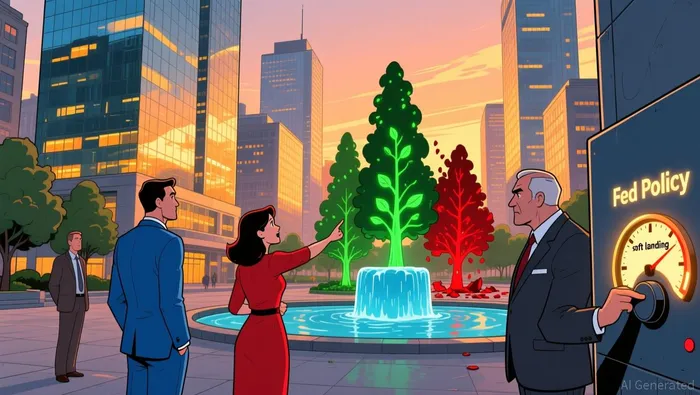
The Santa Claus Rally, historically defined by gains in the last five trading days of December and the first two of January, has averaged a 1.3% return for the S&P 500 since 1950. In 2025, the rally's prospects are bolstered by a trifecta of factors: a 0.25% rate cut by the Fed in December, a 4.3% Q3 GDP print (the strongest in two years), and a cooling PCE inflation reading of 2.8%. These developments have created a "soft landing" narrative, with investors betting that the Fed's easing cycle will continue into 2026.
 However, the path isn't without hiccups. The S&P 500 dipped 0.7% in the five days leading into the rally window, fueled by concerns over AI overvaluation and mixed signals from the Fed. Yet, corporate earnings-particularly in the AI sector-have provided a counterweight. Micron's post-earnings surge and Oracle's AI infrastructure bets highlight the sector's potential to drive momentum, even as skeptics question the sustainability of these gains.
The Predictive Power of the Santa Rally: A Historical Lens
While the Santa Claus Rally is a seasonal event, its performance often serves as a bellwether for the following year. According to the Stock Trader's Almanac, a positive Santa Rally has historically been followed by a 2.6% average gain in the S&P 500 in the subsequent three months, while a negative rally has led to a 1% average decline. This year, analysts project a 12% rise in the S&P 500 by year-end 2026, driven by continued corporate earnings growth and a Fed committed to rate cuts.
The Fed's policy trajectory is critical here. The December 2025 rate cut and the pause in quantitative tightening have signaled a shift toward accommodative monetary policy, a move that historically supports risk-on behavior. Yet, bond yields remain elevated, and AI-driven volatility-exacerbated by companies like OracleORCL-- struggling to monetize AI investments-introduces uncertainty.
Navigating the 2026 Outlook: Risks and Opportunities
For 2026, the key will be whether the Fed can balance inflation control with growth support. A "hawkish cut"-a rate reduction paired with cautionary language-could disrupt the rally's momentum, as seen in past cycles. Conversely, a sustained dovish stance, coupled with a softening labor market and falling inflation, could cement the S&P 500's gains.
Investors should also watch the interplay between the Santa Rally and broader sentiment indicators. Jed Ellerbroek of Argent Capital Management points to strong IPO and M&A activity as tailwinds, while Bank of America warns of AI-driven volatility and delayed economic data from a recent government shutdown. These factors underscore the need for a diversified approach, with allocations to both growth and value sectors.
Conclusion: A Cautious Optimism for 2026
The 2025 Santa Claus Rally is shaping up to be a pivotal moment for the market. While historical patterns suggest a positive outcome, the Fed's next moves and economic resilience will ultimately determine its predictive power for 2026. Investors should remain nimble, leveraging the rally's performance as a signal but not a guarantee. As the saying goes, "He who hesitates is lost"-but in this case, he who ignores the data may find himself under the tree with a lopsided portfolio.





Comentarios
Aún no hay comentarios