
Sandvik's Diversified Strategy and Sustainability Push Offset Q2 Headwinds
Sandvik's Q2 2025 results demonstrated resilience amid uneven demand across its divisions, with strong performance in mining and aerospace sectors offsetting softer infrastructure activity and geographic headwinds. While the company's shares dipped 2% following the earnings release, the underlying narrative of strategic repositioning toward sustainable technologies and margin-focused restructuring suggests a compelling long-term story for investors.
The Mining Boom and Sustainable Shift
Sandvik's Mining and Rock Solutions division delivered a standout performance, securing its largest-ever order for battery-electric vehicles (BEVs) from South32's Hermosa critical minerals project in Arizona. The $220 million contract—22 BEVs alongside 20 conventional units—highlighted the growing demand for decarbonized mining equipment. This order not only underscores Sandvik's leadership in electrification but also positions it to benefit from the global push for critical minerals, a cornerstone of the energy transition.
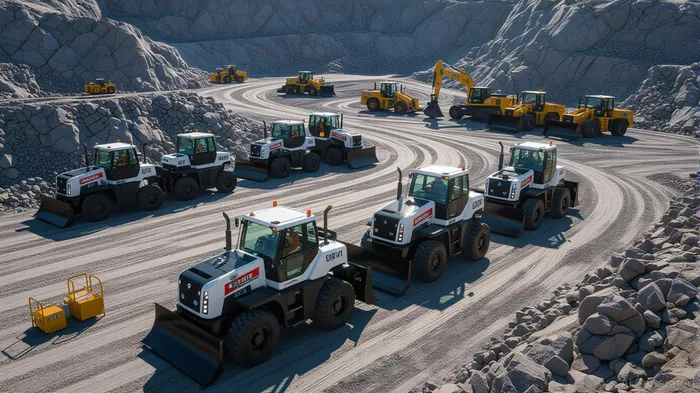
The mining sector's robustness contrasts sharply with the infrastructure division's 16% drop in organic order intake, driven by sluggish macroeconomic conditions. Yet, CEO Stefan Widing framed the weakness as temporary, emphasizing that mining's sustained demand—fueled by EV battery metals and renewable energy projects—will remain a growth engine.
Geographic and Sector Divergences
Europe emerged as Sandvik's strongest regional market, while North America held steady. Asia, however, disappointed, with China's post-reopening economy failing to rebound as expected. The infrastructure and general engineering sectors also saw sales moderation, reflecting broader economic uncertainty.
The company's restructuring efforts in its Machining division—trimming 350 roles to save SEK 380 million annually by 2026—suggest a strategic focus on operational discipline. CFO Cecilia Felton noted that these moves, despite a SEK 570 million Q2 restructuring charge, will bolster margins in the medium term.
Investment Implications: A Divided Market, a Unified Strategy
The immediate dip in Sandvik's shares post-earnings reflects short-term concerns over infrastructure and Asia's softness. Yet, the company's long-term bets—sustainable mining equipment, decarbonization, and margin optimization—align with secular trends. Consider these key points:
Mining's Long Tail: Critical minerals demand is structural, not cyclical. Sandvik's BEV fleet win with South32 is a harbinger of more such contracts as miners prioritize emissions reductions.
Sustainability as a Competitive Edge: Sandvik's focus on electrification and acquisitions in 3D metrology (e.g., Verisurf) and demolition equipment (Osa Demolition) signal a broader play to dominate niche, high-margin markets.
Margin Resilience: While Q2 restructuring costs were steep, the savings target of SEK 380 million/year by 2026 suggests a path to EBITDA expansion.
Diversification Payoff: Mining accounted for roughly 40% of sales in Q1 2025, but aerospace and machining (post-restructuring) could stabilize returns in weaker cycles.
Conclusion: A Buy on Valuation and Vision
Sandvik's P/E ratio of 18.5x (vs. 22x for peers) reflects current skepticism over near-term headwinds. However, the company's strategic investments—electrification, automation, and operational rigor—position it to outperform in a sector ripe for consolidation. Investors with a 3-5 year horizon may find Sandvik's discounted valuation and growth catalysts compelling. The shares, trading at SEK 1,250, offer upside if mining demand and margin improvements materialize as expected.
While Q2's infrastructure softness and geographic imbalances are valid concerns, Sandvik's ability to balance short-term execution with long-term bets on sustainability and critical technologies makes it a stock to watch in industrial equities.







Comentarios
Aún no hay comentarios