
The Sanctuary City Conundrum: Balancing Immigration Policy and Fiscal Stability in U.S. Municipalities

The U.S. immigration debate has long been a hot-button issue, but in 2025, it's becoming a financial flashpoint. Sanctuary city policies and ICE enforcement tensions are no longer just political talking points—they're reshaping municipal budgets, corporate strategies, and investor confidence. For investors, understanding this dynamic is critical. Let's break down the numbers, the risks, and the opportunities.
The Fiscal Tightrope: Municipal Budgets Under Pressure
Sanctuary cities, which limit collaboration with federal immigration enforcement, have sparked a heated debate over their financial impact. Recent studies reveal a paradox: while these policies save local governments $101 million annually by avoiding ICE-related costs (which hit $3.28 billion for cooperating jurisdictions), they also expose cities to potential federal funding cuts.
The Trump administration's 2025 push to withhold grants from sanctuary jurisdictions has already triggered budget deficits in cities like Los Angeles and San Francisco. Moody'sMCO-- and S&P have flagged sanctuary status as a “risk factor” for bond ratings, citing exposure to federal policy shifts. shows a widening spread, reflecting investor anxiety.
What's the takeaway? Municipal bonds in sanctuary cities may offer yield, but they come with higher volatility. Investors should monitor federal funding trends and local budget disclosures.
Business Operations: Labor Markets and Investor Sentiment
Sanctuary policies have a mixed impact on business operations. On one hand, they attract immigrant labor to industries like construction, hospitality, and agriculture—sectors that rely on low-wage workers. A 2023 study found that sanctuary cities saw a 0.18% drop in unemployment and a 5.5% rise in housing prices, suggesting economic revitalization.
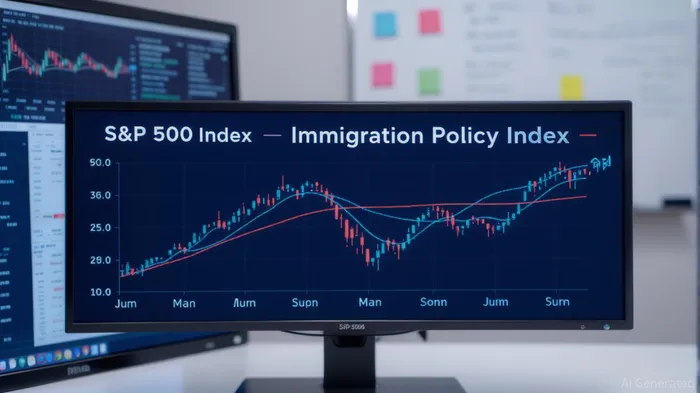
But there's a catch. The same study noted a 1.6% reduction in wages, raising concerns about labor market competition. Meanwhile, ICE enforcement actions—like raids or detainers—create operational uncertainty for businesses. highlights divergent trends, with sanctuary-city firms showing resilience in labor costs but facing regulatory scrutiny.
Investment angle: Companies that provide legal services, healthcare, or financial products to immigrant communities (e.g., TurboTax, Healthcare.gov partners) could benefit from sanctuary policies. Conversely, businesses reliant on strict immigration enforcement (e.g., ICE contractors) face headwinds.
Public Trust and Geopolitical Repercussions
Public trust in local governance is a cornerstone of economic stability. Sanctuary policies have bolstered trust in immigrant-heavy communities, with non-detainer counties reporting 35.5 fewer crimes per 10,000 people than detainer counties. This trust translates to higher tax compliance and social cohesion—key drivers of long-term growth.
However, the geopolitical stakes are rising. Sanctuary policies strain U.S. relations with countries seeking to repatriate citizens and complicate international trade agreements. For example, Mexico and Canada have expressed concerns over inconsistent enforcement, which could disrupt cross-border labor flows. reveals a correlation that investors should not ignore.
Global investor warning: Foreign capital may shy away from U.S. markets if sanctuary policies are perceived as destabilizing. Look for shifts in M&A activity or corporate relocations to non-sanctuary cities.
The Bottom Line: Navigating the Risks
Sanctuary city policies are a double-edged sword. They offer fiscal savings and economic growth but expose municipalities to federal retaliation and geopolitical friction. For investors, the key is diversification:
1. Hedge municipal bond exposure by pairing high-yield sanctuary-city bonds with safer, non-sanctuary counterparts.
2. Target sectors aligned with immigration trends, such as education, healthcare, and legal services.
3. Monitor federal policy shifts—a change in administration could reverse funding cuts or impose new conditions.
In the end, the U.S. immigration debate isn't just about politics—it's about money. And for investors, the winners and losers will be determined by who adapts fastest to this new reality.





Comentarios
Aún no hay comentarios