
Sanctions, Summit, and Sovereignty: Navigating Geopolitical Risks in 2025
The geopolitical chessboard in 2025 has taken a sharp turn, with U.S. President Donald Trump’s proposed sanctions against Russia and his contentious meeting with Ukrainian President Volodymyr Zelenskyy reigniting market volatility. As tensions between Washington and Kyiv escalate, investors must parse the economic implications of a potential policy shift that could redefine global trade, energy, and diplomatic relations. 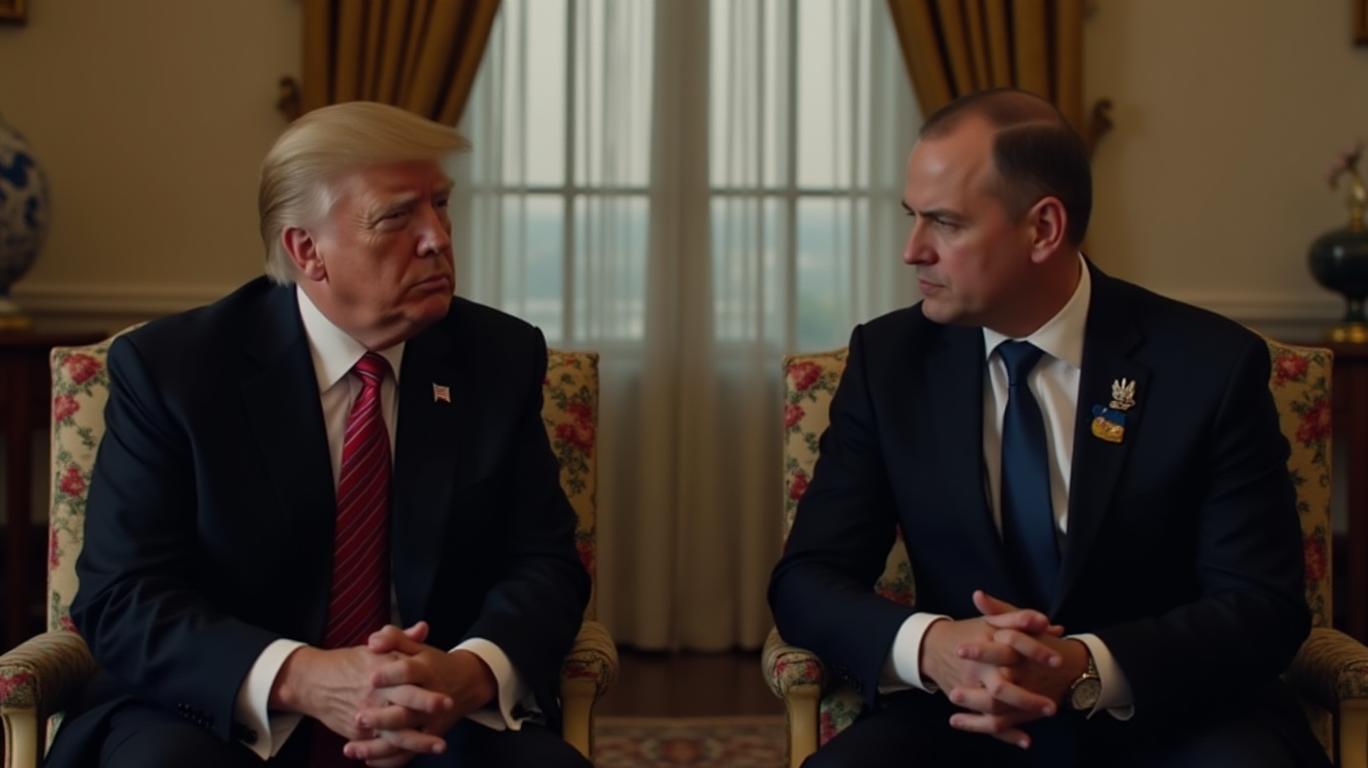
The Sanctions Gamble: Tougher Measures or Tactical Retreat?
Trump’s latest sanctions proposal targets Russia’s economy directly, including a conditional lifting of restrictions if Moscow accepts a U.S.-brokered peace deal. The framework demands Ukraine cede Crimea and portions of the Donbas to Russia—a move Zelenskyy has repeatedly rejected, citing constitutional principles. This standoff reflects a broader strategy: using economic leverage to force territorial concessions.
However, the administration’s approach is fraught with contradictions. While threatening to halt U.S. aid to Kyiv, Trump simultaneously imposed a 10% tariff on all nations in April 2025 under the International Emergency Economic Powers Act (IEEPA). These tariffs, coupled with existing sanctions, have already shrunk Russia’s GDP by 15% since 2022, yet Putin has shown no sign of retreating.
The Vatican Summit: Symbolism vs. Substance
The April 26 meeting between Trump and Zelenskyy marked the first face-to-face encounter since their explosive Oval Office showdown in February. While both leaders called the Vatican talks “constructive,” the substance remains elusive. Key sticking points include:
- Crimea’s Legal Status: The U.S. insists on de facto recognition of Russia’s annexation, a non-starter for Kyiv and Europe.
- Sanctions Relief Timeline: Zelenskyy demands simultaneous ceasefire and security guarantees before any sanctions are lifted.
- Ukraine’s Sovereignty: Kyiv refuses to negotiate while Russian forces occupy 20% of its territory.
The public optics of their meeting—captured in a rare group photo with European leaders—sought to reassure markets. Yet behind closed doors, the divide persists.
Market Implications: Winners and Losers in the Geopolitical Game
Energy Markets:
Sanctions on Russia’s energy exports (already 30% below 2021 levels) could tighten global oil supplies. However, China’s reduced retaliatory tariffs on U.S. semiconductors () hint at a cautious détente.Manufacturing and Trade:
Trump’s tariffs, including a 145% rate on Chinese goods, have driven U.S. consumer confidence to a 72-year low. Investors should watch reshoring initiatives in semiconductors and critical minerals, as the White House seeks to reduce reliance on foreign supply chains.Geopolitical Risk Premium:
The MSCIMSCI-- Emerging Markets Index has underperformed the S&P 500 by 12% year-to-date, reflecting investor anxiety over trade wars and energy disruptions.
Investment Strategy: Navigating the Minefield
- Avoid Overexposure to Sanctioned Sectors: Russian equities and energy stocks remain high-risk due to lingering Western hostility.
- Embrace Reshoring Plays: U.S. manufacturers like Caterpillar (CAT) and General Electric (GE) could benefit from “buy American” incentives.
- Hedge with Commodities: Gold and energy ETFs (e.g., GLD, USO) offer diversification against geopolitical instability.
- Monitor Diplomacy: A breakthrough in U.S.-Ukraine talks could spark a rally in European equities (FEZ), while failure might push the S&P 500 into correction territory.
Conclusion: A High-Stakes Balancing Act
The interplay between Trump’s sanctions, Zelenskyy’s resistance, and global economic pressures creates a precarious environment for investors. While the White House’s “tough love” approach to Ukraine aims to force a settlement, Kyiv’s refusal to surrender territory—and Europe’s steadfast support—suggest prolonged conflict.
Key data underscores the risks:
- Consumer Sentiment: The University of Michigan’s index fell to 58.5 in April 2025, the lowest since 1978.
- Trade Deficits: The U.S. goods trade deficit widened to $1.2 trillion in Q1 2025, despite tariffs.
- Market Volatility: The VIX Index spiked 30% in April, reflecting investor anxiety over geopolitical uncertainty.
For now, investors should prioritize defensive strategies, diversify geographically, and remain attuned to diplomatic signals. The path to peace—and profit—depends on whether Washington and Kyiv can bridge their irreconcilable demands before markets lose patience.
In this high-stakes game, the only certainty is that geopolitical risk will continue to dominate the investment landscape in 2025.







Comentarios
Aún no hay comentarios